































Why Moms Are More Prone to Seasonal Depression—and How to Cope

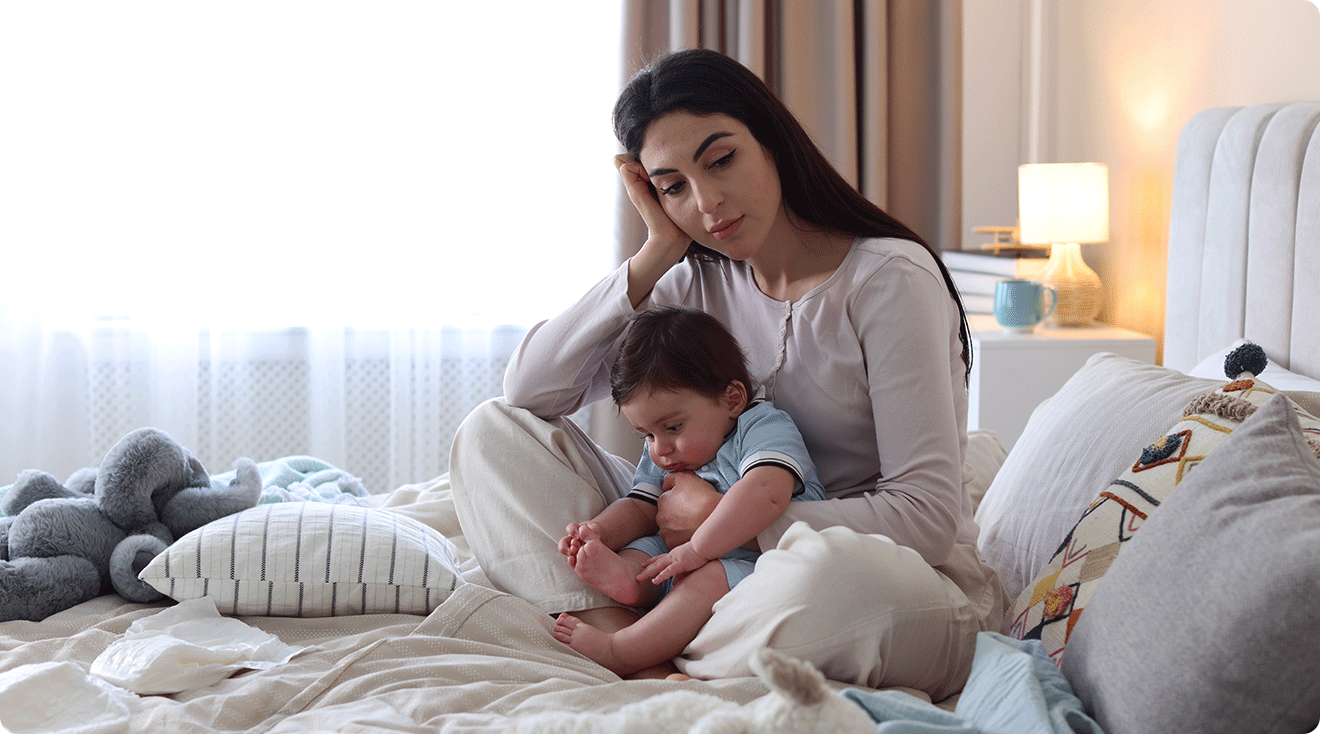

Every year, as the days get shorter and the weather gets colder, moms find themselves feeling heavier, more withdrawn and emotionally drained. And if you’re in the postpartum trenches or parenting young kids, that weight can feel unbearable. You’re already running on broken sleep, navigating a massive identity shift and carrying the mental load of caring for everyone else. Dark winter days add to the pile on. “New moms are already under considerable physiological and emotional stress,” says Marilyn Cross Coleman, LCSW, PMH-C, founder of Shameless Mama Wellness. “Their systems are on overload due to sleep deprivation, hormonal shifts, identity issues and the constant demand for caregiving. Shorter days, colder weather and less sunlight hit them harder because they’re already operating at a deficit.”
As a mom of two rambunctious boys who usually need hours of outdoor play to burn off energy, I’ve felt the urge to retreat during winter—the urge to shut myself in, cancel plans and just survive until spring. But after speaking with perinatal mental health experts and hearing from countless real moms, it’s clear that while winter can be deeply challenging, isolating ourselves only makes things worse.
If you feel the winter blues creeping in, we’re here to help. We’re breaking down why seasonal depression hits moms harder, how it overlaps with postpartum mental health and what will actually help.
- Seasonal depression can intensify postpartum depression and anxiety, especially in the first year after birth.
- Hormonal shifts, sleep deprivation, isolation and reduced sunlight create a perfect storm for declining mental health.
- Winter blues are common, but persistent low mood, withdrawal or intrusive thoughts may signal something more.
- Small lifestyle changes (like light exposure, gentle routines and connection) can make a real difference.
Research suggests that seasonal changes and postpartum mood are linked, though the relationship is still being studied. A large systematic review of more than 100,000 women found that those who gave birth in spring, summer or fall had a significantly lower risk of postpartum depression compared to women who delivered in winter, suggesting that seasonal factors (particularly reduced daylight) might play a role in postpartum mood vulnerability.
In a separate study of over 9,000 new moms, researchers found that the risk for depressive symptoms was highest in December, aligning with what’s known about winter-related changes in light exposure and circadian rhythms.
Taken together, these findings suggest that winter doesn’t cause postpartum depression on its own, but it can certainly intensify it or exacerbate existing vulnerability.
It’s not your imagination. It’s even harder being a mom in the winter. Here’s why:
You’re trapped inside due to weather
Cold weather, snow, early sunsets and seasonal sickness quietly strip away everyday connection. Stroller walks stop. Playgroups pause. Even short outings can start to feel risky or overwhelming. “Postpartum mothers are uniquely vulnerable to experiencing Seasonal Affective Disorder because their usual ‘village’ suddenly come to a screeching halt, increasing feelings of isolation and loneliness for many mothers,” says Lauren Hunter, LCSW, PMH-C, perinatal psychotherapist and owner of North Star Wellness & Therapy PC. For some moms, that fear becomes its own barrier to leaving the house. As Tanha, a mom of one in Pennsylvania, says, “I became anxious about the weather. The cold, ice and snow. I was scared we’d get hurt. I started to feel shut in because of that.” Perinatal mental health experts note that when anxiety limits movement and connection, isolation can set in quickly, often without moms realizing how much it’s affecting their mood.
You’re sleep deprived and emotionally raw
Sleep deprivation is one of the strongest predictors of postpartum depression and anxiety. Add winter disruptions with less daylight and kids home sick and many moms find their already-fragile sleep unraveling. “Sometimes moms enter a cycle where impairment in sleep impacts mood and activity that then further impacts sleep, and the cycle continues. This can lead to an increase in depressive symptoms,” says Coleman. When sleep suffers, emotional regulation becomes harder, resilience drops and even small stressors can feel overwhelming.
Hormones and winter become a ‘double whammy’
Postpartum hormonal shifts already put new moms on an emotional rollercoaster. Estrogen and progesterone drop sharply after birth, leaving mood-regulating neurotransmitters like serotonin and dopamine with less support. When these natural postpartum changes collide with seasonal factors, it can intensify feelings of depression. “Many people experience changes in serotonin and melatonin with decreased sunlight, especially in winter,” says perinatal social worker Lisa Greenstein, LCSW, PMH-C, “So if someone is sensitive to both the postpartum estrogen drop and the seasonal decrease in sunlight, they can feel a kind of ‘double whammy,’ making mood symptoms even more pronounced.” This hormonal sensitivity helps explain why even small disruptions in routine, daylight or sleep can feel overwhelming. It’s not just fatigue or stress—it’s biology interacting with the environment, making winter a uniquely challenging season for postpartum mental health.
So little light, so much to do
Winter isn’t just cold, it’s packed with expectations and social demands that can weigh heavily on new moms. Between holiday gatherings, birthday parties and family obligations, many moms find themselves stretched thin, to put it mildly.
Even routine obligations, school runs, social check-ins or coordinating care can feel amplified when outdoor activities are limited. This combination of social expectation and winter isolation makes it easy for season blues to get the upper hand.
You’re becoming someone new in the middle of winter
Early motherhood isn’t just exhausting, it’s identity-shifting. Matrescence (the transition into becoming a mother) can fundamentally change how you see yourself, your abilities and your worth. In winter, when days are quieter and more confined, there’s less distraction from that internal shift. Even when a mom is struggling, the work doesn’t stop. As Amy R., a mom of three in Michigan, shares, “While I was drowning in a fog of unexplainable exhaustion, I still needed to make dinners, drive kids to sports and lessons, clean the home, etc.” Winter can intensify that pressure because energy is at its lowest, while expectations remain unchanged.
Utilize light as treatment
Sitting by a window during a morning feeding or using a clinically rated light box can help regulate serotonin and circadian rhythms. “Increasing morning light exposure is the most effective strategy and requires the least effort,” Coleman says. For some moms, it’s a true game-changer. As Didi H., a mom of two in Stamford, Connecticut, shares, “I was a mom with SAD but my doctor had me use /[light therapy] to increase serotonin—and I had great success.”
Stabilize sleep
Sleep disruption is unavoidable in early parenthood, but patterns still matter. Waking around the same time each day and protecting rest where possible can prevent mood from spiraling.
Move your body gently
Short walks, stretching or a few minutes of yoga can improve mood and energy. If movement happens while holding a baby or chasing a toddler, it still counts! The goal is nervous-system regulation, not fitness.
Choose connection that actually feels doable
Social connection doesn’t have to mean big plans. A 20-minute call, a quick errand or a low-pressure playdate can help counter isolation. Connection is about emotional safety, not showing up perfectly.
Let winter be slower (on purpose)
Many moms feel pressure to keep the same pace year-round, but winter isn’t built for that. Letting go of unrealistic expectations can reduce emotional strain. Hunter encourages moms to embrace seasonal pacing. She suggests “leaning into the slowness and quietness of winter.”
Create one small daily anchor
When days blur together, one predictable ritual can help. Whether it’s a short afternoon walk or a simple evening reset. These anchors add structure without pressure.
Track your wins (especially the little ones)
Winter depression shrinks perspective. Writing down one daily “win” (feeding yourself a healthy meal, getting outside, keeping up with hydration!) helps counter the brain’s negativity bias and builds evidence that you’re coping.
Reach out for help early—don’t wait until you’re drowning
If low mood lasts two weeks or more, or interferes with caretaking, reach out to your doctor or a mental-health specialist.
Frequently Asked Questions
What is seasonal affective disorder (SAD)?
It’s a type of depression triggered by seasonal changes, especially reduced sunlight in fall and winter. It can cause low mood, fatigue and decreased motivation—even in moms who usually feel fine.
How do you know if it’s more than “just” the winter blues?
Signs include persistent low mood for more than two weeks, fatigue, trouble caring for your children or intrusive negative thoughts. If these feelings are affecting your daily functioning, reach out to a healthcare provider.
Winter can magnify everything about early motherhood—the exhaustion, the isolation, the self-doubt. But feeling low in this season doesn’t mean you’re failing, and it doesn’t mean this is how things will always be. Give yourself grace. And, hopefully, the sun will come out tomorrow.
Marilyn Cross Coleman, LCSW, PMH-C, is a social worker and the founder of Shameless Mama Wellness.
Lisa Greenstein, LCSW, PMH-C, is a social worker and perinatal mental health specialist in Westfield, New Jersey.
Lauren Hunter, LCSW, PMH-C, is a perinatal psychotherapist and the owner of North Star Wellness & Therapy PC in Port Jefferson, New York.
Brain and Behavior, Relationship between seasons and postpartum depression: A systematic review and meta-analysis of cohort studies, June 2022
Depression and Anxiety, Seasonal Effects on Depression Risk and Suicidal Symptoms in Postpartum Women, May 2012
Real-Parent Perspectives:
- Tanha, a mom of one in Pennsylvania
- Amy R., a mom of three in Michigan
- Didi H., a mom of two in Stamford, Connecticut
Target Baby Registry
Free $100+ Value Welcome KitFree $100+ Value Welcome Kit
15% Completion Discount15% Completion Discount
Free 1-Year ReturnsFree 1-Year Returns
20+ Exclusive 20% Off
Deals For Mom & Baby20+ Exclusive 20% Off Deals For Mom & Baby1:1 Concierge With
Baby Gear Specialists1:1 Concierge With Baby Gear Specialists

*Subject to availability and Retailer's terms.
We earn commissions from these links.