









9 Surprising Summer Dangers for Baby

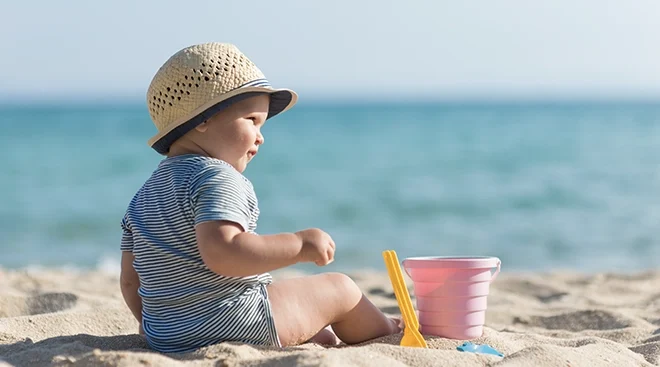

Ah, summer—the sun is shining and the outdoors is calling. But while there’s plenty of fun to be had, the season also brings some hazards for babies that might not be top of mind. Here, we break down nine dangers to look out for and how to side-step them so you and baby can safely enjoy everything summer has to offer.
While you probably already know the importance of protecting baby’s skin from sunburn, you may not realize just how sensitive an infant’s skin is to sunscreens. For babies under 6 months old, Garry Gardner, MD, chair of the Committee on Injury, Violence and Poison Prevention for the American Academy of Pediatrics (AAP), says it’s best to just avoid direct sun exposure altogether when you can.
When you’re out in the sun, use sun hats, umbrellas and baby-size shades. If you have to, the AAP says it’s okay to apply a little sunscreen to small exposed areas of skin on babies under 6 months, like the face and back of hands, tips of ears and tops of feet.
For babies older than 6 months, you can use sunscreen on any area of exposed skin—just use one that’s designed for babies. Be sure to test it on a small area of baby’s skin first, and if a rash develops, call your doctor.
No matter what your child’s age (or mom’s age, for that matter), it’s still important to avoid direct sunlight, especially between 10 a.m. and 4 p.m. when the sun is at its strongest.
Okay, so maybe this one isn’t a shocker, but when it’s steamy outside, it’s important to limit how much time you spend outdoors with your little one. Heading out with baby in tow for an hour or so is fine, as long as you stay in the shade (or under an umbrella). But if you’re planning to be at the pool or beach all day, hire a sitter to stay inside with baby, Gardner advises. Babies and young children are particularly vulnerable to heatstroke, especially if they’re not used to the warm weather.
We know you know to keep a very close eye on baby when you’re at the beach or pool (and if you have a pool in your backyard, to keep it fenced off). But you may not realize that even baby pools aren’t completely safe for little ones: Babies can (and do) drown in less than 2 inches of water. So sure, let baby splash around in one (she’ll probably love it)—just don’t think you can let your guard down just because there’s barely any water in there. (Same goes for bathtubs and even small buckets of water.)
The grass may seem like a soft, safe place for baby, but there are two main things to watch: Plants are the leading cause of poisoning among children, and babies will put just about anything in their mouths. Be sure to remove or fence off any poisonous plants. Call your local Poison Help Line (800.222.1222) to get a complete list of poisonous plants common to your area.
The second big danger in your yard are the pesticides and herbicides you spray to get rid of weeds and keep pests off your flowers and plants. Don’t let baby play in the backyard for at least 48 hours after it’s been treated, the AAP recommends.
While a mosquito bite isn’t necessarily anything to worry about, the real hazard when it comes to young babies and bugs is the stuff you use to keep those creepy-crawlers at bay. The AAP advises against using insect repellent on babies under 2 months old.
For children older than 2 months, choose a spray with a DEET concentration of 10 to 30 percent. They’re equally effective, but 10 percent DEET lasts for two hours, while 30 percent DEET lasts for five. The AAP recommends choosing the lowest concentration that’ll last for the amount of time you need.
Regardless of baby’s age, avoid any products that combine DEET and sunscreen. DEET can make SPF less effective, and SPF needs to be reapplied every two hours, whereas DEET sprays generally shouldn’t be reapplied that often.
When applying bug repellent, keep these tips in mind:
- Make sure you’re in an open area outside
- Spray into your hands and then rub it on baby, so it doesn’t get into the air you breathe
- Don’t spray on or near your child’s face (especially around the mouth or eyes)
- Avoid any cuts or irritated skin
- Wash baby’s skin with soap and water after coming inside
Still bugged out by bug spray? You can opt for a natural mosquito repellent for babies, or try some of these chemical-free ways to protect your little one from insects:
- Avoid areas where bugs tend to hang out (like near flowers, standing water and brush areas)
- Use netting over your stroller or baby carrier
- Don’t use scented soaps, perfumes or hair sprays on your child
- In the evenings, when mosquitoes really come out to play, cover up with long sleeved shirts, pants and socks to prevent bites
Bug bites are more annoying than dangerous for your little one, but a bee sting is another story. Yes, even babies can be allergic to bee stings. So if baby develops a rash, fever or other reaction after being stung, take him to a doctor right away. And did you know that you should also remove the stinger immediately? It’ll prevent a large amount of the venom from being pumped into baby’s skin. Just gently scrape it off horizontally with a credit card or your fingernail. Ease pain or swelling by soaking a cloth in cold water and pressing it over the bite.
We get it: It’s nice to enjoy the summer breezes. But you may not realize how easy it is for even very young babies to roll, wiggle, push or crawl out of open—and, yes, even screened—windows. Install window guards near changing tables, cribs and any other areas where baby may be crawling or playing.
Believe it or not, dehydration isn’t a big risk for babies in summer, Gardner says. Babies will let you know when they’re thirsty or hungry, so there’s no need to force fluids just because it’s hot out. While it’s important for moms and dads to drink plenty of water, if you feed baby water too early, you run the risk that she won’t take in enough breast milk or formula (and all the important nutrients they contain). Once your child starts eating solids, you can start giving water, but babies under 12 months only need a few sips here and there (and babies under 6 months don’t need any at all).
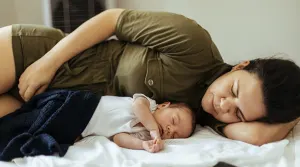
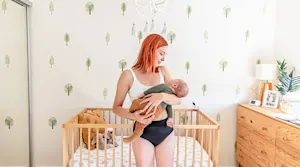
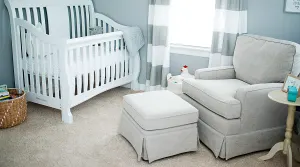
Hitting the road for a summer vacation or visit with grandma and grandpa? Be sure to bring a portable crib or bassinet (or call ahead to make sure there’s one at your destination). Don’t make do by placing baby in the bed with you—if you roll over onto her in your sleep, or if she rolls over onto a pillow or blanket, there’s a risk she could suffocate, Gardner warns.
If a well-meaning grandparent is already spoiling baby with a crib full of blankies, toys and stuffed animals, take them out before putting him down for a nap. You want to have as little in the crib as possible, advises Gardner. That means no stuffed animals, pillows or monitors—just a tight, fitted sheet. Blankets aren’t recommended either for babies under 12 months. If the AC’s blasting and you’re worried baby will get cold, tuck him into a wearable blanket.
Please note: The Bump and the materials and information it contains are not intended to, and do not constitute, medical or other health advice or diagnosis and should not be used as such. You should always consult with a qualified physician or health professional about your specific circumstances.
Plus, more from The Bump:
Navigate forward to interact with the calendar and select a date. Press the question mark key to get the keyboard shortcuts for changing dates.