




When Can Babies Have Water? (And How to Introduce It)


Drinking water is undoubtedly healthy—but offering baby water too soon (or too much of it) can pose serious health risks. Giving baby water “can be problematic for a few reasons, including that immature kidneys aren’t able to rebalance electrolytes well, leading to something called water intoxication,” explains Krupa Playforth, MD, a board-certified pediatrician at Warm Heart Pediatrics in Northern Virginia and the founder of The Pediatrician Mom.
So when can babies have water? And what’s the best way to introduce it? Here’s everything to know about when babies can drink water—and how to safely add it to their routine.
- Babies can start drinking water when they’re around 6 months old. Before then, their kidneys are too immature and their small bellies need calorie-dense liquids (aka breast milk and/or formula).
- If baby drinks too much water before 6 months, they could experience a serious condition called water intoxication. Signs of water intoxication in baby include vomiting, fussiness, lethargy, swelling of the hands or feet, hypothermia and seizures.
- From 6 to 12 months of age, babies can drink small amounts of water: around 4 to 8 ounces daily.
Babies can start drinking water when they’re around 6 months old, according to the American Academy of Pediatrics (AAP). While breast milk and/or formula should be baby’s primary source of nutrition until they’re around one year old, introducing water at 6 months helps your little one develop cup drinking skills, become familiar with water and—if you live in an area where the water is fluoridated—potentially prevent future tooth decay.
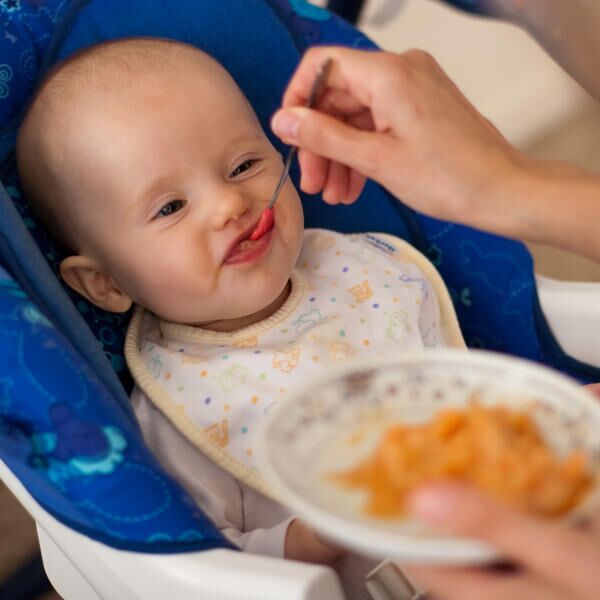
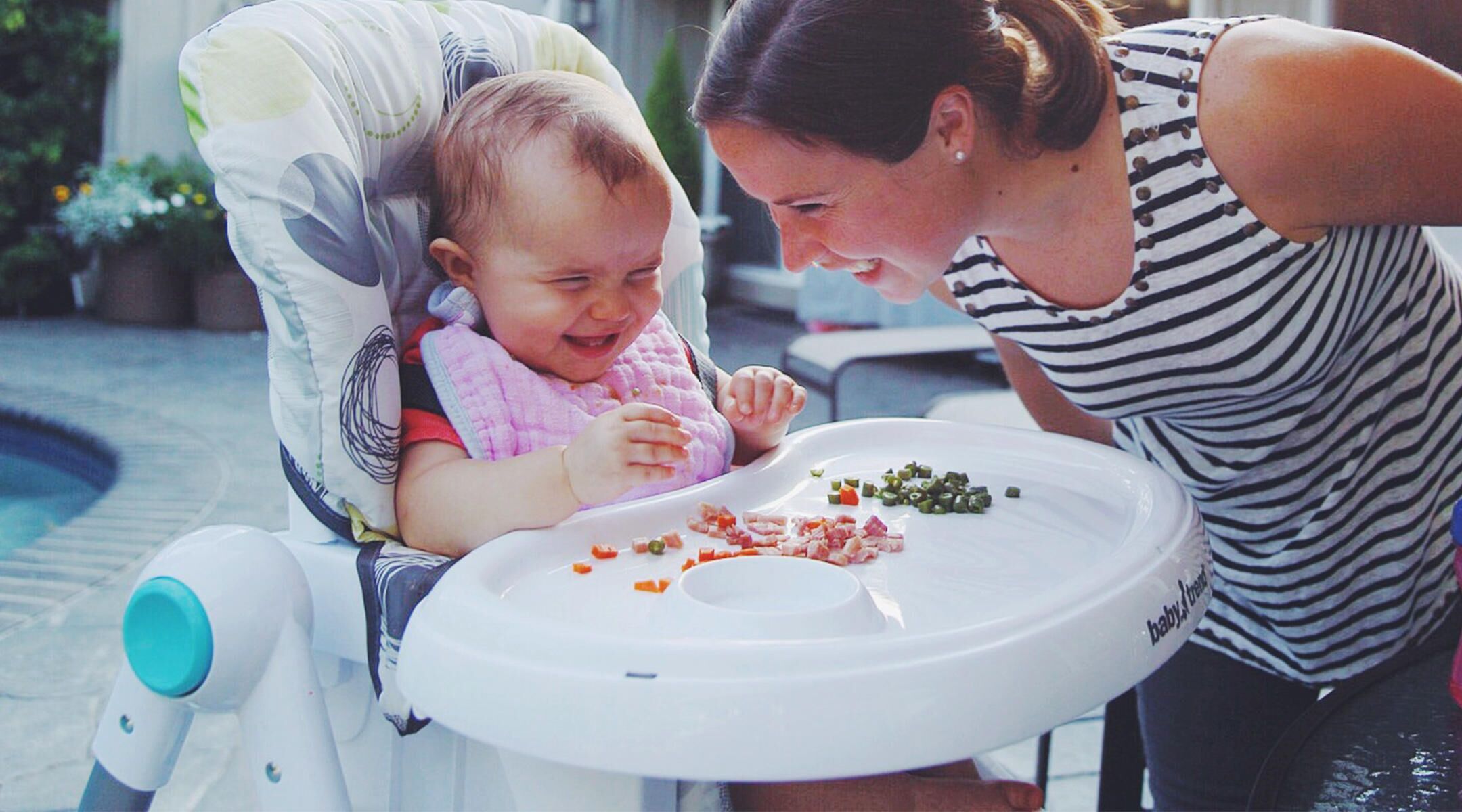
Giving baby water for the first time often coincides with their introduction to solid foods, which the AAP also recommends starting at around 6 months old.
Giving a younger baby water can potentially pose serious health risks, warns Caroline Brown, MD, a pediatrician and the director of The Children’s Clinic of Winston-Salem in North Carolina. “The reason we recommend waiting until at least 6 months is because young infants have immature kidneys that cannot filter the water,” she explains. “If a young infant drinks too much water, this can dilute the concentration of important minerals such as sodium, which can have catastrophic effects—leading to seizures, brain swelling and even potentially death.”
Signs of water intoxication in baby include vomiting, fussiness, lethargy, swelling of the hands or feet, hypothermia (a drop in body temperature below 97 degrees) and seizures. If you notice any of these symptoms, contact your pediatrician immediately or seek emergency care.
Another reason why babies can’t have water before 6 months is their teeny-tiny stomachs. To promote optimal growth, we need to fill their bellies with calorie-rich fluids such as breast milk or formula. “We want everything baby consumes until 6 months to have some caloric value,” explains Playforth. “Giving water can fill them up and lead to decreased intake of nutrients.”
Once baby’s old enough to drink water (which is, again, 6 months old), they don’t need a lot of it—especially at first. Brown suggests starting with just a few “sips here and there throughout the day,” totalling 4 to 6 ounces maximum from 6 to 9 months of age. Then, between 9 and 12 months, parents can gradually increase the amount to 6 to 8 ounces a day.
After baby turns one, it’s best for them to drink a combination of water and cow’s milk, according to the AAP (in addition to breast milk, if desired). The amounts will vary—some toddlers drink more water than milk and vice versa, which is totally fine. For example, when my middle son turned one and ditched the bottle, he never drank milk again. Instead, he only drank water and got his dairy and calcium from other sources, like yogurt and cheese. But my youngest son likes milk more than water. “There are no strict minimum or maximum amounts for toddlers,” Brown says. “Toddlers should be allowed to drink as needed for their thirst.”
Here’s a general breakdown of how much water your little one should drink during the first few years of life.

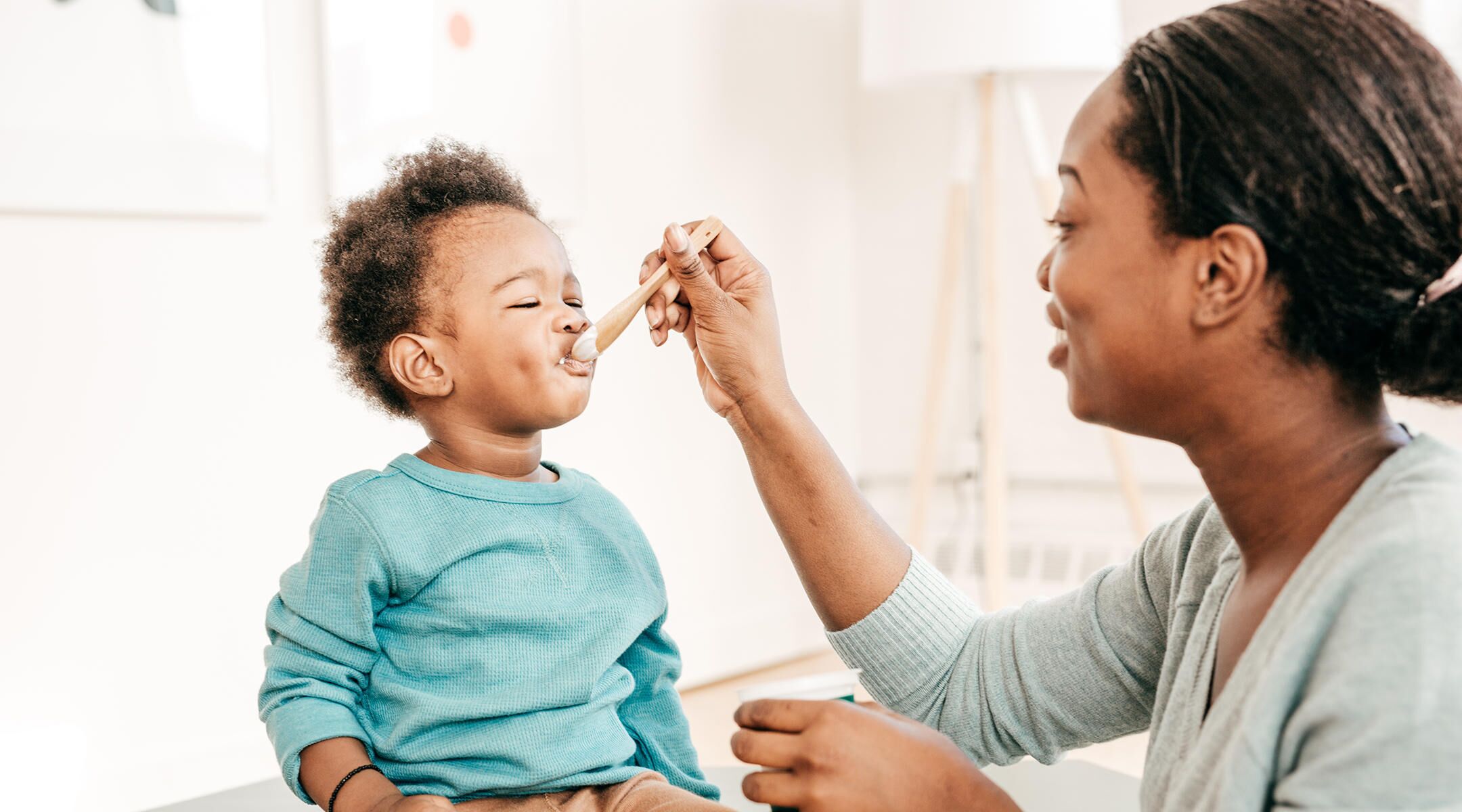
Before you offer your little one water for the first time, it’s important to get your pediatrician’s sign-off. Once you’ve gotten the green light to introduce H20, both Playforth and Brown suggest starting with offering baby small amounts of water (think just a sip or two) at mealtimes. Don’t offer it in a bottle—use an open-top, sippy or straw cup.
Don’t be surprised if baby doesn’t master the skill instantly. “My son initially spit out the water when he first drank it,” recalls Kirsten K., mom of a 2-year-old in Connecticut. Patience and practice are key: Continue to offer water at mealtimes and throughout the day, keep the amounts small and—most importantly—don’t stress about it. “Water is a thin liquid and it can take some practice to learn the skill of swallowing effectively,” Playforth says. “The goal at this point is also to develop skills around drinking from something other than a nipple. These skills can take time!”
What type of water should baby have?
Your pediatrician can give you specific advice on what water to serve baby depending on your home’s water source. But, generally speaking, “as long as your local tap water quality’s considered safe to drink, babies can drink tap water,” says Playforth. Many parents, however, prefer a filter—and that’s a perfectly good choice too. “We’ve always had a filter pitcher in the fridge, since it feels cleaner to me and we all prefer the taste,” shares Natalie Gontcharova, senior editor at The Bump and mom of one.
It’s not normally advised to give distilled water to babies, as it “often lacks minerals and fluoride,” Playforth notes. If your home has access to well water, you can “send a sample to the state lab for testing for bacterial and chemical contaminants,” Brown adds.
While babies only need to drink small amounts of water, they can still become dehydrated if their overall fluid intake is too low. Babies are particularly at risk for dehydration if they’re experiencing diarrhea or vomiting. Below are the signs to look out for.
Signs of mild to moderate dehydration
- Playing less than usual
- Peeing less often (for infants, fewer than six wet diapers a day)
- Parched, dry mouth or lips
- Fewer tears when crying
- Sunken soft spot on the head
Signs of severe dehydration
In addition to the mild-to-moderate signs listed above, these are signs that baby could be severely dehydrated.
- Very fussy
- Excessively sleepy
- Sunken eyes
- Cool, discolored hands and feet
- Wrinkled skin
- Only peeing one or two times a day
“If a parent notices these symptoms, they should contact their pediatrician immediately,” says Brown. If dehydration is severe, baby may need IV fluids.
Frequently Asked Questions
Is it okay to use water for baby’s bottle prep?
Pediatricians recommend prepping formula with tap water—given there’s no known water contamination in your area, of course. For babies under 2 months old, babies born prematurely or those with weakened immune systems, you should boil the tap water for one minute and then let it cool before mixing it with the formula, says Brown. Boiling the water first helps kill any potential bacteria.
When prepping bottles, “it’s extremely important to follow formula-preparation instructions exactly,” Playforth says. Adding too much water can dilute the formula, reducing the amount of nutrients baby gets and potentially slowing down growth and development. It can also lead to water intoxication. “Babies are at higher risk for this because their kidneys are immature and unable to correct those imbalances,” says Playforth. “The most common cause of water intoxication in babies is incorrectly mixed formula.”
Is it okay if baby swallowed water in the bath?
“A sip or two of bath water is unlikely to cause harm, but a parent should intervene to prevent larger quantities from being ingested, as this can cause an upset stomach (if drinking dirty water mixed with soap)," says Brown.
When can baby drink juice?
While 100 percent juice drinks are marketed as healthy, experts don’t recommend them for young children because of all the sugar and calories. Instead, once your little one has hit the 12-month mark, focus primarily on cow’s milk and water—and only offer juice in small, limited quantities.
When can baby have a sippy cup?
The AAP recommends introducing a sippy cup to baby as early as 6 months. Baby should transition from bottles by 18 months.
Many experts recommend coordinating introducing a sippy cup with the start of solid foods. Other signs of readiness for a sippy cup include baby being able to sit without support and hold their bottle independently.
When can and should baby have sugar water?
Just like juice, experts don’t recommend giving sugar water to babies or young kids. “Sugary drinks offer no nutritional value and would be replacing the breast milk or formula that baby needs to grow properly,” Brown says. “Additionally, the sugar…feeds cavity-causing bacteria and causes damage to the enamel, leading to tooth decay.”
While water is an excellent source of hydration, babies shouldn’t drink it until they’re 6 months old since their kidneys can’t filter it appropriately and it can fill up valuable space in their tiny stomachs. Once baby hits the 6-month mark and you get the green light from your pediatrician, offer baby water in small amounts in a cup at mealtimes and throughout the day. This will let them get used to the taste and drinking out of a cup—setting them up for a future of good hydration and healthy habits!
Please note: The Bump and the materials and information it contains are not intended to, and do not constitute, medical or other health advice or diagnosis and should not be used as such. You should always consult with a qualified physician or health professional about your specific circumstances.
Plus, more from The Bump:
Caroline Brown, MD, FAAP, IBCLC, is a pediatrician and the director of The Children's Clinic of Winston-Salem in North Carolina. She earned her medical degree from Wake Forest University School of Medicine.
Krupa Playforth, MD, is a board-certified pediatrician at Warm Heart Pediatrics in Northern Virginia and the founder of The Pediatrician Mom. She earned her medical degree from Vanderbilt University School of Medicine.
Healthy Children (American Academy of Pediatrics), Recommended Drinks for Children Age 5 & Younger, October 2023
American Academy of Pediatrics, Infant Food and Feeding, November 2023
Healthy Children (American Academy of Pediatrics), Choose Water for Healthy Hydration, July 2024
Healthy Children (American Academy of Pediatrics), From Bottle to Cup: Helping Your Child Make a Healthy Transition, July 2023
Real-parent perspectives:
- Natalie Gontcharova, senior editor at The Bump and mom of one
- Kirsten K., mom of a 2-year-old in Connecticut
Learn how we ensure the accuracy of our content through our editorial and medical review process.
Target Baby Registry
Free $100+ Value Welcome KitFree $100+ Value Welcome Kit
15% Completion Discount15% Completion Discount
Free 1-Year ReturnsFree 1-Year Returns
20+ Exclusive 20% Off
Deals For Mom & Baby20+ Exclusive 20% Off Deals For Mom & Baby1:1 Concierge With
Baby Gear Specialists1:1 Concierge With Baby Gear Specialists

*Subject to availability and Retailer's terms.
We earn commissions from these links.