
















The Bump X BirthFUND Center Collective Power in Black Maternal Health

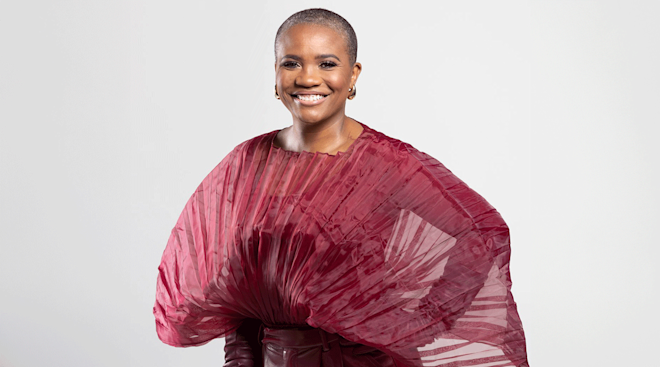
Five months postpartum, Elaine Welteroth’s phone—like many new parents’—is undoubtedly filled with thousands of photos and videos of her new baby boy. But outside of the sweet snaps of baby SantiGold playing, laughing and snuggled nose to nose with his mama there are 53 other baby photos that hold a special place in her heart.
Each of those 53 photos represents a life brought safely and joyfully into the world through birthFUND—a nonprofit the multi-hyphenate journalist, New York Times best-selling author and mother launched to help more families access midwifery care, doulas and birth centers. “The most rewarding experience has been the baby pictures,” Welteroth said in conversation with The Bump. For Welteroth, there’s nothing like seeing the faces of babies and mothers who might not be here without birthFUND. Her mission is simple but powerful: to ensure pregnant people don’t just survive childbirth—but experience it with dignity, support and joy.
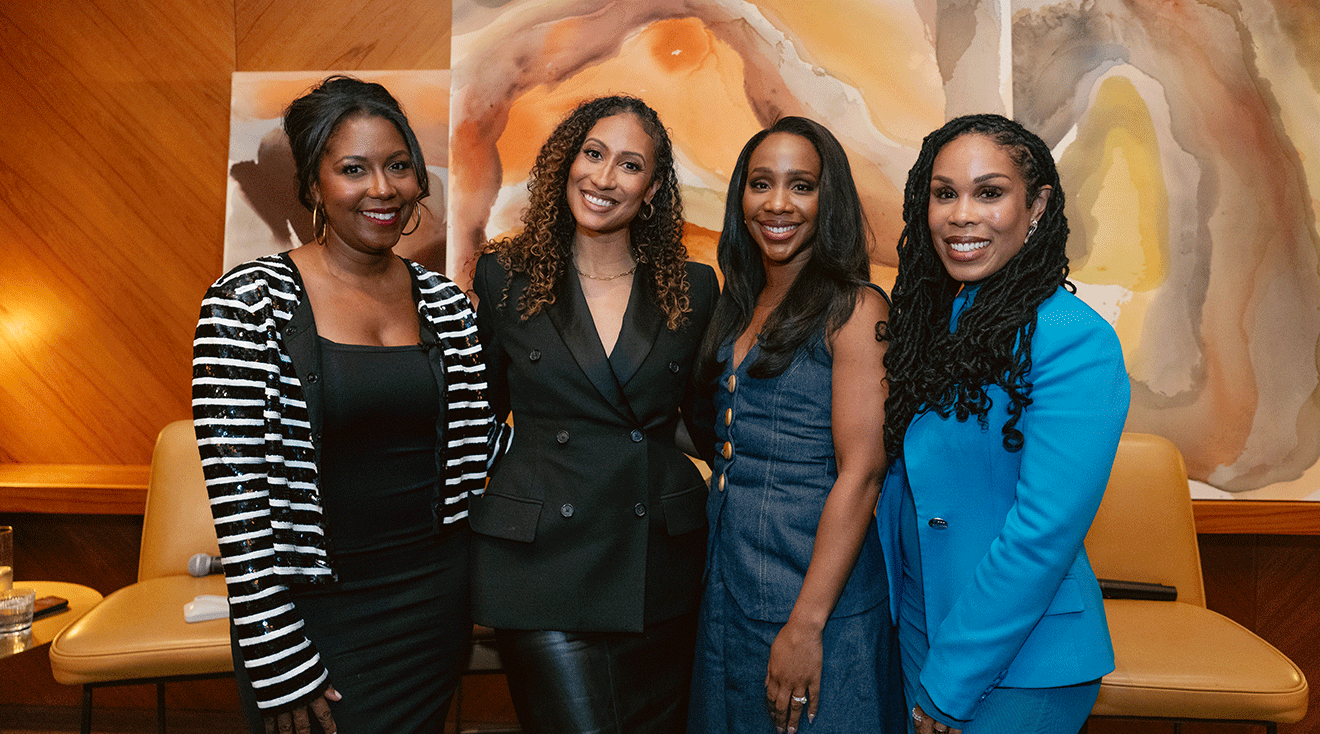
And that joy was palpable at Motherhood Unfiltered, a powerful event hosted by The Bump in partnership with birthFUND to celebrate the nonprofit’s one-year anniversary and The Bump’s continued commitment to Black maternal health. “I’ve been hustling with my head down nonstop to build this organization while building my family,” Welteroth said. “And I looked up tonight at a room filled with powerhouse women who showed up to support our mission—and I exhaled. Maybe for the first time in over a year. I could feel this baby I’ve been nurturing being held by the community it was built for.”

That baby—birthFUND—was born out of urgency. Not only do up to half of all women describe their childbirth as traumatic, but the US maternal death rate is almost ten times that of other wealthy nations, with Black women dying at three times the rate as their white counterparts. While midwives, doulas and other birthing options have been shown to reduce these risks, many can’t access this care due to cost or lack of availability.
“I was just so surprised that there was this huge gap in care,” Welteroth explained. “It seemed so obvious to me that we could fund this and do this and make a real change.” Her conviction crystallized after seeing a Tweet about April Valentine, a Black woman who died during childbirth just a few miles from her home. “That really got rid of any hesitation I had. I realized that no one else was doing something about this, and if I didn’t, more women would continue to die.”
One year later, birthFUND has funded birth teams and maternal care for 53 families, and the room at CHIEF in New York was packed with more than 100 supporters. From doctors and doulas like Rachel Villanueva, MD and Kameelah Phillips, MD, to industry leaders, cultural changemakers and prominent figures like Naturi Naughton, Kimberly Seals Allers and Eboni K. Williams, the room was stacked with nothing short of Black maternal health heroes. The expert panel, curated by The Bump’s Head of Marketing & Content, Jen Hayes Lee, featured Welteroth alongside CNN News anchor Abby Phillip and physician and NYT bestselling author Uché Blackstock, MD. What unfolded wasn’t just a discussion—it was a blueprint for a better way forward.

Phillip’s story echoed what so many Black women experience: a system that demands trust but doesn’t always offer it in return. “There’s a power dynamic in healthcare where patients feel like because they don’t have a medical degree, they’re not qualified to have an opinion about their own health,” she said.
“The truth is, we do have opinions. We do have views about how we want to be treated, and I think having more respect for women and patients will go a long way. Treating them like partners in their health and saying to women, ‘Here are really what your options are, and here are really what the risks are,’ and not just trying to scare them into interventions that maybe they don’t need or don’t want. I think a fear-based healthcare system is not working for us, and we need to empower people, not scare them.”
Phillip’s approach to empowerment was rooted in research. “I did a ton of research myself… and in the course of that research, it occurred to me that I wanted to make a set of different choices about where I gave birth,” she said. “I gave birth at home without pain medications or medical interventions…not as a badge of honor, but just because I genuinely believed that was the healthiest thing for my body.” Still, she emphasized that birth doesn’t have to look one way—but it should be a decision, not a default. “It’s okay to push back… and all of those things were things I did not know.”
But knowledge alone isn’t always enough. “I think that’s where birthFUND comes in,” Phillip said. “The financial piece of this is a huge part of the puzzle of access to better care and care alternatives for a wider range of women.” She added, “Maternal health can seem like this insurmountable problem, like ‘oh my God—what are we going to do?’ And the answer can be as simple as: give women the money that they need to pay for the birth that is safest for them. The end. It’s not that complicated.”

Funding joy, not just survival was a through-line all evening. “We don’t just as Black women need to work on surviving birth, but we actually get to have a joyous birth experience,” attorney and new mom Eboni K. Williams shared. “This is not all doom and gloom.” Williams, who gave birth with the support of a Black OB and a Black doula, described an experience where she was fully seen, heard and honored. “My room smelled like the Mandarin Oriental Spa. We reduced the fluorescent lighting…and I was able to feel as comfortable as humanly possible.”
For her, respect for her wishes wasn’t an afterthought; it was the foundation. “Remember, ultimately, this is about you and that baby. These people are there for you, not the other way around. They are in service of the safety and health of you and this baby,” Williams said. “Relish in that power. Recognize you are actually in a position of power, although it might not feel like it.”
And that message—that Black women deserve not just to be heard, but to be held—is what birthFUND is building toward. “Don’t settle,” Welteroth said. “There are options. Your birth experience can be different, and it can be beautiful…If you don’t feel safe or heard by your caregiver, go find another one. Even if you don’t feel comfortable doing it for yourself, do it for your baby. You and your baby deserve that.”
Learn how to contribute to birthFUND by starting a funding circle or donating at thebirthfund.com. For more conversations around maternal health, especially among Black women, visit The Bump’s Black Maternal Health Hub.
Navigate forward to interact with the calendar and select a date. Press the question mark key to get the keyboard shortcuts for changing dates.