







Jess King on 2 Under 2, Queer Parenting and Postpartum Identity Grief


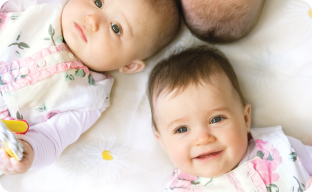
Peloton powerhouse Jess King has spent years inspiring millions to take up space and live authentically. But over the last few years, her most profound transformation has taken place off the bike. Alongside her wife Sophia Urista, King has embraced the wild, messy beauty of motherhood, navigating the chaos of raising two children, Afiza Maria (“Iza”), 2, and Lucien (“Luz”), 3—born just eight months apart.
Here, King pulls back the curtain on the raw realities of parenting “two under two,” the deeply personal path of queer family representation, the often-overlooked challenge of postpartum identity grief—and what’s next in her personal and professional journey.

The Bump: You’ve always been vocal about celebrating Pride all year round, not just in June. As a prominent LGBTQ+ public figure, what does it mean to you to show up authentically on the Peloton platform and beyond, especially during Pride Month?
Jess King: Pride isn’t a season for me. It’s a way of being. June is beautiful because it gives us a collective opportunity to celebrate, dance, come together, reflect and honor the people who fought for our right to exist openly—but my queerness doesn’t go back in the closet after Pride Month.
Showing up authentically on the Peloton platform means allowing people to see all of me…the coach, the artist, the wife, the mother, the queer woman, the human being who’s still learning and growing every day. Visibility is powerful because it creates possibility. Every time someone sees a version of themselves reflected in me, they receive permission to take up a little more space in their own life. That’s the gift. That’s the responsibility. And that’s something I carry with me every day of the year.

TB: Seeing a queer, two-mom family thrive publicly is incredibly impactful. What kind of feedback have you received from the LGBTQ+ community—especially aspiring or new queer parents—who see themselves reflected in your family?
JK: The messages that mean the most to me are the ones that simply say, “I feel seen.” I’ve heard from queer people who never thought marriage or parenthood was possible for them. From families who finally see themselves reflected somewhere. From people who tell me that when they show up to my classes, my social channels or our community, they feel like they belong.
That’s a huge part of why I’ve been building On the Record, my multimedia platform. The entire project is rooted in the belief that everyone’s story deserves a place to live, especially the stories that have historically been left out of the conversation.
I’ve had parents tell me that when their child came out, they weren’t worried because they had already seen examples of queer people thriving. They could envision a future filled with love, family, community and belonging… Representation helps replace that fear with possibility.

TB: Parenting spaces and medical experiences can still be deeply heteronormative. What have been some of the unique hurdles you and Sophia have faced while navigating the path to pregnancy and parenthood as a same-sex couple, and how did you advocate for yourselves?
JK: Throughout my pregnancy journey, there were moments when I felt like I was being viewed more as a statistic than as an individual woman. That’s why it was so important to build a care team that truly aligned with my values. I chose a midwife and doula who were both women of color, deeply introspective and highly informed about the impacts of misogyny and systemic racism within the birthing process.
What made the difference was that they trusted my body, my baby and my intuition. Their approach was rooted in wisdom, culture and individualized care. I felt safe, seen and supported in a way that often wasn’t reflected in the broader birthing culture I encountered.
And honestly, it’s not just medical spaces. Social media has been a fascinating lesson in boundaries. People can become incredibly comfortable asking questions they’d never ask a heterosexual couple: “Who’s the dad?” As if our family requires additional explanation in order to be understood or validated.
The truth is, our family is complete exactly as it is. Our children have two loving mothers (and maybe another dog in the future). Full stop.
TB: You carried your son, Luz, and Sophia carried your daughter, Iza. Having experienced both sides of the coin within your partnership—being the pregnant one and being the birthing partner—how did those alternating roles shape your empathy and connection to one another?
JK: Carrying Luz gave me an entirely new respect for what the human body is capable of. Watching Sophia carry Iza gave me an entirely new understanding of her depths and what she was capable of.
Being pregnant and supporting someone through pregnancy are completely different experiences. Having lived both roles created a much deeper empathy between us because we each understood different pieces of the puzzle.
When I was pregnant, I experienced the physical transformation firsthand. When Sophia was pregnant, I experienced the helplessness of wanting to fix discomforts that couldn’t be fixed. Both experiences taught me to surrender. Both experiences taught me reverence.
And honestly, watching Sophia become a mother in her own unique way expanded my understanding of love.
TB: You and Sophia experienced a whirlwind, welcoming Luz and Iza just eight months apart—meaning you went from a newborn straight into a second pregnancy and “two under two” life. When you were building your registry for round two, how did your strategy change? What were the non-negotiable essentials you needed, and what’s the one must-have item you tell every new mom they need?
JK: To be honest, by the second round we didn’t have much time to overthink anything. It was such a long journey for me to actually get pregnant, that we just had assumed we should start sooner for Sophia. We never thought we would end up being pregnant at the same time for a few months, which was wild. We welcomed our babies just a few months apart, so life moved fast.
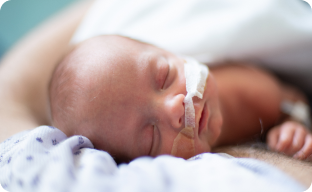
We tried to be intentional about what we brought into our home, asking ourselves if something was practical, multi-purpose and truly necessary. We bought some things secondhand too. I love to thrift, and babies grow out of things so quickly. One of the most essential and important baby items that we purchased was the MomCozy Nasal Aspirator. We wouldn’t have survived without it.
Would I recommend having babies months apart? I’m not sure. But it was (and still is) one of the most beautiful, chaotic and incredible experiences of our lives.

TB: On the bike, you’re a master of physical and mental endurance, but postpartum is its own beast. What was the most unexpected or challenging part of the “fourth trimester” that you feel people don’t talk about enough?
JK: I don’t think people talk enough about identity grief. Everyone prepares you for sleep deprivation. Everyone talks about physical recovery. What caught me off guard was how much of myself I had to rediscover…
I had to surrender to the reality of the season I was in instead of trying to rush back to the person I was before… The biggest lesson for me was this: You don’t just have a baby—you become someone new. And while that transformation is beautiful, it can also be disorienting. There’s a version of you that no longer exists, and a new version emerging. Learning how to meet her with compassion is some of the deepest work you’ll ever do…
There’s so much pressure to get back to your life, your routine, your body. But postpartum asks something very different of you. It asks you to slow down, listen and honor where you are.
What I wish more people understood is that new mothers need support. Real support. Not just encouragement in the comments section. You need community. You need people who can help care for you while you’re caring for a newborn. In so many ways, postpartum is meant to be a communal experience, but modern life often leaves women trying to navigate it alone.
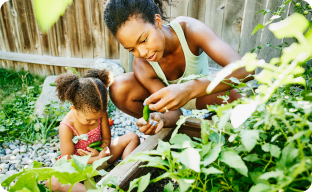
TB: At 2 and 3 years old, Iza and Luz are quite close in age. What’s the current reality of this toddler-and-preschooler dynamic? Can you share a recent “chaos” moment where you and Sophia just had to laugh so you wouldn’t cry?
JK: One of our favorite parenting hacks is making things worse before making them better. If Luz drops a spoon and starts crying, we’ll drop our spoons too. We get even more dramatic than the kids. It’s basically a giant “yes, and…” improv game. Somehow, by matching the energy and making it ridiculous, everyone starts laughing instead of melting down.

TB: You are a Peloton instructor, a DJ, a creator and a partner. How do you protect and fuel Jess King the individual when the weight of being “Mom” takes over?
JK: Being a mom is one of the most meaningful roles I have, but it’s not the only one.
One of the hardest parts of postpartum, especially during maternity leave, was being disconnected from the practices and communities that make me feel most like myself. I missed having dedicated time for creativity, movement, connection and expression.
Music helps. Movement helps. Time with my community helps. DJing, in particular, has become a powerful creative outlet because it reconnects me to a part of myself that existed long before I became a mother.
I’ve learned that caring for Jess isn’t separate from being a great mom—it’s part of it. The truth is, being Jess makes me a better mom. And being a mom has made me a fuller version of Jess.
TB: Sophia has spoken beautifully about labor and the strength of motherhood. How has seeing Sophia step into her power as a mother changed or deepened your love for her?
JK: Watching Sophia become a mother deepened my love for her in ways I couldn’t have anticipated. Motherhood revealed new dimensions of her strength, patience, tenderness and resilience. There are moments when I watch her with our children and feel overwhelmed with gratitude that they get to experience her love every day.
It has also reminded me that partnership isn’t about keeping score. It’s about witnessing each other evolve and falling in love with those new versions over and over again.
One of the biggest challenges of parenthood is that partner time can easily become planning and logistics time instead of romance. When you finally have a moment to connect, you’re often talking about schedules, responsibilities or what’s happening with the kids.
For Sophia and me, it’s important to keep a finger on the pulse of our relationship.
TB: Your Peloton community has watched your life completely transform over the last few years. How has becoming a mother shifted your coaching style, your playlists or the messages you share with your riders and runners?
JK: Motherhood has made me a more compassionate coach. My relationship with resilience has changed. I used to think resilience was about pushing through. Now I think resilience is also about softening, adapting, asking for help and beginning again.
I bring more humanity into my coaching now because motherhood stripped away any illusion of perfection. My Spotify has definitely gotten a bit more messy when it comes to playlisting classes, though, now that we have so many baby songs as our top plays!
TB: What are the core values you and Sophia are most intentional about instilling in Luz and Iza? How are you teaching them about love, identity and the beauty of their community from an early age?
JK: More than anything, we want our children to know that love is abundant. We’re teaching kindness, curiosity, empathy, self-expression and respect for difference. We want them to know that every person deserves dignity. We want them to celebrate who they are and honor who others are. We’re also raising our children to be bilingual, which has been an incredible journey for me in reconnecting with my Latin roots.
Parenting has also been a lesson in surrender. I was convinced I’d have a little girl who’d happily let me put bows in her hair every day. Not the case. Our kids are very clear about what they like, what they don’t like and who they are. And I’ve learned that part of my job is honoring that.
TB: What’s one piece of unfiltered, unsolicited advice you’d give to another queer couple about to embark on the wild journey of expanding their family?
JK: There’s no perfect way to do this—and that’s advice for any couple, really.
The road to pregnancy likely won’t look the way you expect it to, and that’s okay. Let’s normalize that. Let’s stop holding up one heteronormative path to family creation as the standard. And let’s take some of the burden off women by having more honest conversations about how partners can support themselves and each other through this process with greater awareness and accountability.
For queer people looking to expand their families, if you don’t know other queer families, please reach out. DM me. You’re not alone, and you’re not the first person to navigate this journey. Maybe you’re the first in your town, but there’s a huge community out there. I’m always happy to share resources, connections and the people who helped me along the way.
TB: You’ve gone from a professional dancer to a Peloton phenomenon, a mom of two and now a professional DJ. You constantly reinvent yourself. Looking down the road, what does the future of the Jess King brand look like? Are there any dream projects you and Sophia want to conquer next?
JK: If there’s one thing I’ve learned, it’s that reinvention isn’t about becoming someone new, it’s about uncovering more of who you’ve always been… The throughline of everything I do is connection. Whether it’s on a bike, behind a DJ booth, on a stage or around our family dinner table, my mission remains the same: help people remember who they are and give them permission to live fully in that truth.
Target Baby Registry
Free $100+ Value Welcome KitFree $100+ Value Welcome Kit
15% Completion Discount15% Completion Discount
Free 1-Year ReturnsFree 1-Year Returns
20+ Exclusive 20% Off
Deals For Mom & Baby20+ Exclusive 20% Off Deals For Mom & Baby1:1 Concierge With
Baby Gear Specialists1:1 Concierge With Baby Gear Specialists

*Subject to availability and Retailer's terms.
We earn commissions from these links.


