









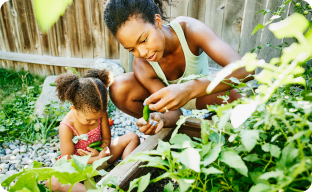
How My Daughter’s Boundary Setting Helped to Heal My Inner Child


Since becoming a mom, I’ve often found myself deeply intrigued with my daughter’s boldness—the unapologetic way she expresses her emotions and communicates her boundaries. Children are often described as innocent and unfiltered, but what I see in her is something even greater: a pure, unshaken confidence in her right to exist fully as herself. Watching her navigate the world reminds me daily that there’s wisdom in youth—and, sometimes, as parents, we’re the ones who need to slow down and listen.
I’ll never forget the first time she set a clear boundary with me. We were hanging out at home, curled up on the couch watching our favorite TV program. Without much thought, I shifted closer, placing my arm gently around her waist. It was meant as a small gesture of affection—one I had shown countless times before. But, in that instant, she turned her head toward me, and said in a soft but firm voice, “Hey, Mom. Stop touching me.”
Her words landed like a jolt. My initial reaction wasn’t pride or admiration; rather, it was one of discomfort. My chest tightened, my jaw clenched and I felt a wave of offense. (How dare she? I’m her mother. She’s a child.) Part of me felt entitled to her space and her body, because I was the parent and she was “just” the child. I complied, but, inside, I felt angry, disrespected and strangely small.
It was then that my commitment to gentle parenting was truly tested. It’s easy to embrace philosophies when they stay theoretical. I could post about respecting my child’s boundaries, I could agree with articles and parenting books—but, in that living, breathing moment when my daughter looked me in the eyes and said “no,” the practice felt excruciating.
As I sat in that discomfort, I realized it wasn’t my wiser adult self who was offended. It was my inner child—the little girl inside me who never had the chance to say “no,” who had learned early on that her feelings and boundaries weren’t valid and that respect was a one-way street pointing toward adults. My daughter’s boldness was colliding with my own buried pain.
Something shifted in me as I recognized that. I decided to lean into the moment rather than resist it. The next time I wanted to hug her, I paused and asked, “Can I touch you?” When she looked at me and said “yes,” I hugged her tighter than before. A smile spread across my face, not just because she had given me permission, but because I felt like I had just given myself permission too. Permission to feel, to ask and to matter.
Something cracked open in me. It sent me on a path of reevaluating how I’d been taught to treat emotions and boundaries. Growing up, feeling too many emotions was seen as a weakness or inconvenience. Boundaries were equated with disrespect. Phrases like “children should be seen and not heard,” “don’t talk back” and “never question adults” were deeply ingrained in my upbringing. In many ways, those messages silenced me before I even found my voice.
Parenting my daughter has forced me to confront those old wounds. I began to see emotions not as messy obstacles, but as signals and powerful tools that guide us through the world. Ignoring them doesn’t make them disappear; rather, it forces them to erupt in other unhealthy ways. Suppressed feelings can turn into anxiety, depression, disconnection or even physical illness. Honoring our feelings, on the other hand, fosters emotional intelligence, resilience and authenticity.
Boundaries also became reframed in my eyes. My daughter telling me not to touch her wasn’t an act of rebellion or rudeness. It was her way of saying, “This is what I need right now.” She was communicating an unmet need—something I’d never been allowed to do as a child. At first, I reacted with physical tension: a racing heart, flushed cheeks and tight fists. Each “no” felt like a challenge. But as I practiced responding with empathy, compassion and patience, those intense reactions softened. I found myself less reactive and less angry.
Over time, I realized something beautiful was happening. In helping her feel safe to assert herself, I was healing the silenced little girl inside me. Every time she said “no” and I honored it, I felt a part of me grow stronger. Parenting had become a two-way exchange; as I guided her emotional growth, she unknowingly guided mine.
Of course, this kind of evolved parenting isn’t easy. It’s far simpler to default to old scripts of control and authority, especially on hard days. There are still moments when my triggers flare and when her independence rubs against my ingrained need for order or compliance. The difference is that now I recognize those triggers as invitations to pause, reflect and choose differently. I won’t pretend it’s always graceful. Sometimes I raise my voice and wish I hadn’t. Sometimes I feel frustrated by her persistence. Even then, I try to circle back, apologize and repair. I’ve learned that parenting isn’t about being perfect; it’s about modeling growth, accountability and humanity.
Through my daughter, I’m learning to sit with feelings of discomfort instead of running from them. I’m learning that boundaries don’t push love away—they make love safer and stronger. I’m learning that emotions are not enemies but companions. Most importantly, I’m learning that the little girl inside me still matters, and that it’s never too late to give her what she once needed.
The journey to healing my inner child has been immensely rewarding. I’ve found that making space for my child’s feelings, even when inconvenient, helps both of us. In nurturing her voice, I’ve finally begun to hear my own. And that is the greatest gift motherhood has given me—the chance to grow alongside my child, not just as her mother, but as a human being still learning how to be whole.
About the author: Nica Lovely is a lifestyle and mental health freelance writer with a focus on parenting and marriage. She shares her own life experiences with the goal of encouraging others to heal their own personal traumas. Before she started writing, Nica earned her social work degrees at Michigan State University and Western Michigan University. She has worked as a therapist, and found fulfillment teaching and encouraging people to take control of their own mental health. Nica lives in Kalamazoo, Michigan, with her husband, daughter and bonus son. They enjoy thrifting and finding great food.
Target Baby Registry
Free $100+ Value Welcome KitFree $100+ Value Welcome Kit
15% Completion Discount15% Completion Discount
Free 1-Year ReturnsFree 1-Year Returns
20+ Exclusive 20% Off
Deals For Mom & Baby20+ Exclusive 20% Off Deals For Mom & Baby1:1 Concierge With
Baby Gear Specialists1:1 Concierge With Baby Gear Specialists

*Subject to availability and Retailer's terms.
We earn commissions from these links.


