






























5 Worst Things About Pumping—and How to Deal


Whether you’re pumping and breastfeeding or exclusively pumping, you’re committed to making milk for your little one. As wonderful as that is, the realities of pumping breast milk can, well, suck. From having to juggle work meetings while pumping to feeling like your nipples are being pulled out, it can be a huge pain (literally).
“After my first baby, I went back to work and pumping didn’t go well,” shares Allison Tolman, LPN, IBCLC, a breast pump expert who helps new moms navigate their way through breastfeeding and pumping as they return to work. “I quit my job and never went back to work—I was a school nurse.” She says she initially thought she had low milk supply, but that it was actually low pumping output, which is a very common issue. This inspired Tolman, now a mom of three, to help other moms pump quickly and efficiently.
While pumping can be less than pleasant—ahem, to put it mildly—there are also plenty of ways to make pumping easier so you can produce milk smoothly and turn it into a more positive experience. Check out some common problems along with expert advice, ahead.
Let’s be real: Pumping can make you feel like you’re being yanked on the nipples. Repeatedly. “You do not want your nipple to look like a miniature Vienna sausage or miniature hot dog when you’re done pumping,” says Dianna Dixon, DPA, IBCLC, a pumping expert, lactation consultant and postpartum doula. Like with breastfeeding, you can also experience clogged ducts and even mastitis.
Research says pumping moms commonly experience pain. Experts say that choosing the right flange size can make a big difference. Signs that you may be choosing the wrong flange size include, according to Dixon:
- Your areola is going into the flange
- Your nipple is swelling and may be in pain
- Your nipple is getting stuck and doesn’t freely move in the flange
- Your nipple is turning purple, blue or white
- Your nipples are sensitive after pumping
- You have sharp, shooting pain after pumping
Dixon recommends getting measured for a properly sized flange by a lactation consultant, adding that the sizes that came in the pump box may not always work. “Please remember that flange sizing is an art and not a science,” adds Dixon—making it even more important to work with a professional.
You pump and pump…only to make very little milk. “I pumped for 30 minutes and got an ounce after work, when normally I’d get about 3,” shares The Bump community member dancer7889. “I know I’m not empty because I can hand-express some milk.”
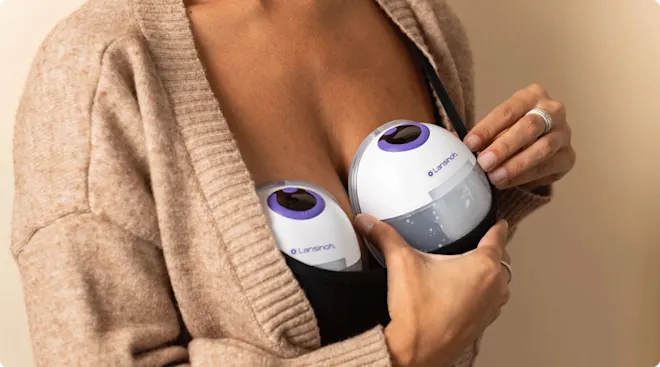
Again, many moms think this is a milk supply issue, when it’s actually low pumping output, explains Tolman. “This is different than low milk supply, and they’re often confused with each other,” she says. The solution is learning how to pump efficiently, and there’s a lot that goes into that: Tolman suggests working with a lactation consultant who’s knowledgeable about pumping to work out your individual issues. Dixon adds that the right breast pump—she suggests a highly customizable primary pump, rather than a portable one—and using the right flange size can make a huge difference when it comes to pumping output.
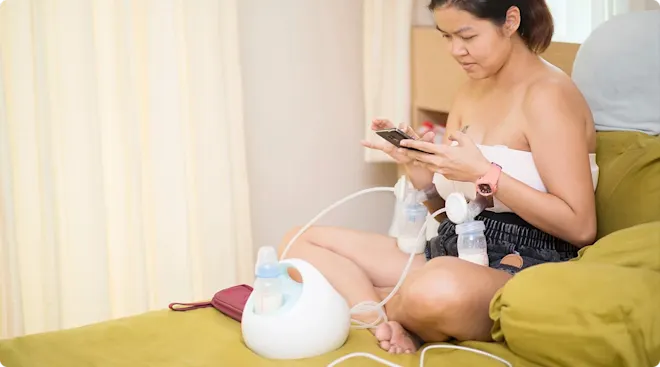
Pumping can feel like a full-time job on its own. (It’s not like you have parenting to do or anything!) And if you’re returning to work, it can be especially tricky to make time for it between meetings and work projects. Plus, I personally know many women who’ve had to pump in less-than-ideal conditions at work—like ”lactation rooms” that were really glorified supply closets. There’s nothing like the stench of cleaning chemicals to get your milk flowing.
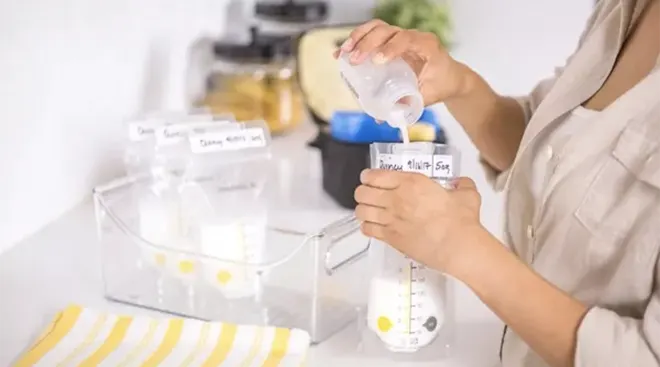
The general recommendation is to pump every three hours for 30 minutes until your supply is regulated, which can take up to 12 weeks, explains Dixon. “Pumping consistently around the same time allows you to see if there are any changes to your supply with each pump,” she says. Of course, this can be super challenging when you’re pumping at work. Be sure to speak with your employer about all of the logistics ahead of time, learn about safe breast milk storage and know your rights—chances are, you’re covered by the PUMP Act, which means your employer’s required to give you time to pump at work.
Every day at my new job was different, and every day meant a new person (or two or three or four) with whom I had to coordinate a pumping break and location. I found the nursing nook, lactation room or mother's room at three hospitals and four training centers, and used about six different people's private offices. I learned how to pump in my car, which I hate. I’ve also given up at least 12 to 15 percent of my salary to accommodate the time needed to pump on a daily basis. And with all of that, I still feel a little sad to be stopping.
Waking up to pump when baby’s still sleeping in the middle of the night is exhausting. But many moms have to do this in early days to keep their supply up and/or prevent engorgement. “If she does anything more than a four-hour stretch, I have to pump or else I can’t sleep because I’m in pain,” says The Bump community member Bredins wife. “But me getting out of bed usually wakes her up anyway, so I end up just nursing her.”
Dropping the middle-of-the-night pump can cause feelings of guilt. “I decided at 6 months, I’d stop getting up to pump in the middle of the night,” says The Bump community member mojito14. “It’s nice to get a decent night’s sleep now (Harrison sleeps from 8-8), although I’m very, very full in the morning and Harrison gets a nice feast first thing. I still feel guilty for some reason. Like I should be continuing with the stash.”
I mean, who has the time for this? Obviously, there’s no straightforward solution here: It’s important to sanitize your pumping supplies, according to the US Centers for Disease Control and Prevention (CDC). But it sure isn’t fun.
Sometimes, pumping is terrible in unique ways: “One time at work I did my first pump of the day, I went to wash my pump parts, and I saw a dead beetle in the little valve,” says Tolman. “So I had to dump out all of the milk, and it was disgusting and terrible. I was like, ‘I hate pumping.’”
On that note, not every day will be a “dead bug in your pump part” day. With time, practice and perhaps professional help, you’ll get this pumping thing down. And when it’s time to quit, you’ll be proud of yourself for having made it through. “Tomorrow my daughter turns 13 months, and I’ll also be pumping at work for the last time,” shares The Bump community member Sep5Bride. “She’s still nursing in the morning and at night, but stopping pumping still feels like a big milestone for me. I was thinking back over the past year of pumping, and felt the need to give myself a little pat on the back for all the effort that went into keeping it up!”
Please note: The Bump and the materials and information it contains are not intended to, and do not constitute, medical or other health advice or diagnosis and should not be used as such. You should always consult with a qualified physician or health professional about your specific circumstances.
Plus, more from The Bump:
Dianna Dixon, DPA, IBCLC, is a pumping expert, lactation consultant and postpartum doula. She’s the founder of Pump with Purpose, a global lactation and postpartum private practice based in Manassas, Virginia.
Allison Tolman, LPN, IBCLC, is a breast pump expert, nurse, lactation consultant and birth doula who’s passionate about helping new moms navigate their way through breastfeeding and pumping while returning to work. She’s the creator of the “Boobie Barometer,” through which she’s tested over 100 breast pumps and counting. She’s also a mom of three.
Maternal & Child Nutrition, Positive and Negative Experiences of Breast Pumping During the First 6 Months, August 2014
US Breastfeeding Committee, The PUMP Act Explained
US Centers for Disease Control and Prevention, How to Keep Your Breast Pump Kit Clean
Real-parent perspectives:
- Bredins wife, The Bump community member
- dancer7889, The Bump community member
- mojito14, The Bump community member
- Sep5Bride, The Bump community member
Learn how we ensure the accuracy of our content through our editorial and medical review process.
Target Baby Registry
Free $100+ Value Welcome KitFree $100+ Value Welcome Kit
15% Completion Discount15% Completion Discount
Free 1-Year ReturnsFree 1-Year Returns
20+ Exclusive 20% Off
Deals For Mom & Baby20+ Exclusive 20% Off Deals For Mom & Baby1:1 Concierge With
Baby Gear Specialists1:1 Concierge With Baby Gear Specialists

*Subject to availability and Retailer's terms.
We earn commissions from these links.