


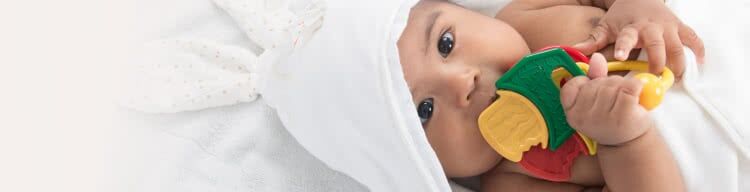







Why Baby Hates Tummy Time (and What You Can Do to Help)


Babies spend a good chunk of their first few months sleeping on their back, but it’s crucial for them to also experience being on their stomach during the day. “Tummy time,” as it’s called, helps babies build the upper body strength they’ll need to achieve the big milestones that happen within their first year of life, such as rolling over, sitting and crawling. But, despite parents’ best efforts, sometimes babies just don’t enjoy tummy time. If your little one isn’t a fan, don’t despair—keep reading to learn why your little one may not like it and what to do when baby hates tummy time.
Tummy time is exactly what it sounds like—time baby spends on their stomach while awake (and under the watchful eye of a parent or caregiver). Think of it as a mini workout for baby: Being on their belly helps baby strengthen their head, neck and shoulder muscles, which sets them up to accomplish some major milestones within their first year, such as rolling over, sitting up, crawling and eventually walking, says pediatrician Whitney Casares, MD, author of The New Baby Blueprint: Winning at Parenting Without Losing Yourself and medical consultant for CeraVe.
Tummy time also helps decrease the risk of positional plagiocephaly (also known as flat head syndrome), which happens when baby’s head flattens in some areas from lying on their back. “Though we know placing babies flat on their backs while sleeping is safest for them, that means they spend a lot of time with direct pressure on the back and sides of their heads,” Casares explains. “Tummy time gives them opportunities to experience a different position.” (However, know that if baby does fall asleep on their tummy during tummy time, they’ll need to be placed on their backs in a safe space to sleep!)
Parents are encouraged to start tummy time early—in fact, babies born full-term with no health issues can begin tummy time as soon as their first day home. At first, sessions can be short and sweet—two to three sessions a day for three to five minutes at a time, according to the American Academy of Pediatrics (AAP). As baby gets older and stronger, you can work up to 15 to 30 minutes of tummy time a day. Just don’t be surprised if baby resists! Lots of infants protest at being on their bellies, at least initially.
While tummy time is undoubtedly important, the reality is some little ones just don’t like it. So why do babies hate tummy time? One possible reason is that they’re just not used to it. “The recommended sleep position is on their back and they’re primarily on their backside in their first few months, so they often will protest being on their belly,” says Denise Scott, MD, a pediatrician with JustAnswer and a pediatric endocrinologist at Integris Health in Oklahoma City.
Baby may also hate tummy time because they can’t yet push themselves up high enough to turn their heads and look around, Casares explains. And who can blame them? Being stuck face-down, unable to move much, would likely bother you too.
Casares also cautions parents against doing tummy time soon after baby eats, as they might feel uncomfortable. If you do, “Burping baby right before tummy time is a good idea,” she says. “Baby might still spit up during your tummy time session, but it will be more enjoyable.”
Hearing your little one cry every time they’re placed on their belly is hard—but it doesn’t mean you should give up on tummy time. Take heart: There are several things you can do to make the experience more enjoyable for baby.
-Be smart about scheduling tummy time. To help set baby up for success, aim to do tummy time when your little one is in a good mood. After all, If they’re already tired, irritable or hungry, baby is much more likely to hate tummy time. Try doing it after a nap, so they’re well rested and ready for some play time.
-Place baby on your chest. If baby hates tummy time on the ground, try mixing it up by placing baby on your chest—it’s still a great way to help build baby’s strength, plus your little one can enjoy looking at your face, hearing your voice and snuggling close to you. “Hold baby facing you on your chest a few times a day,” Casares says. “[This] allows you to practice similar strengthening exercises in a cozy environment.” An alternative position, Scott suggests, is to lay baby across your lap while you rub their back or gently sway your legs back and forth.
-Give baby something to do. Toys and other safe objects can go a long way in helping keep baby engaged during tummy time. Some tried-and-true favorites, according to the experts we chatted with: a baby-safe mirror, a black-and-white picture board, a musical toy or a colorful play mat.
-Join baby on the floor. If you’re wondering how to coax your little one to stay on their belly when baby hates tummy time, an easy solution is to join in. Not only does parent participation make tummy time more fun, but it also helps baby bond with you. “Lie on your tummy face-to-face with them while singing and talking to them to make it more enjoyable,” Scott suggests. You can even enlist the help of an older sibling!
-Help them lift their head. One reason baby hates tummy time is because they can’t yet lift their head to see what’s in front of them. To ease their frustration, Scott recommends placing baby on an incline or rolling a small towel or blanket under their chest so their head is lifted and they can better see what’s in front of them. “This will allow them to not be completely face-down,” she explains.
-Use a yoga or exercise ball. Another way to make tummy time more fun is to place baby belly-down on a yoga or exercise ball, Scott says—just make sure you’re holding onto baby at all times. While you’re seated on the floor, place baby on top of the ball in front of you and slowly roll them back and forth while maintaining a supportive hold. The gentle motion can quickly calm a cranky baby.
While the goal is to work up to longer periods of tummy time, remind yourself that it’s okay to start slow. “Make sure baby is well rested, fed and burped. Work tummy time into your daily routine, such as before or after diaper changes,” Scott says. “The more you do this, the stronger baby will become, and the more they will enjoy playing on their tummy.”
Please note: The Bump and the materials and information it contains are not intended to, and do not constitute, medical or other health advice or diagnosis and should not be used as such. You should always consult with a qualified physician or health professional about your specific circumstances.
Plus, more from The Bump:
Whitney Casares, MD, MPH, FAAP, is a pediatrician based in Portland, Oregon. She is also the author of The New Baby Blueprint: Winning at Parenting Without Losing Yourself(https://www.amazon.com/New-Baby-Blueprint-Caring-Little/dp/1610023757?&linkCode=ll1&tag=tb-baby-hates-tummy-time-20&linkId=46f32ca5894812f24c352cea84690656&language=en_US&ref=asli_ss_tl) and serves as a medical consultant for CeraVe. Casares obtained her medical degree from the University of Vermont and completed her pediatrics residency at Stanford University. She also holds a Master of Public Health in maternal and child health from the University of California, Berkeley.
Denise Scott, MD, is a pediatrician with JustAnswer and a pediatric endocrinologist based in Oklahoma with over 30 years of experience. Certified in culinary medicine, Scott also runs the blog Feed Future Health and is the author of Feed Your Child's Future Health: Prevent Disease before it Starts. She received her medical degree from the University of Texas Medical Branch and completed her residency at the University of Oklahoma Health Sciences Center, with a fellowship at the National Institutes of Health.
American Academy of Pediatrics, Back to Sleep, Tummy to Play, September 2023
Learn how we ensure the accuracy of our content through our editorial and medical review process.
Target Baby Registry
Free $100+ Value Welcome KitFree $100+ Value Welcome Kit
15% Completion Discount15% Completion Discount
Free 1-Year ReturnsFree 1-Year Returns
20+ Exclusive 20% Off
Deals For Mom & Baby20+ Exclusive 20% Off Deals For Mom & Baby1:1 Concierge With
Baby Gear Specialists1:1 Concierge With Baby Gear Specialists

*Subject to availability and Retailer's terms.
We earn commissions from these links.


