








Baby Milestones: A Comprehensive Guide to Baby's Development


Watching baby grow and develop new skills is incredibly exciting—and it happens fast. Their first year is packed with blink-and-you-missed-it baby milestones, like cooing, sitting up and cruising on furniture. I’ll never forget my son’s first baby laugh when he was 4 months old. He sounded like a little robot because he was still mastering his vocal cords, but it was so sweet to hear!
Then again, tracking infant milestones can also be nerve-wracking. If baby isn’t quite on track, it’s easy to spiral into anxiety. When my son took a while to learn to roll over belly-to-back, I wasn’t just nervous about the milestone—I was worried about leaving him on his belly while sleeping. And let me tell you, that was exhausting. I was relieved when he started rolling both ways around 7 or 8 months, and being slightly “off-schedule” didn’t affect the rest of his development.
David B. Levine, MD, FAAP, a pediatrician at Atlantic Health, reminds us that baby milestones aren’t absolutes. “Milestones are ranges and need to be looked at in the context of the whole child, and not in isolation,” he says.
That said, it’s important to be aware of motor; language and speech; social and emotional; and cognitive baby milestones, so you can keep practicing skills with baby—and flag anything of concern with your pediatrician. Early intervention can often do wonders, so it’s best to speak up. Ahead, check out our complete list of infant milestones during the first 12 months, plus when to consult your doctor on baby’s development.
- Types of milestones: Most baby milestones fall into the categories of motor (gross or fine); language and speech; social and emotional; and cognitive.
- Motor milestones for babies include holding up their head, rolling over, sitting up and pulling up to stand.
- Baby speech milestones include cooing, making babbling sounds and saying “mama” or “dada.”
- Social and emotional infant milestones include smiling, laughing and making a variety of facial expressions.
- Cognitive baby milestones include putting things in their mouth to explore them, reaching to grab toys and banging two things together.
- Contact your pediatrician: If baby doesn’t smile and has limited eye contact by 6 months old, doesn’t sit unassisted by 9 months, doesn’t babble or make gestures by one year, doesn’t respond to their name by one year, or doesn’t pull to stand by one year.
Baby milestones are skills babies exhibit that show they’re growing and developing as expected. They include gross and fine motor skills, language development, social and emotional learning, cognitive achievements and more. Your pediatrician will track infant milestones at baby’s well-check visits by doing a physical exam and interacting with baby to see how they move, play and make sounds. If baby hasn’t reached certain milestones by the expected age, your doctor may suggest screenings to check for developmental delays. They may also recommend early intervention, which can include physical, occupational and speech therapy. “Our firstborn had a speech delay—he was born with hearing loss—and early intervention was fabulous,” says The Bump community member EricandKaren. “Best thing that could’ve happened to us! He decided to start talking one day and hasn’t ever stopped.”
Leslie Treece, MD, FAAP, a pediatrician in Tennessee, says doctors typically use a tool called the Ages and Stages Questionnaire (ASQ) to track baby milestones. It’s a series of questions parents answer at the start of each well visit, after which they get a score that translates into normal range, borderline or delayed. “Not every baby does every skill exactly at the same time, but this is a good starting point and way to see if there are any red flags,” Treece says.

Motor skills are how baby moves physically. Gross motor skills include large muscles in the body, including the arms and legs. Fine motor skills involve coordinating small muscles, such as those in the hands and feet.
Baby milestones that use gross motor skills include, according to the Centers for Disease Control and Prevention (CDC):
- Holding up the head during tummy time
- Moving the arms and legs
- Holding the head steady without support when being held
- Pushing up onto elbows and forearms when on tummy
- Rolling from belly to back
- Rolling from back to belly
- Pushing up with straight arms from tummy
- Leaning on hands to support themselves when sitting
- Getting into a sitting position without support
- Sitting up without support
- Pulling to stand
- Walking while holding on to furniture, aka cruising (it’s normal not to start walking without support until later—anytime up until 18 months old)
Keep in mind that the CDC and the American Academy of Pediatrics (AAP) updated their baby developmental milestones in 2022, which included the removal of crawling as a milestone. While crawling is still a beneficial part of development, the reasoning was that not all babies do it.
My daughter is almost 7 months old. So far, she's sitting by herself unsupported all the time without falling over. She's able to roll from front to back, but she doesn't do it often because she hates tummy time. She’s also started to try to scoot when sitting on her bum.
Baby milestones that use fine motor skills include:
- Opening the hands briefly
- Holding a toy when you put it in baby’s hand
- Using their arm to swing at toys
- Bringing hands to their mouth
- Moving things from one hand to another
- Using fingers to “rake” food toward themselves
- Drinking from a cup without a lid, as you hold it
- Picking things up between their thumb and pointer finger, like small bits of food (aka pincer grasp)
Baby language and speech milestones include:
- Making sounds other than crying
- Reacting to loud sounds
- Cooing
- Making sounds back when you talk to them
- Turning head to hear the sound of your voice
- Taking turns making sounds with you
- Blowing “raspberries”
- Making squealing noises
- Making babbling sounds like “mamamama” and “babababa”
- Lifting their arms to show they want to be picked up
- Waving “bye-bye”
- Calling a parent “mama” or “dada”, or another special name
- Understanding “no” (briefly pausing or stopping when you say it)
My baby is almost 8 months old. He can say ‘dada’ and ‘dog dog’ in relation to their meaning. He can also sign ‘milk.’
Milestones for babies that are considered social and emotional include:
- Calming down when spoken to or picked up
- Looking at your face
- Seeming happy to see you
- Smiling when you talk to or smile at them
- Smiling on their own to get your attention
- Chuckling when you try to make them laugh
- Looking at you, moving or making sounds to get or keep your attention
- Recognizing familiar people
- Enjoying looking at themselves in the mirror
- Laughing
- Being shy, clingy or fearful around strangers
- Showing different facial expressions, like happy, sad, angry and surprised
- Looking when you call their name
- Reacting when you leave (looking, reaching for you or crying), aka separation anxiety
- Smiling or laughing when you play peek-a-boo
- Playing games with you, like pat-a-cake
Cognitive baby milestones include:
- Watching you as you move
- Looking at a toy for several seconds
- If hungry, opening their mouth when they see the breast or bottle
- Looking at their hands with interest
- Putting things in their mouth to explore them
- Reaching to grab toys they want
- Closing their lips to show they don’t want more food
- Looking for objects when they’re dropped out of sight (aka developing object permanence)
- Banging two things together
- Putting something in a container, like a block in a cup
- Looking for things they see you hide, like a toy under a blanket
While it’s a good idea to go to your pediatrician with any questions or concerns you have on baby milestones, there are a few red flags you should definitely bring up. According to Amir Miodovnik, MD, MPH, a developmental-behavioral pediatrician who helps parents navigate the challenges of raising children with ADHD, autism and learning differences, they include:
- No smiles and/or limited eye contact by 6 months old
- Not sitting independently by 9 months old
- Not babbling by one year old
- Not making gestures by one year old
- Not responding to their name by one year old
- Not pulling to stand by one year old
Additionally, if baby seems to have lost any skills they’ve gained before—whether it’s motor skills, language or gestures—it warrants a conversation. “In the first year, the key milestones aren’t just about walking or talking; they focus on forming connections,” Miodovnik says. “Babies should actively seek out faces, enjoy interactions and express what interests them. The consistent absence of social behaviors is an important red flag.”
My daughter didn't sit up unassisted until 8 months, got herself to a sitting position from lying down at 10 months and started crawling at 10.5 months. She's only pulling up to her knees and refuses to stand, so we're going to be late in walking as well! She’s happy and playful, and meeting milestones still within the normal range. So I'm just going to chill out and enjoy—she'll get there in her own time!
Frequently Asked Questions
What’s the first milestone for baby?
One of the major physical newborn milestones is baby holding their head up and looking around, says Treece. You can help them strengthen their head control—which prepares them for other baby milestones, like rolling over, sitting up and, eventually, walking—by offering plenty of tummy time. Another important newborn milestone is smiling back at a parent or caregiver, which usually happens between 6 and 8 weeks, says Levine.
Is crawling a milestone for babies?
Crawling was a milestone until 2022, when the CDC and AAP removed it from their list of baby developmental milestones. Many experts say it’s still a beneficial part of development, although some babies skip it entirely.
Is it normal for baby to skip crawling?
“It’s normal for some babies to skip crawling, although most occupational therapists will tell you that crawling helps them to extinguish their newborn reflexes,” says Treece. “So it’s ideal if they do crawl, but not all of them will. Some just go straight from pulling up and standing to walking.”
What is the earliest a baby can sit up unassisted?
Baby can generally sit up unassisted by 6 to 7 months. “Most babies at 6 months can sit for a few seconds in a ‘tripod’ position—legs out and leaning on hands,” says Treece. If baby isn’t sitting independently by 9 months, check in with your pediatrician.
How does the pediatrician track baby’s milestones?
At baby’s well visits, your pediatrician will perform a physical exam and interact with baby to test how they move, play and make sounds. They also use a tool called the Ages and Stages Questionnaire (ASQ), which parents fill out to give the doctor an idea of baby’s development. If baby hasn’t reached certain milestones, your pediatrician may recommend more screenings and/or an early intervention program.
Are there early autism signs?
Miodovnik says to look out for the following signs when it comes to potential autism:
- By 6 months: No smiles, no warm expressions or limited eye contact
- By 9 months: No back-and-forth sounds, smiles or facial expressions
- By one year: No pointing, gesturing, babbling or responding to their name
“If these shared social moments are lacking, it's important to discuss your concerns with your pediatrician,” Miodovnik says. “If the pediatrician suggests ‘watching and waiting,’ but you still have a persistent worry, you can request a developmental screening. As a developmental-behavioral pediatrician, I always trust a parent's instinct regarding their child's development.”
Keep in mind that while some kids show signs of autism as babies, in others it doesn’t show up until 2 years old or later. Research shows that by age 2, a diagnosis can be considered reliable. The AAP recommends that all children be screened for autism at 18 months old and again at 2 years old.
Are milestones different for premature babies?
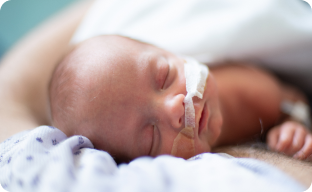
Yes, milestones are different for premature babies because they’re measured based on their adjusted age (calculated from their original due date), not their chronological age, per the AAP. By 2 years old, most toddlers who were born premature will catch up to the typical milestone range, but it’s always a good idea to ask your pediatrician whether your child might benefit from extra support.
Parents report that preemie milestones can be all over the place. “Our daughter has been somewhere in-between her actual and adjusted [ages] since we brought her home,” says The Bump community member mommamorris. “Now, we're in physical therapy, and she's doing a few things with her actual, and is caught up with her adjusted.”
Every baby’s different when it comes to infant milestones, and it’s worthwhile to remember that there’s a range of “normal.” Still, it’s important to keep in mind what the major baby milestones are, and when to reach out to your pediatrician for advice. “Many parents get a little anxious when they fill out the questionnaire for their baby’s checkup because they might not be doing all of the things asked yet,” says Treece. “But the biggest misunderstanding [about milestones] is the lack of recognition that every baby’s unique and they don’t all follow an exact recipe.”
Please note: The Bump and the materials and information it contains are not intended to, and do not constitute, medical or other health advice or diagnosis and should not be used as such. You should always consult with a qualified physician or health professional about your specific circumstances.
Plus, more from The Bump:
David B. Levine, MD, FAAP, is a pediatrician at Atlantic Health. He earned his medical degree from the New York University School of Medicine.
Amir Miodovnik, MD, MPH, is a developmental-behavioral pediatrician who helps parents navigate the challenges of raising children with ADHD, autism and learning differences. He earned his medical degree from Ohio State University College of Medicine.
Leslie Treece, MD, FAAP, is a pediatrician in Tennessee. She earned her medical degree from the University of South Alabama College of Medicine.
Cleveland Clinic, Baby Developmental Milestones (Infant Milestones), April 2025
Centers for Disease Control and Prevention, CDC’s Developmental Milestones, June 2025
American Academy of Pediatrics, Evidence-Informed Milestones for Developmental Surveillance Tools, February 2022
Autism Speaks, Signs of Autism
JAMA Psychiatry, Autism from 2 to 9 Years of Age, June 2006
American Academy of Pediatrics, Autism, October 2025
Healthy Children (American Academy of Pediatrics), Your Preemie’s Growth & Developmental Milestones, September 2024
Real-parent perspectives:
- Dec2018mom, The Bump community member
- EricandKaren, The Bump community member
- mommyjhh, The Bump community member
- Mrs.N_2005, The Bump community member
Learn how we ensure the accuracy of our content through our editorial and medical review process.
Target Baby Registry
Free $100+ Value Welcome KitFree $100+ Value Welcome Kit
15% Completion Discount15% Completion Discount
Free 1-Year ReturnsFree 1-Year Returns
20+ Exclusive 20% Off
Deals For Mom & Baby20+ Exclusive 20% Off Deals For Mom & Baby1:1 Concierge With
Baby Gear Specialists1:1 Concierge With Baby Gear Specialists

*Subject to availability and Retailer's terms.
We earn commissions from these links.


