



























The Best Maternity Tights, Tested by Winter Moms-to-Be

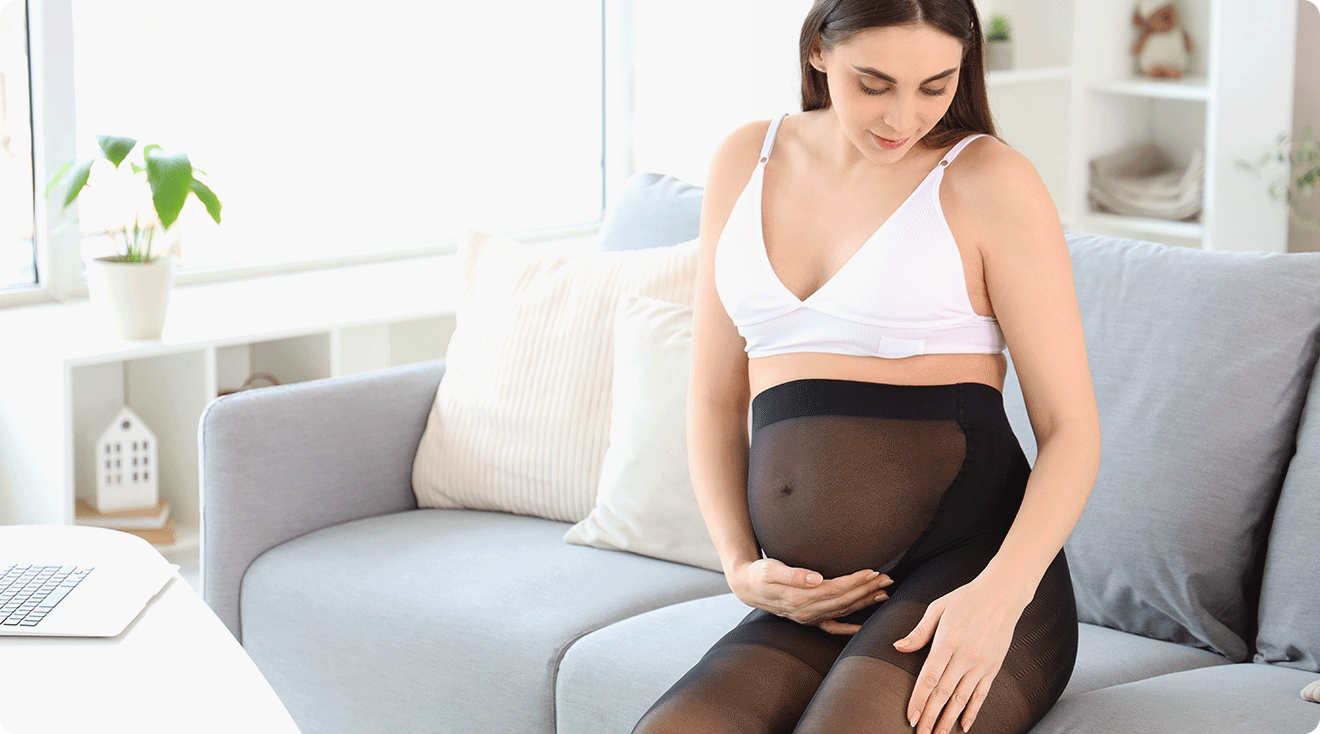

If you’re carrying a fall or winter baby—or if you’re a tights-all-year person—you’ve probably discovered that your pre-pregnancy tights are the first things to go (okay, maybe second only to jeans). But you don’t have to sacrifice your go-to look for pregnancy. A lot of things change when you’re pregnant, your sense of style isn’t usually one of those things!" says Rebekah Mustaleski, CPM, a certified professional midwife based in Knoxville, Tennessee. “You’re still going to want to dress in a similar style while you’re pregnant and dressing in clothes that feel like ‘you’ is a great way to be comfortable with the body changes that happen throughout pregnancy.”
You might not be thrilled about buying another maternity-only item, but here’s the thing I wish someone had told me when I was pregnant: Some maternity tights do more than help you stay warm or look pulled together—they can offer subtle support you may not even realize you need until you feel the difference. To save you from a scroll-and-return spiral, we asked two expecting mamas to personally test eight top-rated pairs of maternity tights. The results are a shortlist of maternity tights that support you—and your bump—without sacrificing style.
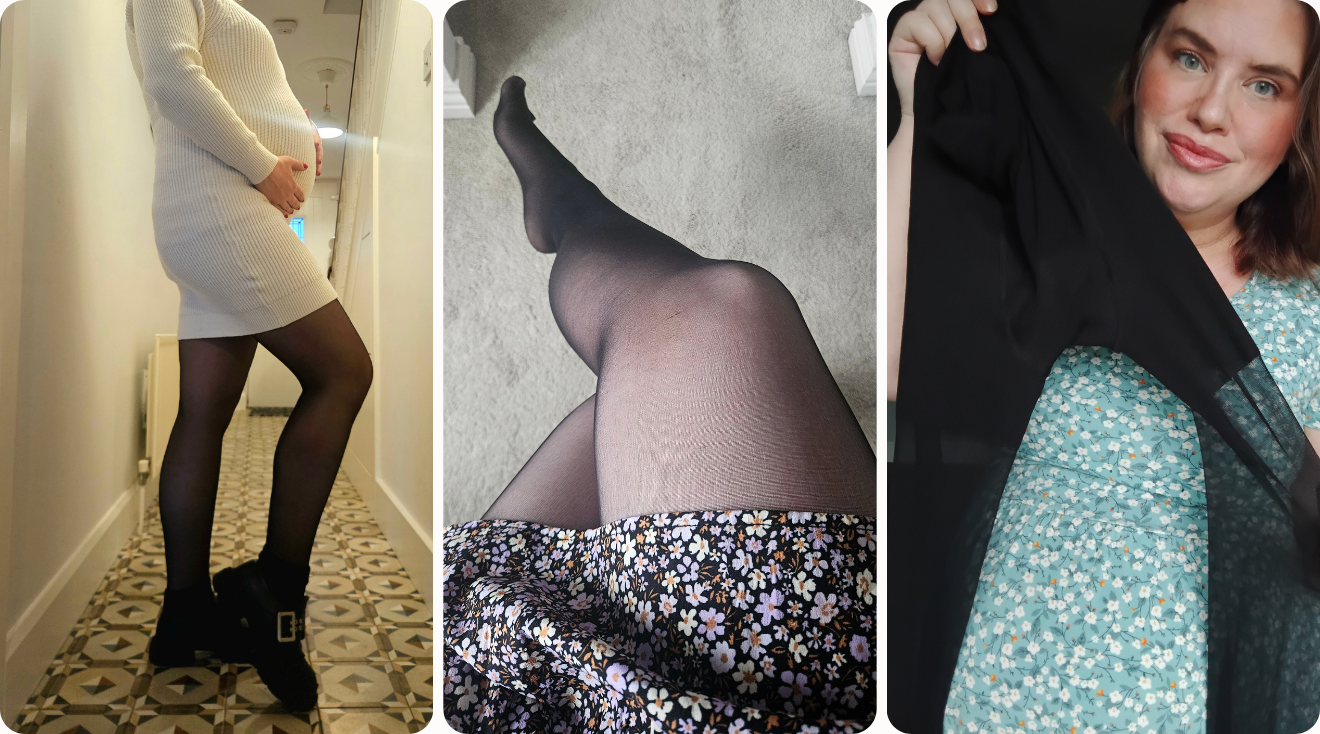
We started by reviewing eight top-rated maternity tights currently available. From there:
- Two pregnant testers, both in their third trimester, wore the tights during full, busy days—heading to work, running errands and caring for little ones. One of our testers was due in January of 2026, and the other in February, so they put these tights to work in cold weather. Each pair was evaluated on factors including fit, comfort, support, quality, ease of care and overall value. Using a 1-10 scoring system (with 10 as the highest), their feedback helped us narrow the list down to four standout options.
- We consulted a certified professional midwife and a vein care specialist to better understand the benefits of maternity tights (and the compression some pairs offer), as well as key features parents should look for when shopping.
- We consulted a personal stylist to help navigate the fashion side of pregnancy. She gave us expert tips on dressing the bump—and pointed us toward brands known for high-quality construction that won’t sag or slip.
- Because no two pregnancies—or bodies—are the same, we rounded out our testing by scouring customer reviews, parenting forums, and message boards to see how these tights performed for expectant parents across a range of sizes, stages and lifestyles.
Editorial integrity is at the heart of everything we publish. Read more about how The Bump develops our product reviews.
Best rip-resistant maternity tights
- Ultra-strong yet sheer “barely there” look
- No sagging or slipping
- Full belly panel coverage
- Pricey compared to other sheer maternity tights
- Strong, but not indestructible
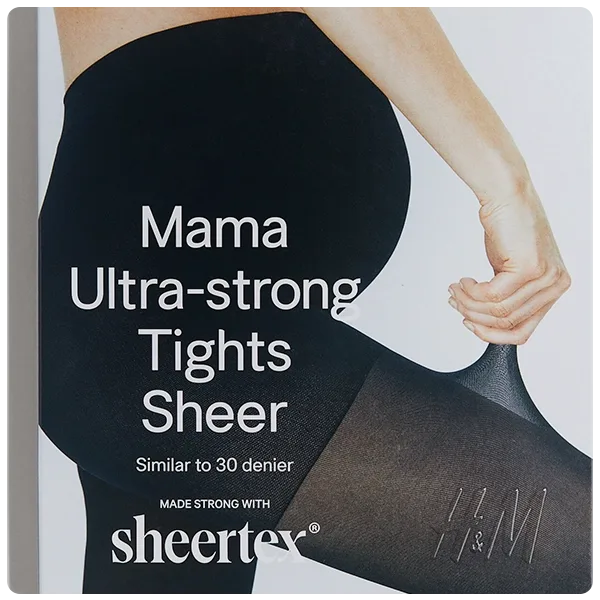
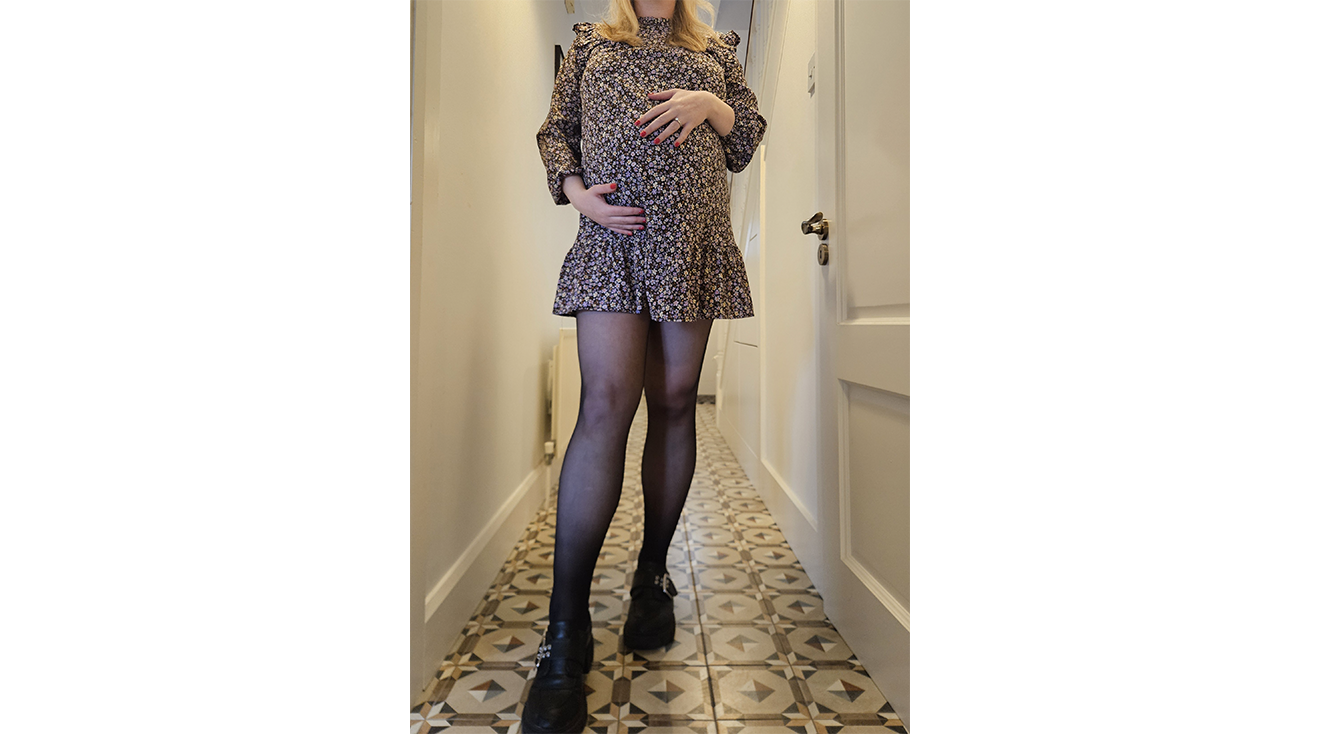
If there’s anything that makes me groan more than realizing I’ve been wearing baby spit-up all day, it’s getting a run in my tights by mid-afternoon. H&M’s MAMA Sheertex Ultra-Strong Sheer Tights prove that maternity tights can be sheer and breathable while still holding it together through a full workday—and a wash and repeat.
Our product tester (and editor) Martina put these tights to the test at 33 weeks pregnant, wearing them through a full day of work that included a 30-minute commute on foot. “I walked into work wearing them and they didn’t sag at the crotch or slip down at the waist—both major pet peeves of mine,” she says. She was also thrilled that she could pet her cat before heading out the door without ending up covered in fur, unlike most hosiery.
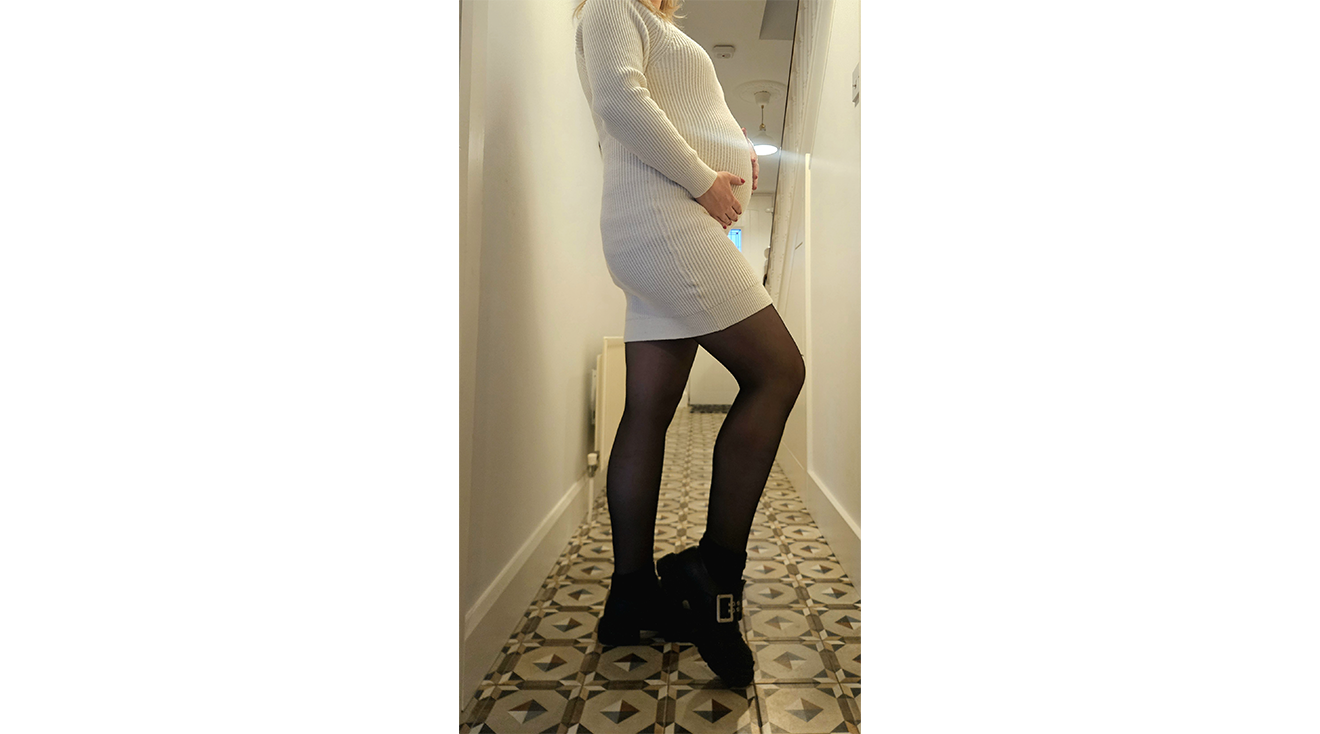
Martina ordered her pre-pregnancy size and found the fit true to size. “The belly panel completely covers my bump, there’s no sagging at the crotch, and they don’t bunch around my ankles,” she says. She also liked the light black color and barely-there look. Martina noticed faint red marks from the seams after all-day wear, but they faded quickly and didn’t cause discomfort or irritation.
Strong, of course, doesn't mean indestructible. Martina noticed a small tear in the gusset on first wear and a few minor snags after washing. But these tights are designed to resist laddering (those annoying long runs), and neither the tear nor the snags spread or became visible when worn. “I put them on very slowly and carefully,” she says, noting that they could snag if pulled on in a rush. The brand also notes that the fabric can sometimes appear uneven after a wash, which Martina experienced firsthand. “I noticed a few minor snags on the thighs, which show up as dark horizontal lines or dots,” she says. Following the care instructions, she was able to fix them by pulling very gently on either side of the snag and lightly rubbing the fabric to realign the threads.
Size: S to XL | Denier: 30 | Fabric composition: 53% polyamide/26% polyethylene/20% spandex/% other fibers | Care instructions: Machine wash cool and line dry
Our product tester says:
“Overall, these tights are good quality… I liked the sheer look, and they're a style I would gravitate to if I needed to buy a pair.”

Best maternity compression tights
- Light, non-medical grade compression
- Available in three shades
- Comfortable, stretchy over-belly panel
- Stylist recommended
- Took more effort to put on than other non-compression pairs, according to our tester
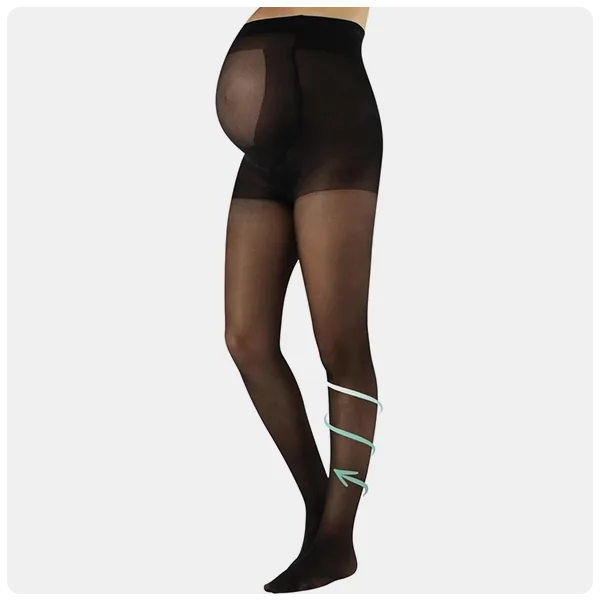
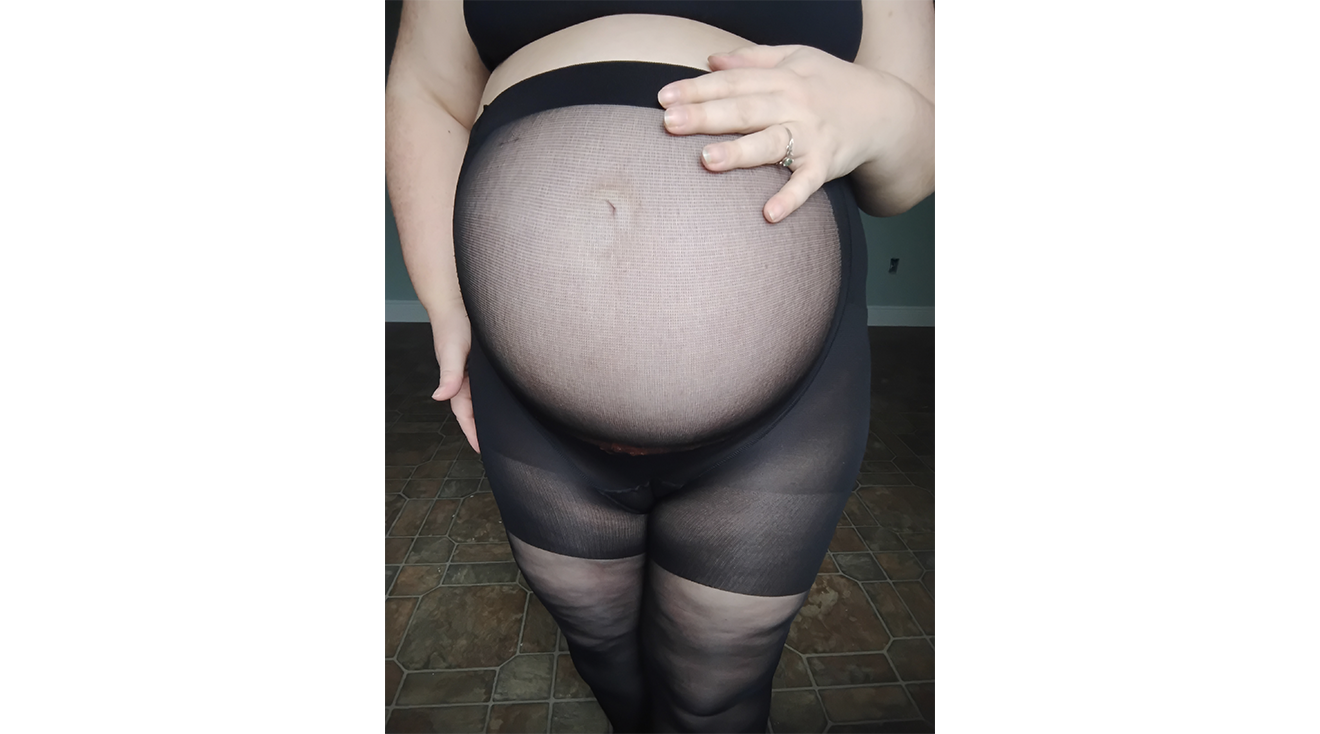
Like many pregnant people, I had my fair share of leg discomfort during pregnancy, from evening aches and swelling to restless leg syndrome (RLS). With 8 millimeters of mercury (mmHg) of compression, the Calzitaly Maternity Support Tights may reduce swelling and provide gentle support to tired muscles. (Although it's not heavy enough to provide therapeutic treatment for varicose veins or significant swelling.) “My legs do get a little achy in the evenings," says Martina, "and I often have leg cramps in bed at night, so I was excited to try these." After a day in the Calzitaly tights, “I didn't notice any aches and pains that evening,” she reports.
“If you want high-quality Italian hosiery, the Calzitaly maternity line is famous for being incredibly stretchy and soft on the skin,” says personal stylist Melissa Jaeger. Martina certainly agreed, noting the “high-end” look and feel. “The fabric looked quite thick and felt strong, so I wasn't overly worried that these tights would ladder or snag,” she shares. Once on, the darker material stretched into a more sheer effect—a look she preferred over fully opaque tights. She awarded them a perfect 10 out of 10 for quality, adding, “My husband told me I looked pretty. At this stage of pregnancy, it's hard to pull outfits together, so I'll take that as a win!” Martina ordered her pre-pregnancy size and found the fit true to size, noting that while the tights took a bit more effort to pull on than non-compression styles, they felt comfortable once in place. The waistband sat about an inch or two below her bra strap, and the over-belly panel had plenty of stretch to accommodate a growing bump. “I also appreciated the fact that the gusset is made from cotton for added breathability as I run warm,” Martina says. The material held up well to tugging, wear and washing, with no laddering or snagging during testing. Size: S to XL | Denier: 20 | Fabric composition: 79% polyamide/20% spandex/1% cotton | Care instructions: Machine wash cold
Our product tester says:
“These tights were great and offered everything I would expect from a high-end hosiery brand. They are comfortable, supportive and fit well with no rolling or sagging.”
Best sheer maternity tights
Elegant, non-shiny matte finish Stretchy, comfortable over-belly panel Inclusive sizing up to 2XL Gentle, non-binding extra-large waistband
- Delicate 12-denier fabric
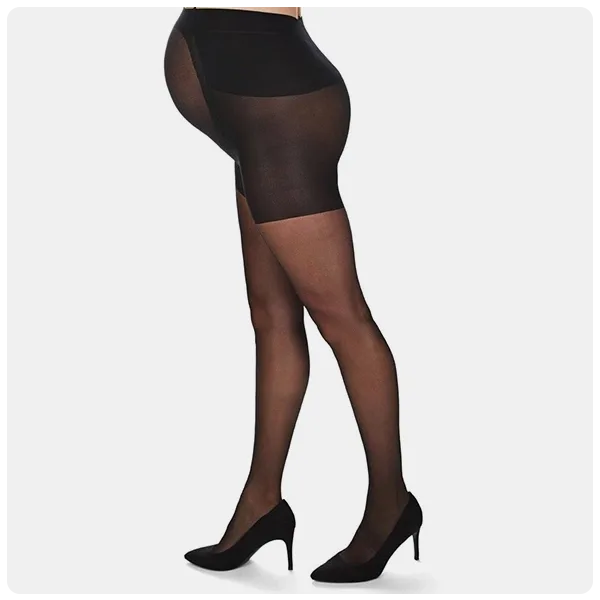
When nothing fits quite right or constricts in all the wrong places, swapping sweats for a dress can feel anything but glamorous. MeMoi’s 12 Denier Sheer Maternity Pantyhose deliver a rare balance: a sheer, polished look elegant enough for a dressy event, yet still easy and comfortable enough to dress down with a simple dress and boots, according to our product tester (and expectant mama) Christina.
At 29 weeks pregnant, Christina was looking for tights that wouldn’t roll down over her bump or sag at the crotch—her “biggest complaints with maternity tights.” From the moment she put these on, they “felt comfortable with a soft, gentle stretch that didn’t pinch or feel restrictive,” she says. She ordered her pre-pregnancy size and found them true to size—in fact, she gave them a perfect 10 out of 10 for fit thanks largely to the extra-large waist. “The waistband sat comfortably above my belly button and stayed in place all day,” she notes, adding that the belly panel didn’t look bulky or create visible lines under clothing. Christina also liked the non-shiny color and smooth finish, saying the tights worked beautifully with everything she styled them with.
According to Jaeger, sheer tights are anything from 5 to 20 denier and “are the go-to for traditional elegance and high-formality events.” At just 12 denier, these tights are undeniably sheer—but they performed impressively for the category. Christina was careful to gather the legs and pull them on slowly. They didn’t snag or ladder on Christina’s first wear, but they’re not indestructible, and sharp nails or jewelry still warrant caution. Another tip for longevity: Jaeger says to skip moisturizing before putting on tights. “The oils can break down Lycra fibers over time, making the tights more prone to slipping down.”
Size: S/M to L/XL and Q1/Q2 | Denier: 12 | Fabric composition: 82% nylon/18% spandex | Care instructions: Machine wash cold in mesh laundry bag
Our product tester says:
“I would recommend these to other moms-to-be. They’re comfortable, they stay up, and they’ve held up better than most sheer tights I’ve tried.”
Best maternity tights for cold-weather
- Cozy, soft fleece-lined interior
- Realistic sheer look, full coverage
- Includes protective mesh laundry bag
- Durable, snag-resistant fabric blend
- Expensive
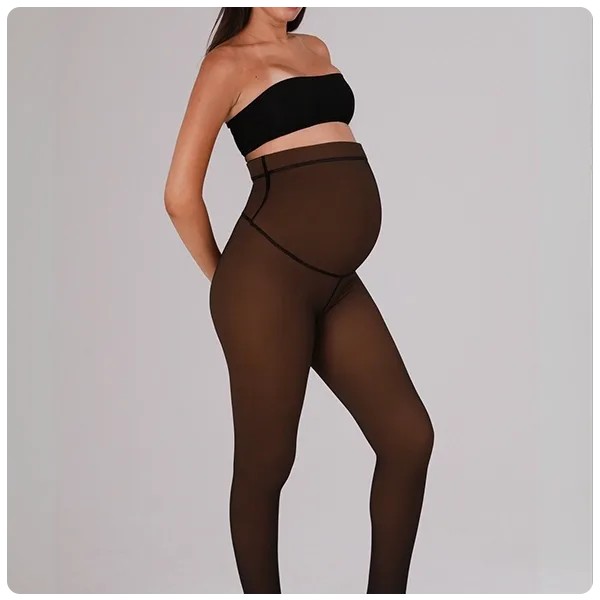
The name says it all: Noosh Toast Maternity Sheer Illusion tights are built for warmth—but what surprised our product tester and mom-to-be the most was not just how soft and cozy these fleece-lined tights felt, but how comfortable they were all day long. At 29 weeks pregnant, Christina C., described them as the kind of tights that feel almost like sweatpants, but far more polished. The exterior gives the visual effect of sheer hosiery while the interior provides total coverage. “The opacity was perfect—completely opaque with no sheerness at all, even when stretched over my bump,” Christina says.
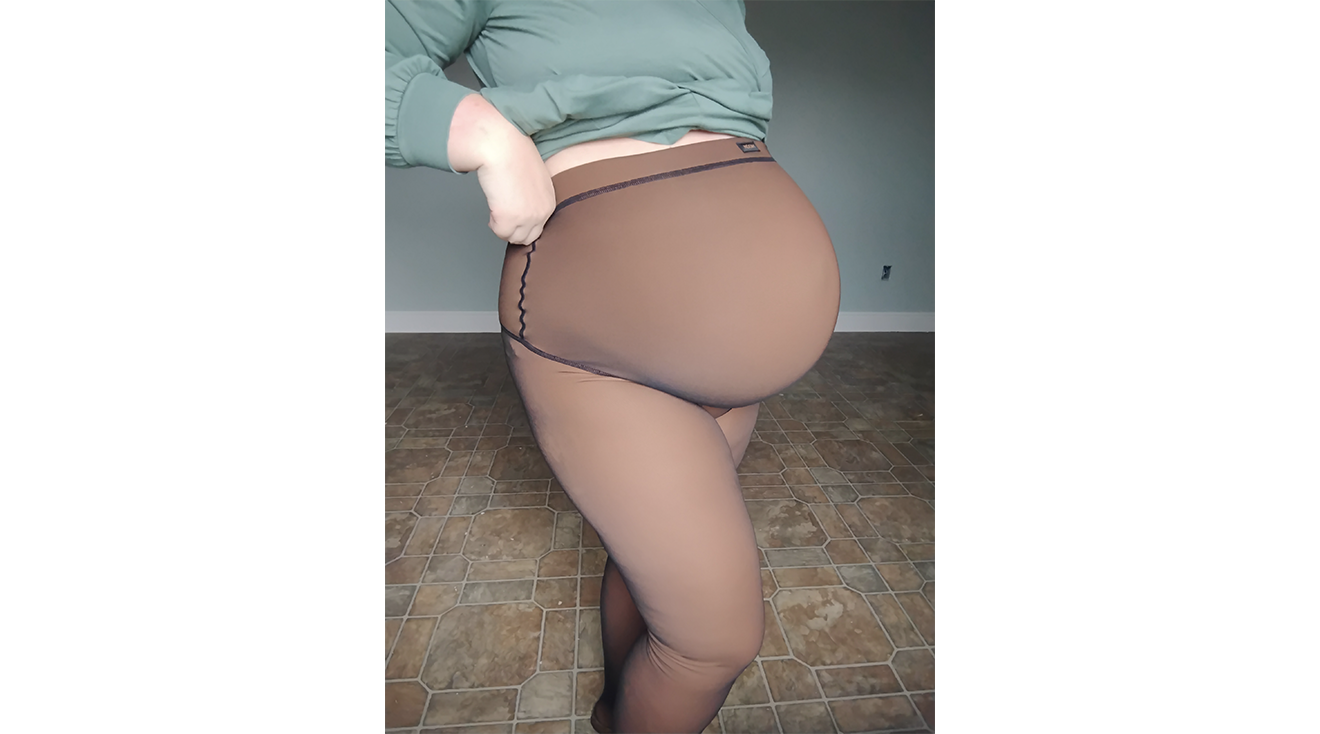
Christina wore them both indoors and outside while tending to her kids and running errands—and often forgot she was even wearing them. “The inside fleece lining is incredibly soft and cozy without feeling bulky,” she says, adding, “I never felt sweaty or stifled, which tells me the fabric breathes better than I expected for a fleece-lined tight.” It’s no surprise, then, that she awarded them a perfect 10 out of 10 for comfort, material and quality. Fit was another 10 out of 10: at one size up from her pre-pregnancy size, the waistband sat well above her belly button, fully covering her bump and staying put through bending, sitting and constant movement, with no rolling, slipping or sagging at the crotch. There were also no itchy tags, raised seams or pressure points—and lint and pet hair didn’t cling, a big win in a busy household.
“These feel far more rip-resistant than average,” Christina adds, putting that claim to the test by tossing them into the laundry on a regular wash-and-dry cycle (though the brand recommends air drying). After two full cycles, she reported they still looked and felt like new.
Size: XS/S to L/XL | Denier: N/A | Fabric composition: 75% polyamide/25% spandex | Care instructions: Machine wash cold (30-degrees) on a gentle cycle, no bleach and air dry
Our product tester says:
“They were my favorite out of all the tights I reviewed because they’re incredibly comfortable, supportive without feeling tight, and stay in place all day while still looking great.”
A lot of what you look for in a pair of maternity tights is the same as what you need to consider when buying a regular pair—keep the following in mind as you shop:
- Sizing. It’s a good idea to check each brand’s specific sizing guidelines and read real tester feedback—like the experiences we’ve shared above. This is the best way to decide if you should stick with your pre-pregnancy size or if the fit runs small.
- Durability. Most tights are made from a blend of nylon (polyamide) and spandex. Because many of these blends look similar on paper, real customer and tester reviews are the best way to see if a pair will hold up through wear and washes. Look for high-quality markers like reinforced toes and breathable cotton gussets.
- Cost. While upfront cost is a major factor, the real value lies in the quality and durability of the material, which determines your true cost per wear. Investing in a durable option over a cheap, flimsy pair that needs replacing every few wears due to snags or ladders will save you money in the long run.
- Compression vs. non-compression. Stretch alone does not equal compression, says Tonie Reincke, MD, a board-certified interventional radiologist and vein care specialist, and not every pair you buy offers compression.
You’ll also want to consider the denier of the tights. This measures the weight and thickness of the fabric. The higher the denier, the less sheer the tight:
- 10–20D: Sheer and elegant, but prone to snagging.
- 40–60D: Semi-opaque and a sweet spot for many.
- 80D+: Fully opaque, very durable, and the warmest option.
Can I just size up in regular tights?
Sure, but it’s not the most comfortable choice. “As long as you size up to fit your baby bump, there aren’t any health risks that I’m aware of,” says Mustaleski. However, because your belly grows far more dramatically than the rest of your body, regular tights that stretch enough to accommodate a bump are often loose, saggy and unsupportive everywhere else. There’s a reason only half the tights we tested made the grade—not every pair is up to the job.
It often comes down to both how your body feels and your individual risk factors. According to Dr. Reincke, light compression can be helpful if you’re dealing with mild leg fatigue or occasional swelling at the end of the day—and let’s be honest, by the time you hit the second or third trimester, whose legs don’t hurt a little? Beyond just daily comfort, they may also be worth considering if you have a family history of varicose veins. “The compression they provide helps improve blood flow to your feet and ankles, which can reduce swelling and keep you more comfortable,” says Mustaleski.
Medical-grade compression—a type we have not covered in the tights above—is usually recommended for more severe symptoms or higher-risk situations, as they help keep blood flowing toward the heart rather than pooling in your lower legs. According to Dr. Reincke, these situations may include significant leg swelling, painful varicose veins, a history of blood clots or venous disease, prolonged standing, limited mobility or if you’re expecting multiples. “Pregnancy itself increases venous pressure and clot risk,” she explains. If you are experiencing severe symptoms or have a significant family history, it’s a good idea to ask your doctor if medical-grade compression is right for you."
What to consider when buying compression maternity tights
Before you start shopping, the first item on your to-do list should be a conversation with your healthcare provider. They can help you determine the right compression level for your specific needs and ensure they are safe for you to wear. If you have significant arterial disease, severe peripheral neuropathy, poorly controlled diabetes with sensory loss or active skin infections, your doctor may recommend avoiding compression wear altogether.
“Patients should stop wearing compression and seek medical advice if they experience new or worsening pain, numbness, tingling, skin discoloration, pressure marks that do not resolve, shortness of breath, chest pain, or sudden asymmetric leg swelling, as these may indicate complications unrelated to compression that require prompt evaluation,” Dr. Reincke advises.
Understanding compression ratings
Compression tights are measured in millimeters of mercury (mmHg), which indicates how much pressure they apply—the measurement comes from the use of mercury in a classic barometer. “A standard range for compression during pregnancy is somewhere between 15 to 30 mmHg, depending on the product and the purpose of the compression,” explains Mustaleski. Based on your symptoms and underlying risk factors, Dr. Reincke explains that your provider can help match you to one of three compression levels:
- Light compression (<15 mmHg): Primarily for comfort, mild swelling, and prevention in low-risk patients. The Calzitaly tights we recommend above fall into this category.
- Moderate compression (15–20 mmHg): Commonly recommended during pregnancy for symptomatic swelling, varicose veins, or long periods of standing or sitting.
- Medical-grade compression (20–30 mmHg): Used for more significant venous insufficiency, painful varicosities, or patients with prior clotting or higher venous risk—typically under provider guidance.
You should also keep an eye on areas of compression. “True maternity compression tights should provide graduated compression, strongest at the ankle and gradually decreasing up the leg,” explains Dr. Reincke, adding that “support panels should be concentrated in the ankles, calves and lower legs.” This is very different from standard maternity tights, which simply stretch fabric over the legs and abdomen, as “stretch alone does not improve circulation.” And remember, you’re looking for support, not strangulation—the compression should not be so tight or restricting that it is difficult to breathe or bend over.
About the writer:
Janelle Leeson is a Portland, Oregon–based mom of one with a background in biology and a passion for helping parents navigate pregnancy and early motherhood. With years of experience in reporting, Janelle specializes in delivering evidence-based guidance—from testing and researching the best prenatal vitamins to interviewing experts about the complexities of maternal health. By combining her scientific roots with her lived experience, she provides practical, expert-backed advice that parents can rely on in their everyday lives.
Plus, more from The Bump:
Rebekah Mustaleski, CPM-TN, IBCLC, is a certified professional midwife specializing in evidence-based maternity care. She co-founded Roots & Wings Midwifery in Knoxville, Tennessee. Mustaleski received her bachelor’s degree in psychology from Centre College, and worked as a doula and birth photographer prior to establishing Roots & Wings. Mustaleski is also the compression director at Motif Medical.
Melissa Jaeger is a personal stylist and the founder of The Haus of Huntress.
Tonie Reincke, MD is a board-certified interventional radiologist with a clinical focus on venous disease, including venous insufficiency, blood clots, and compression therapy. She routinely counsels patients on the safe and effective use of compression garments across a wide range of clinical scenarios, including pregnancy.
Target Baby Registry
Free $100+ Value Welcome KitFree $100+ Value Welcome Kit
15% Completion Discount15% Completion Discount
Free 1-Year ReturnsFree 1-Year Returns
20+ Exclusive 20% Off
Deals For Mom & Baby20+ Exclusive 20% Off Deals For Mom & Baby1:1 Concierge With
Baby Gear Specialists1:1 Concierge With Baby Gear Specialists

*Subject to availability and Retailer's terms.
We earn commissions from these links.