



Can You Take Melatonin While Pregnant?


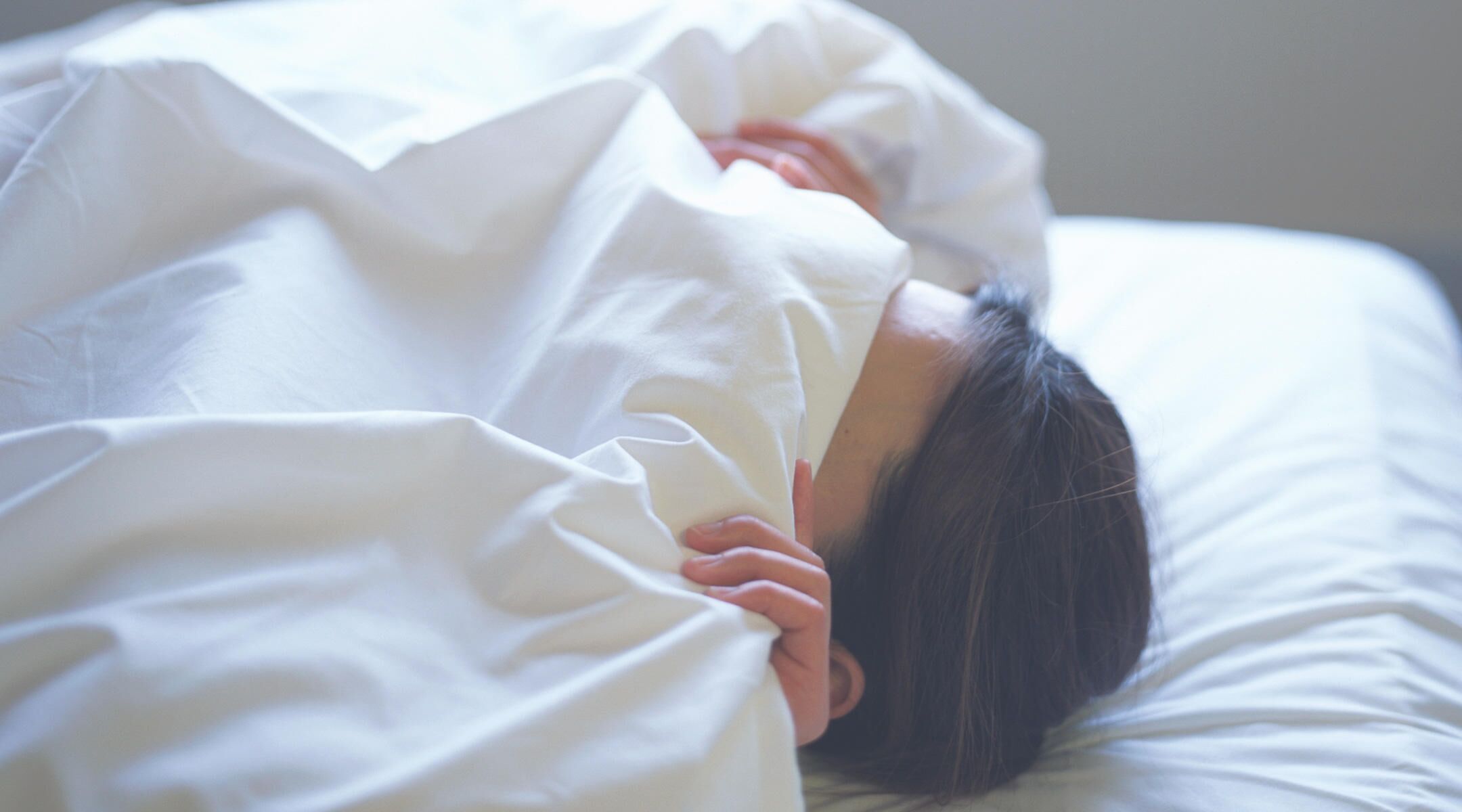
If you’re desperate to clock more Zzz’s during pregnancy, know that you’re not alone. Ask a pregnant person—any pregnant person!—and they’ll tell you that the struggle is real.
There are a slew of reasons you’re having trouble sleeping during pregnancy: heartburn, leg cramps, frequent urination and general discomfort are just a few of the factors that can keep you from getting quality shut-eye.
It’s no wonder if you’re considering turning to melatonin for some help in the snooze department. Many people, including moms, swear by the supplement form of this sleep-promoting hormone. It can help regulate your internal clock and make your sleep cycle more predictable.
“I used melatonin throughout both of my pregnancies. I found it very helpful,” says Alex Murad, a mom of two in New York. “When I was pregnant with my second child, I didn’t feel like I was in such a fog that I couldn’t tend to my daughter when she needed me.”
But while you probably know of at least one expectant mom who uses melatonin and maybe even used it yourself before pregnancy, it’s fair to have questions about anything you put in your mouth when you’re expecting. Can you take melatonin while pregnant? Is it safe—and are there potential benefits or risks? The answers to these questions are murky at best, which is why most doctors recommend avoiding the supplement as a precaution. Here’s what you need to know if you’re considering taking melatonin during pregnancy.
- Melatonin is an incredibly popular sleep aid. It’s a hormone naturally produced in your body, which the dietary supplements are designed to mimic.
- There isn’t much data to suggest melatonin is safe or unsafe in pregnancy.
- As a result, many doctors recommend that you avoid taking melatonin while pregnant.
Melatonin is a hormone that your brain makes in response to darkness, according to the National Center for Complementary and Integrative Health (NCCIH). Melatonin helps to regulate your internal clock (circadian rhythm), and can help you to fall asleep. Melatonin is not a sedative, though. Instead, it can simply help to prime your body for sleep.
While melatonin is naturally produced in your body, melatonin dietary supplements are designed to mimic the hormone in your body—and they’re having a major moment. Research published in the Journal of the American Medical Association (JAMA) found that the overall use of melatonin supplements in the 55,021 people surveyed increased from 0.4 percent in data from 1999 to 2000 data to 2.1 percent in data from 2017 to 2018.
Your body continues to produce melatonin naturally during pregnancy. The placenta makes it, so it’s ever present in your system. In fact, research shows that melatonin levels rise in your blood during pregnancy and fall immediately after you give birth, suggesting that you have plenty of the hormone circulating in your body when you’re expecting.
The frustrating reality is that there’s no definitive answer as to whether or not it’s safe to take melatonin while pregnant. “We know that melatonin crosses the placenta and can enter the fetus’ bloodstream,” says Pieter Cohen, MD, a general internist at Cambridge Health Alliance and associate professor at Harvard Medical School. “It appears safe, but it hasn’t been carefully studied.” That goes for melatonin gummies, dissolvables and capsules designed to be swallowed.
What’s more, even if you pluck the lowest dose off your pharmacy shelf, there are no guarantees. Supplement dosage isn’t regulated by the Food and Drug Administration (FDA), so you can never know exactly how much you’re taking. In fact, research has found that melatonin labeling isn’t always accurate, and that the dose listed on the bottle might not represent the actual amount of melatonin in the pills. As a result, the NCCIH says that there are “safety concerns” for melatonin use in pregnant women.
Making things even more confusing is that data from clinical trials so far suggests that melatonin use during pregnancy is probably safe in humans—it’s just not definitive. Because of this, you may find some doctors who say it’s okay to take melatonin during pregnancy.
“Doctors are mixed on this,” says Christine Greves, MD, a board-certified ob-gyn at the Winnie Palmer Hospital for Women & Babies in Orlando. “There’s no good evidence.”
G. Thomas Ruiz, MD, lead ob-gyn at MemorialCare Orange Coast Medical Center in Fountain Valley, California, points out that “there have been no documented studies that show melatonin hurts the fetus.” But there are also no studies that conclude that it’s safe to take the supplement during pregnancy. That’s why most healthcare professionals recommend steering clear, to be safe.
While melatonin isn’t recommended during pregnancy because of the unknown risks, there’s a flip side to the argument. Promising animal research suggests that melatonin supplementation during pregnancy could potentially decrease the risk of preeclampsia, preterm birth and intrauterine growth restriction (IUGR). Moreover, melatonin during pregnancy may have neuroprotective qualities. Of course, more studies are needed.
Murad says melatonin was helpful for quieting her “racing” mind late at night during pregnancy. “I find it very helpful—pregnant or not—when my body is ready to sleep but my mind isn’t,” she adds.
Interestingly, evolving research also suggests that melatonin’s role in circadian rhythm regulation may improve outcomes in couples facing infertility. That said, there’s no confirming proof that taking melatonin during pregnancy delivers unique benefits beyond sleep support.
Melatonin supplements aren’t well-regulated product in the US, making it hard to know if what the label says reflects what’s in the bottle, Greves explains. Even at low doses, there’s a chance that melatonin exposure could have subtle effects on baby’s hormonal signal development, Cohen notes. And higher doses could be even more problematic. “We know that children can become overly sedated by excessive melatonin, but what effect excessive melatonin would have on [baby in utero] isn’t known,” Cohen says.
If you’re struggling with sleep, Greves recommends trying to figure out why that’s the case: “Is it because your partner snores, or is it because of reflux?” But if you’re struggling to sleep due to nausea and vomiting, the remedy may be something completely different. (Doxylamine—Unisom—and vitamin B6 could help in that case, Greves says.)
With your doctor’s sign-off, you can take an antihistamine like doxylamine or diphenhydramine (Benadryl). “Both are proven to be safe in pregnancy and can help with sleep,” says Renita White, MD, an ob-gyn in Atlanta.
Of course, you can also take some steps to improve your sleep hygiene. Here are some things White suggests doing to encourage more restful nights:
- Avoid screens during the last half hour before you turn in
- Keep the lights low during your bedtime routine
- Try bedtime meditation
- Get exercise earlier in the day
- Stick to a regular sleep schedule
If the above options don’t work, try to remember that this phase of restlessness will pass—eventually (and just in time for a nocturnal newborn to join your family). Tempting as it may be to try melatonin in pregnancy, experts feel it’s just not worth it. “The very marginal potential benefits do not, in my opinion, outweigh the potential risks,” notes Cohen.
Frequently Asked Questions
Does melatonin cross the placenta?
Yes, melatonin crosses the placenta, Cohen says. Because of this, it can enter baby’s bloodstream. But the placenta also makes melatonin during pregnancy, suggesting that baby is exposed to natural levels of the hormone in utero too.
Can you take melatonin in the first trimester?
Although there’s little evidence of harm linked to melatonin exposure in the first trimester, there may be unknown risks, White says. Again, the research just doesn’t exist. She advises against taking melatonin in all three trimesters, and instead opting for medications or lifestyle changes that have been proven to be safe during pregnancy.
Can I take Unisom during pregnancy?
Yes, you can take Unisom during pregnancy with your doctor’s approval. This medication, which is also known by its generic name doxylamine, is proven to be safe to take in pregnancy and may help with sleep.
What sleep aids are considered safe during pregnancy?
Doxylamine (Unisom) and diphenhydramine (Benadryl) are typically considered safe sleep aids to take in pregnancy with your doctor’s okay, Ruiz says. But these aren’t a great choice for everyone. “I would warn people that some are really sensitive to antihistamines. You can feel hungover the next day,” Ruiz says.
What sleep aids aren’t safe during pregnancy?
Anything outside of the antihistamine class is generally not considered safe during pregnancy. (And even then, it’s best to talk to your doctor before taking anything.) Sedatives like Ambien and benzodiazepines like Xanax, Valium and Ativan, are not recommended in pregnancy, Ruiz says.
Can I take melatonin when breastfeeding?
The advice around taking melatonin while breastfeeding is similar to the advice around taking it while pregnant, Ruiz says. Melatonin will seep into your breast milk, which means baby will be exposed if you take the supplement, he points out. As a result, many doctors will recommend that you steer clear.
There isn’t a lot of data to suggest whether it’s safe or harmful to take melatonin during pregnancy. As a result, most doctors will recommend that you avoid taking the supplement, just to be safe. In the meantime, focus on the sleep hygiene habits you can control. A good night’s rest will come again—eventually.
Please note: The Bump and the materials and information it contains are not intended to, and do not constitute, medical or other health advice or diagnosis and should not be used as such. You should always consult with a qualified physician or health professional about your specific circumstances.
Plus, more from The Bump:
Pieter Cohen, MD, is a general internist at Cambridge Health Alliance and associate professor at Harvard Medical School. He earned his medical degree from Yale School of Medicine.
Christine Greves, MD, is an ob-gyn at the Winnie Palmer Hospital for Women & Babies in Orlando, Florida. She received her medical degree from the University of South Florida.
G. Thomas Ruiz, MD, is the lead ob-gyn at MemorialCare Orange Coast Medical Center in Fountain Valley, California. He received his medical degree from University of California Irvine School of Medicine.
Renita White, MD, is an ob-gyn based in Atlanta. She earned her medical degree at the Ohio State University.
National Center for Complementary and Integrative Health, Melatonin: What You Need to Know, May 2024
JAMA, Trends in Use of Melatonin Supplements Among US Adults, 1999-2018, February 2022
Frontiers in Endocrinology, Maternal Serum Melatonin Increases During Pregnancy and Falls Immediately After Delivery Implicating the Placenta as a Major Source of Melatonin, February 2021
Journal of Food Composition and Analysis, Quality Control and Determination of Melatonin in Food Supplements, February 2016
Brazilian Journal of Psychiatry, Melatonin Use During Pregnancy and Lactation: A Scoping Review of Human Studies, November 2021
Antioxidants, Melatonin for the Management of Preeclampsia: A Review, March 2021
Journal of Pineal Research, Melatonin Prevents Experimental Preterm Labor and Increases Offspring Survival, March 2014
American Journal of Physiology-Regulatory, Integrative and Comparative Physiology, Melatonin Supplementation Alters Uteroplacental Hemodynamics and Fetal Development In an Ovine Model Of Intrauterine Growth Restriction, February 2012
Journal of Neuroscience Research, The Neuroprotective Role Of Melatonin In Neurological Disorders, March 2018
Antioxidants, Impact of Melatonin Supplementation in Women with Unexplained Infertility Undergoing Fertility Treatment, August 2019
Real-parent perspectives:
- Alex Murad, mom of two in New York
Learn how we ensure the accuracy of our content through our editorial and medical review process.
Target Baby Registry
Free $100+ Value Welcome KitFree $100+ Value Welcome Kit
15% Completion Discount15% Completion Discount
Free 1-Year ReturnsFree 1-Year Returns
20+ Exclusive 20% Off
Deals For Mom & Baby20+ Exclusive 20% Off Deals For Mom & Baby1:1 Concierge With
Baby Gear Specialists1:1 Concierge With Baby Gear Specialists

*Subject to availability and Retailer's terms.
We earn commissions from these links.