













When to Stop Swaddling Baby, According to Pediatricians


I had learned from all my baby books that swaddling helps baby sleep well. So I was shocked when my 1-week-old just wasn’t into it. After noticing that he was constantly trying to bust out of his swaddle, I asked the doctor if it was okay to stop swaddling. She said yes, and my son’s sleep (and ours) started improving.
Of course, if your newborn has taken to the swaddle and you’re both enjoying its benefits, you might be dreading the day they reject their beloved burrito wrap. So when does that typically happen—and when should you stop swaddling baby? Learn all about this mini milestone—and hear from real parents on when they ditched the swaddle for good.
- When should you stop swaddling? It’s time to stop swaddling baby as soon as they shows signs of trying to roll over—often around 2 to 3 months.
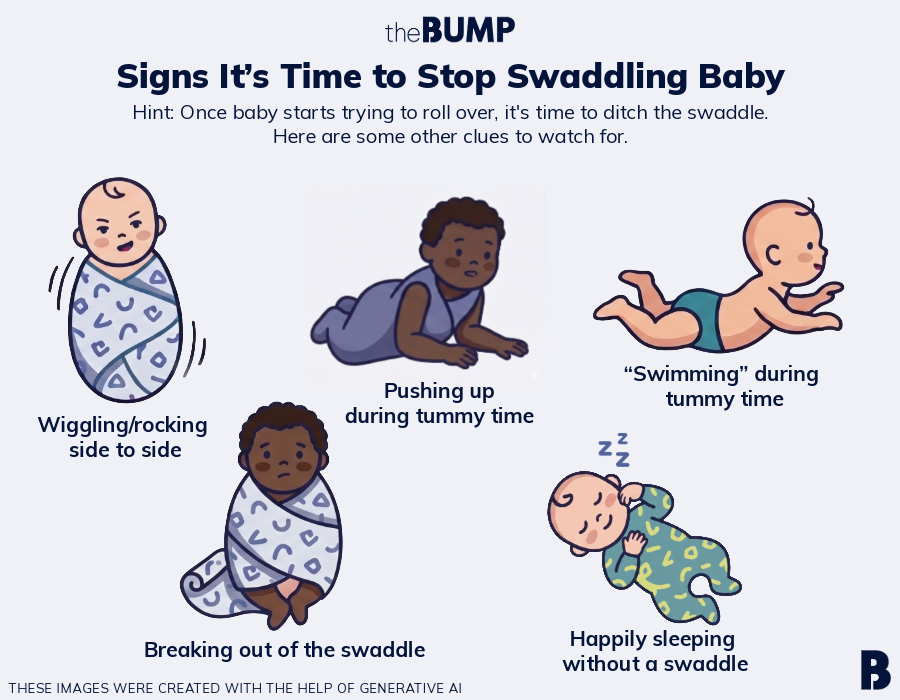
- Signs it’s time to stop swaddling baby: Early cues like rocking side to side, pushing up during tummy time or breaking out of the swaddle signal it’s time to make the transition.
- Why it’s important to stop swaddling baby: Continuing to swaddle after baby starts trying to roll can cause baby to get stuck, which increases the risk of suffocation.
- How to get baby to sleep without a swaddle: Transitioning out of the swaddle can be gradual (e.g. the one-arm approach) or immediate (cold turkey!), depending on your preferences.
You should stop swaddling as soon as your little one shows signs of trying to roll over, advises the American Academy of Pediatrics (AAP). For many babies, this can fall between the two- to three-month mark. But it can also happen earlier or later—so let your little one’s cues be your guide.
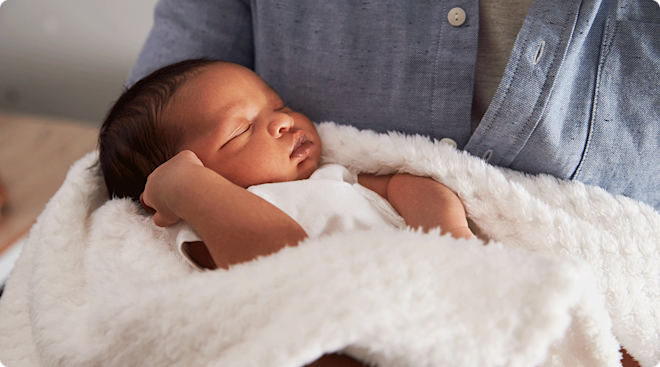
For many, in the early newborn days, swaddling can be incredibly helpful and effective. “It’s a safe practice that provides comfort to babies at a time when they’re very accustomed to the warm, tight embrace of the uterus,” explains Dr. Rachel Schlueter, MD, a pediatrician at Omaha Children’s Clinic in Nebraska. And many parents find that, once they learn how to swaddle properly, it can help newborns sleep for longer stretches and have fewer wake-ups.
This can make losing the swaddle all the more difficult for parents who’ve grown to love how a simple piece of fabric calms and quiets their newborn. Of course, in some cases (like mine), baby may not take to the swaddle at all. In this case, you can stop swaddling even earlier—no need to force it.
Since babies roll over at different ages, it’s important to know the signs to look out for. “If baby starts to wiggle around from side to side using a rocking motion, or lifts their head to track objects, it’s time to say goodbye to swaddling,” says Debbie Gerken, RN, a registered NICU nurse and the founder of Sleep Like a Baby Consulting.
Keep in mind that baby doesn’t actually have to roll over. Any movements that look like they’re making an effort—including a “swimming” motion during tummy time or pushing up—are signals that it’s time to say goodbye to the swaddle.
That said, plenty of babies will let you know that they’re done with swaddling in a more direct way. “I don’t remember exactly when we stopped, but it was probably at 1-and-a-half or 2 months. She kept breaking out,” recalls The Bump community member crackerjackprinter. And if baby starts sleeping happily with their arms above their head or in another non-swaddled position, that’s fine too. This can happen at any time, by the way.
“I always tell my families: If baby doesn’t like the swaddle, skip it. It’s not a requirement—it’s a tool. If it’s not soothing baby to sleep, there’s no reason to use it,” says Dr. Heather Gosnell, MD, a pediatrician based in Phoenix.
While swaddling can have sleep benefits early on, it starts to become a safety hazard as you exit the newborn stage. That’s because being tightly cocooned can make it harder for your snoozer to move or reposition themselves throughout the night. If your swaddled baby were to roll onto their stomach, having their arms wrapped up makes it harder for them to roll back onto their back. Getting stuck in one position could cause their airway to become obstructed, “and that’s a serious suffocation risk,” Dr. Gosnell says.
There are some other downsides to consider: Restraining baby’s hands too long can impede the natural development of self-soothing techniques. “Most often, babies will try to bring their hand to their mouth to start to practice those early self-soothing skills,” explains Gerken. Due to the restrictiveness of the swaddle, baby also can’t use their body to practice the movements necessary to master rolling over, she adds.
Once you notice signs that baby’s ready to sleep a bit more freely, it’s time to start transitioning out of a swaddle. This can be a tricky time for parents, since you might have (finally!) started seeing longer stretches of sleep. While a temporary backslide is to be expected, transitioning gradually can help prevent major sleep disruptions for you and baby.
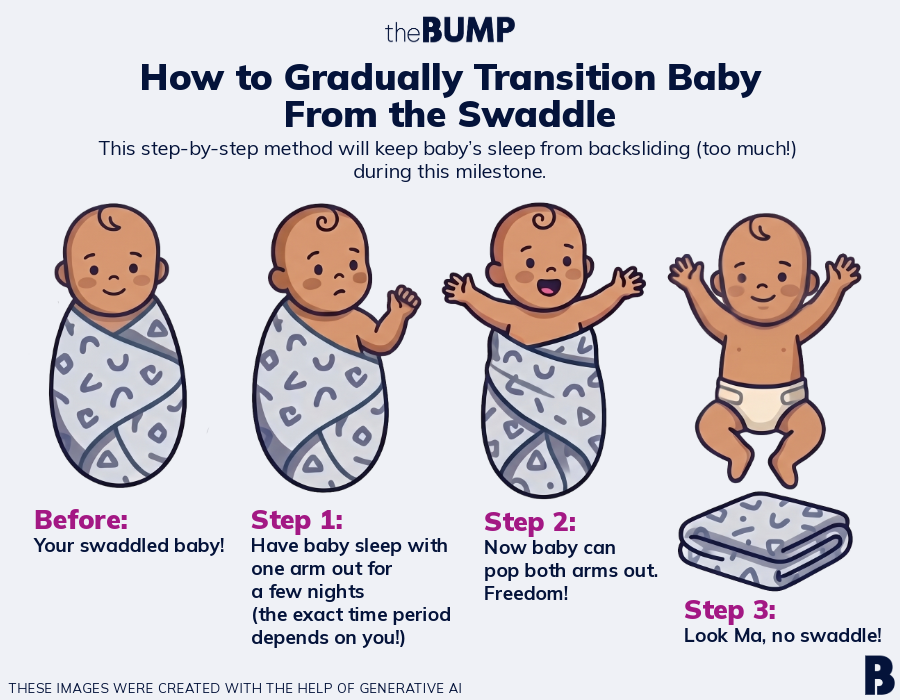
Gerken recommends starting the transition by keeping one arm out of the swaddle. If you’re able to tell which arm baby uses more, opt for that one. Then, move on to removing both arms from the swaddle. “We did one arm out for a week, then two arms out with the swaddle around her waist for a week. Now, she’s in a sleep sack,” says Olivia_Eve, The Bump community member.
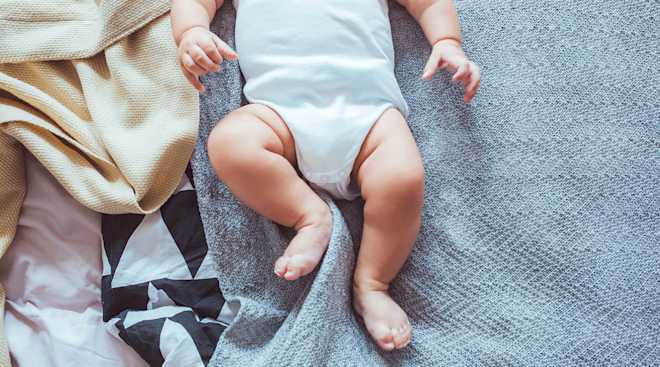
As you move out of the swaddle, continue to make sure that baby’s hips have room to move. “A tight swaddle around the legs can interfere with hip development and lead to dysplasia,” Dr. Gosnell says. “The legs should always be able to fall into that natural frog-leg position.”
Another option is a transitional swaddle wrap, such as the Love to Dream Swaddle Up option. It allows baby to sleep with one or both arms free.
That said, it’s also fine to just stop cold turkey, though how baby responds depends on how attached they were to their swaddle.
Once baby is ready to sleep without being swaddled, it’s time to change up your game when it comes to bedtime and naps. These tips will help baby fall asleep easier, according to Gerken: “In the beginning of no swaddling, my baby would fuss and cry for a few minutes, and I’d go in and just lay a hand on their chest for a few minutes and soothe them a bit, and then they fell asleep,” says The Bump community member Lani Lyons.
Use black-out curtains
I learned that keeping the room dark and cave-like helped my son conk out. We bought temporary paper blackout shades for the windows, since putting them up was so much faster and cheaper than installing permanent ones. Later, as we prepared for our son to move into his own room at around 6 months, we invested in permanent blackout shades for his room.
Add a sound machine
Place a white noise machine in baby’s room but away from their bassinet or crib, and keep the volume as low as possible.
Keep baby’s room cool
Experts say that the ideal room temperature is between 68 and 72 degrees.
Dress baby comfortably
Generally, the AAP advises dressing baby in one more layer than what you’d wear to feel comfortable in the same environment. That said, if it’s cool, it’s fine to add a layer or use a wearable blanket or sleep sack. Don’t get tempted by weighted vests (these aren’t safe), and skip actual blankets until baby is one year old.
Create a consistent routine
Our go-to bedtime routine was a bath, a short book and a final feeding before placing our son in the bassinet. We tried to do this most every night, since nighttime routines give babies the cue that it’s time to wind down for bed.
Bidding goodbye to the burrito wrap can be a little daunting, especially if you’ve been relying on it to help everyone get some sleep. But you’ll get through it, just like these parents did!
Nicole K., mom of one in Chicago
“I stopped swaddling my newborn between 6 and 8 weeks because he started to roll while being swaddled. I immediately put him in a sleep sack. I first started with a tight one like the Love to Dream Swaddle Up Transition Bag and then moved to a more traditional sack like the Kyte or Halo ones. He was a pretty good sleeper and didn’t love being swaddled, so the transition was not too hard as he was always trying to get his hands out anyways.”
Ella Grace Hanover, mom of one and pediatric sleep specialist in New York City
“I stopped swaddling my son around 8 weeks old. I started by swaddling with one arm out and then ditched the swaddle altogether in a week or so. It was my preference for him not to be dependent on the swaddle. When baby sleep cycles mature, they go through lighter phases of sleep and being able to move around can help them resettle.
“It took about a week to transition. I think parents forget that transitions take time. Sleep is lighter in the early-morning hours, so I sometimes re-swaddled him for the first few nights in those hours if needed.”
Emily D., mom of three in New South Wales, Australia
“At around 10 weeks, my baby started breaking free from the swaddle consistently and within a few nights was rolling to her side, which made continuing to swaddle a safety concern we weren’t willing to ignore.
“The first three nights without the swaddle were the hardest, as her sleep went from four-to-five-hour stretches down to one-and-a-half-hour windows before she would wake. To help us transition from swaddling to no swaddling, we did a four-night single-arm-out approach, which allowed our baby to adjust to her startle reflex while giving her a little containment. By the sixth night with no swaddle, she was back to four-hour stretches.”
Samantha B., mom of one in La Vergne, Tennessee
“We were terrified to stop swaddling our daughter, who started rolling at around 5 months. We used the Swaddelini, which has the unique arm holes knitted right in. Once she started rolling, we simply left her arms out of those internal tubes. She was happy as a clam with it just around her torso—and safe with her arms being out. Despite my fears, her sleep stayed exactly the same!”
Frequently Asked Questions
At what age does baby stop needing to be swaddled?
Stop swaddling baby as soon as they show signs of trying to roll over.. This often happens around 2 to 3 months, but it’s more important to go by your baby’s cues than their age.
Can you swaddle baby after 6 months?
You’ll likely need to stop well before baby is 6 month old. You should stop swaddling baby as soon as they show signs of trying to roll over (again, typically happens between 2 and 3 months). Swaddling baby once they’re close to rolling over makes it harder for them to reposition themselves throughout the night, since their arms and hands are wrapped up. That can increase the risk for suffocation, experts say.
Do I need to stop swaddling if baby is rolling to their side?
Yes. You should stop swaddling baby as soon as they start showing signs of being able to roll over, including rolling on their side. Getting rid of the swaddle at this point gives baby the freedom to reposition themselves throughout the night as needed, which can reduce the risk for suffocation.
If baby is breaking out of the swaddle, do I need to retire it?
Loose blankets in the crib are a suffocation hazard until one years old, according to the AAP. So if baby is able to undo their swaddle blanket, you should stop using it. If baby hasn’t yet showed signs of starting to roll, you can swap the swaddle blanket for a velcro or zipper swaddle wrap, which are much less likely to come unraveled during the night.
How can I safely swaddle baby for longer?
Ultimately, there’s no safe way to swaddle baby once they’ve started trying to roll over, says Dr. Gosnell. But if they haven't yet met that milestone and the swaddle blanket keeps unraveling at night, you might get more mileage out of a velcro or zipper swaddle wrap. Those still need to be retired once baby is attempting to roll, though.
How do you transition baby from swaddling in the Snoo?
The Snoo has a built-in swaddle that securely clips into the bassinet. This eliminates the risks associated with rolling. That said, you can still let baby sleep in the Snoo with one or both arms out to “practice” before you stop swaddling entirely. Remember that baby should be out of the Snoo once they turn 6 months old (or weigh around 25 pounds), so it’s best to start transitioning them beforehand.
You might not be looking forward to it, but when it’s time to stop swaddling, you’ll adjust—and baby will too. If they’re starting to show signs of trying to roll, it’s time to move on, since keeping them wrapped can quickly become unsafe. Ease out of it with the one-arm-out approach or just go cold turkey, and lean a solid bedtime routine and a comfortable sleep setup to help everyone adjust.
It can be tricky to decide when to stop swaddling baby, especially when they’re sleeping so snugly in their wrap. To find out when to transition out of the swaddle, we spoke with two pediatricians and a NICU nurse. We also consulted sources such as the AAP. Finally, we spoke with real moms about their ditch-the-swaddle experiences.
After editing, this article was vetted through fact-check and reviewed by our pediatrician medical adviser. Learn more about how we ensure the accuracy of our content through our editorial and medical review process.
About the author: Marygrace Taylor is a mom of one who lives in Philadelphia and writes about health, wellness and parenting. After her 1-week-old started busting out of his swaddle, his pediatrician told her it’s okay to ditch it—and his sleep got much better.
Please note: The Bump and the materials and information it contains are not intended to, and do not constitute, medical or other health advice or diagnosis and should not be used as such. You should always consult with a qualified physician or health professional about your specific circumstances.
Plus, more from The Bump:
Debbie Gerken, RN, is a registered NICU nurse and the founder of Sleep Like a Baby Consulting.
Dr. Heather Gosnell, MD, is a pediatrician in Phoenix. She earned her medical degree from the Uniformed Services University in Bethesda, Maryland.
Dr. Rachel Schlueter, MD, FAAP, is a pediatrician at Omaha Children’s Clinic in Nebraska. She earned her medical degree from the University of Nebraska Medical Center in Omaha.
Healthy Children (American Academy of Pediatrics), Swaddling: Is It Safe for Your Baby?, July 2022
American Academy of Pediatrics, Safe Sleep, August 2023
The National Institute for Children’s Health Quality, Health Professionals Need to Talk to Families About Swaddling, June 2019
Pediatrics (American Academy of Pediatrics), Preventing Excessive Noise Exposure in Infants, Children, and Adolescents, October 2023
Kaiser Permanente, How to Create a Safe Sleep Environment for Baby, July 2022
Real-parent perspectives:
- crackerjackprinter, The Bump community member
- Lani Lyons, The Bump community member
- Olivia_Eve, The Bump community member
- Tarryn, Reddit user
- Ella Grace Hanover, mom of one and pediatric sleep specialist in New York City
- Emily D., mom of three in New South Wales, Australia
- Nicole K., mom of one in Chicago
- Samantha B., mom of one in La Vergne, Tennessee
Learn how we ensure the accuracy of our content through our editorial and medical review process.
Target Baby Registry
Free $100+ Value Welcome KitFree $100+ Value Welcome Kit
15% Completion Discount15% Completion Discount
Free 1-Year ReturnsFree 1-Year Returns
20+ Exclusive 20% Off
Deals For Mom & Baby20+ Exclusive 20% Off Deals For Mom & Baby1:1 Concierge With
Baby Gear Specialists1:1 Concierge With Baby Gear Specialists

*Subject to availability and Retailer's terms.
We earn commissions from these links.