









IVF Breakthrough Uses Donor Egg to Help Families Avoid Genetic Disease


For some families, the dream of having a healthy baby is shadowed by the risk of passing on serious inherited diseases. But a groundbreaking IVF technique is now offering new hope, with eight healthy babies born in the UK already.
The procedure, known as mitochondrial donation treatment (MDT), has been developed at Newcastle University for nearly a decade and enables doctors to help parents avoid passing on faulty mitochondria. The “powerhouse” structures in our cells that provide energy and help organs function properly, when mitochondria don’t work as they should, the effects can be devastating. Symptoms often show up in early childhood and can range from muscle weakness and fatigue to more life-threatening symptoms like brain damage and heart failure.
Thanks to MDT, doctors believe they can now sidestep this risk by creating embryos using genetic material from three parents. Here’s how it works:
- First, an egg from the mother is fertilized with sperm from the father, similar to standard IVF.
- Then, scientists carefully remove the nucleus (which contains nearly all of the parents’ DNA).
- It is then transferred it into a donor egg that contains healthy mitochondria and has already had its own nucleus removed.
- The newly reconstructed egg, now made of the mother’s and father’s DNA, with mitochondria from a “third parent,” the donor, is then implanted in the uterus.
This allows the child to inherit the traits of both parents while avoiding the faulty mitochondrial DNA that could cause serious illness.
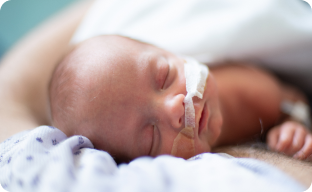
In two papers published in The New England Journal of Medicine, doctors from Newcastle University review the groundbreaking treatment and its success in bringing eight healthy babies into the world. In total, seven mothers gave birth to four boys and four girls, including a set of identical twins, all free of signs of mitochondrial disease. One additional pregnancy is ongoing. A few of the children have experienced minor medical issues (such as muscle jerks or elevated blood fats), but doctors say they were treatable and unrelated to the procedure itself.
While MDT is undoubtedly a major step forward, some experts have expressed concerns about the unknown long-term effects of passing genetic changes down through generations, as well as the potential for this technology to lead to further genetic manipulation. The procedure is currently not permitted under US regulations.
“It’s biologically dangerous,” Stuart Newman, a professor of cell biology and anatomy at the New York Medical College, told NPR. “And then it’s dangerous culturally because it’s the beginning of biological manipulation that won’t just end with preventing certain diseases, but will blossom into a full-fledged eugenics program where genes will be manipulated to make designer babies.”
Others believe the risk is more than worth it. “As parents, all we ever wanted was to give our child a healthy start in life,” one of the mothers said. “After years of uncertainty, this treatment gave us hope – and then it gave us our baby … we’re overwhelmed with gratitude. Science gave us a chance.”


