





























What to Know About the Higher-Stakes Risks of ‘Sharenting’ in the Age of AI


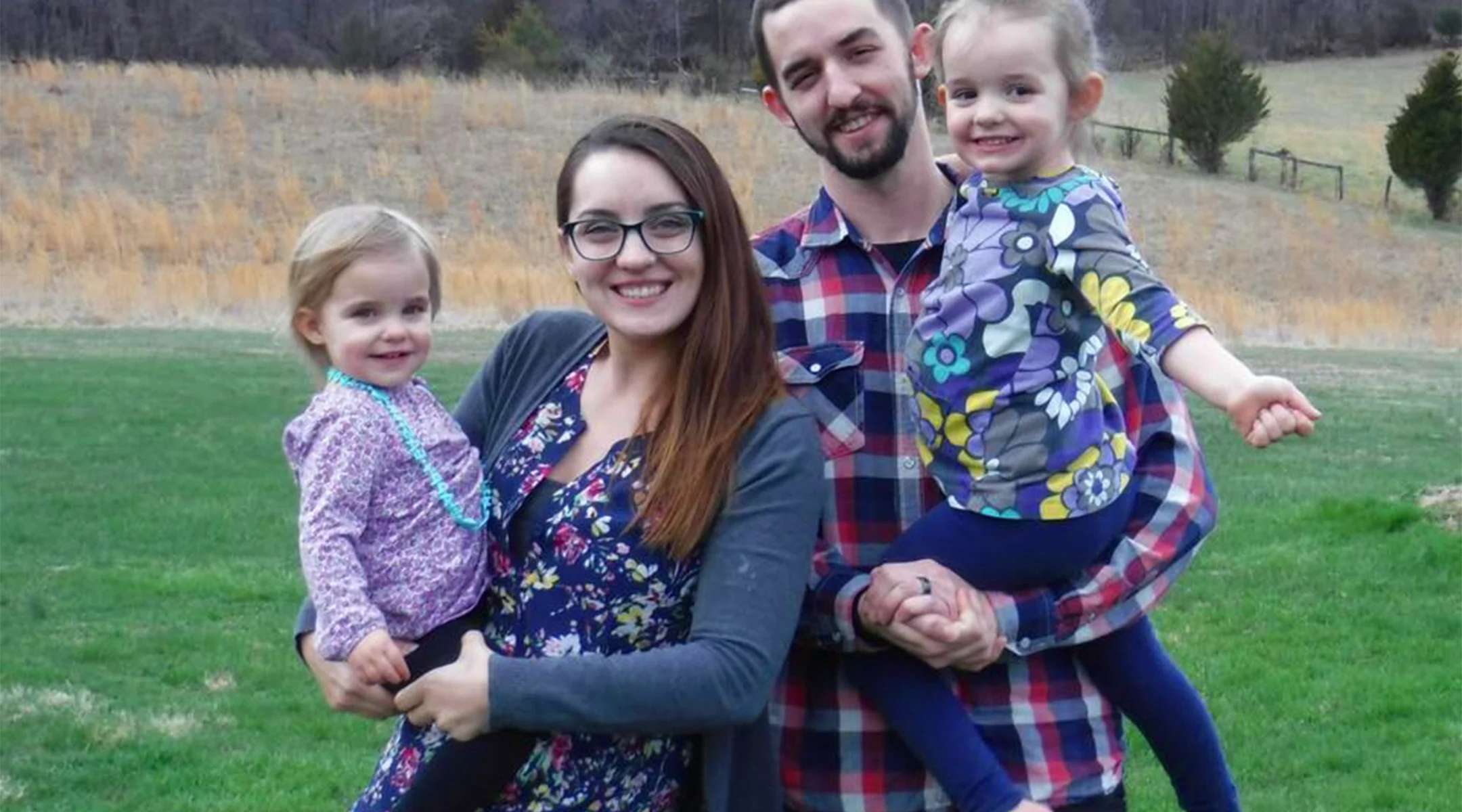
When her first child was born in 2015, Kristen B., a mom of two in Pennsylvania, didn’t think twice about posting pictures of them online. “I didn’t know about data privacy concerns. I didn’t even think about it. But social media was a lot different 10 years ago,” she says. These days, though, she doesn’t share anything kid-related online—in large part because of concerns about AI.
We live in a world where machine-learning systems can dig up personal data from all corners of the internet and generate fake images, videos and text within seconds. This has put many parents on guard when it comes to sharing photos of their kids online—as much as they might want to. “Most folks understand the risks of ‘sharenting’ from what we call the social media era,” says Leah Plunkett, author of Sharenthood: Why We Should Think Before We Talk About Our Kids Online and a faculty member at Harvard Law School. “All of us are still getting our minds around sharing in the AI era.”
So, what kinds of risks does sharenting in the age of AI actually pose for families—and should you stop posting altogether? (Thankfully, no—with careful caveats.) Here’s what you need to know.
- AI dramatically amplifies the risks of “sharenting,” aka posting content online about your kids. Even small bits of personal data—a photo, name or voice clip—can potentially be used to create deepfakes, clones or long-term digital profiles.
- Deepfakes and AI-generated content pose new threats for kids. While the odds of misuse are still relatively low, the tools to create fake images or videos of children are now fast, easy and increasingly common.
- Data scraping can build long-lasting digital portfolios of kids. AI models can pull identifiable information from online content today—and potentially fuel profiling tools that shape opportunities like jobs or college admissions in the future.
- Parents can make sharenting safer by being intentional and private. Limiting your audience, avoiding face-forward photos and audio, scrubbing metadata, and checking for revealing background data all reduce the risk of misuse or exposure.
- Avoid sharing content that reveals personal details or could embarrass your child later. That includes full names, real-time locations, unclothed photos and more.
- Even toddlers and preschoolers can begin learning about digital safety. Asking your child before sharing a photo models respect for their autonomy early on and builds healthy habits around privacy as they grow.
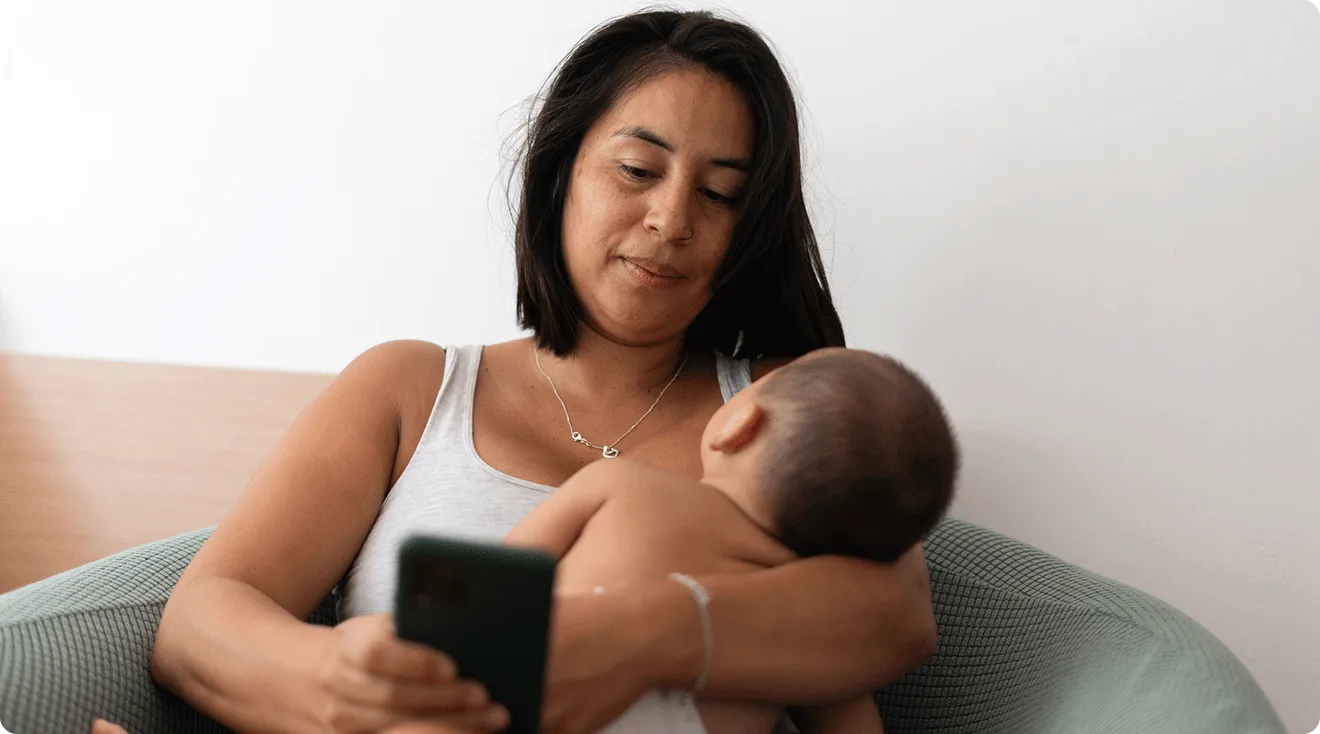
Even if you’ve never heard the term before, you can probably guess what it means: Sharenting is when parents share content online about their kids. That includes posting photos and videos on social media platforms like Facebook and Instagram, as well as sharing on other outlets like blogs or newsletters.
Once a photo, video or another piece of content is posted online, it can live there indefinitely. In the roughly two decades since we’ve lived with social media (Facebook launched in 2004), we’ve seen how that can play out. Old posts that resurface can be embarrassing at best, and tarnish someone’s reputation at worst.
As a result, plenty of us have gotten more selective about how and what we choose to share and with whom. More than half of parents report using privacy settings or restricting who can see posts about their kids online, according to a 2023 poll conducted by University of Michigan’s C.S. Mott Children’s Hospital. “I definitely pay attention to what I post. I’m not going to be posting pictures of them in the bath or anything that contains too much personal information,” says Georgie M., a mom of two in New Jersey.
Increasing protections is a step in the right direction, but unfortunately it may no longer be enough to keep kids’ digital identities safe. “We’re in a whole new world, with many more worlds about to emerge, in terms of what people can do with the smallest bit of personal data, whether it’s a photo, text, a name or any piece of information you’re putting out into the world,” Plunkett says. “It turbocharges the complexities of sharing content of your kids online.”
So what, exactly, are the risks and concerns of sharenting in the AI age? Here’s a closer look.
Deepfakes and voice clones
It’s cool to be able to have ChatGPT or Sora create an image of your dog playing Jeopardy!. It’s not cool that someone else can turn a picture or video of your baby or toddler into something explicit or scary. But with generative AI, whipping up fake images or deepfakes, including nudes, isn’t just possible—it’s shockingly easy. As a result, your child’s image or voice could end up in a creepy meme, video or other type of content. This is both unsettling now and potentially harmful down the road, like when they’re applying for college or a job, notes UNICEF.
If you’re wondering what the odds are that your kid’s picture or voice will get picked up—either randomly or by someone doing it on purpose—the truth is, it’s probably pretty low. But reports of “sextortion” involving AI-generated images of minors (and adults) are on the rise, according to the Federal Bureau of Investigation (FBI). And there’s no telling how things might continue to evolve down the road, since making this type of content is getting easier. “The barrier to creating this fake content has dropped dramatically,” says Kaylin Peete, public affairs coordinator for the Family Online Safety Institute. “In the past you needed advanced tools; now there are apps that can do it in 10 seconds.”
Data scraping and digital portfolios
Data scraping is a process used to train AI models that involves extracting data from the internet, which can include pictures and sensitive information of children. AI models can create clone images or leak sensitive information, including names and the exact time and location where a photo was taken, say experts with Human Rights Watch.
Down the road, the implications of data scraping are chilling. AI tools could compile digital portfolios that may be used to make, for example, hiring decisions about your child in the future. “I’m anticipating that the next generation of those tools, built on emerging and generative AI, will be able to draw on even more data from even more sources,” says Plunkett. “Even something seemingly as innocuous as what developmental stage a baby was in at 3 or 13 months could be used to come up with a portfolio.”
Unlike deepfakes, which may only affect a tiny fraction of the population, data scraping could impact everyone. “Unless we see significant, immediate, sustained federal and state law reform around AI, privacy and acceptable data use, this risk will be at scale. It won’t be individualized,” says Plunkett.
If this all sounds majorly unsettling, you’re not alone. The rise of AI “100 percent” added to Kristen B.’s concerns about posting pictures of her kids. “I no longer share pics of them,” she says, adding that “if I could do it over again, I never would have shared pictures of them” in the first place.
That said, there can still be a lot of joy in sharing those fun moments—baby’s face when she first tried broccoli! Your toddler “reading” his favorite book to his beloved stuffy!—on Instagram or Facebook. “Every family’s risk tolerance is going to be different,” says Plunkett.
There are things you can do to make sharenting safer. While tech experts emphasize that you can never make posting completely risk-free, the key to smarter sharing “is to make it intentional,” says Peete. Here are some ways to do that:
Do: Limit sharing to your inner circle
Even if your account is set to private, can you say with certainty that every one of your connections is trustworthy? Most people would be hard-pressed to say yes (think about that mom influencer you’ve gotten chatty with on DMs but haven’t met IRL, or the neighbor you just met at the local chili cook-off). As a result, “we really don’t know what’s being screenshotted, downloaded or reshared,” from our private posts, Plunkett says.
So, consider creating an inner circle of people you know and 100 percent trust who get to see pictures of your kids. You can make a “Close Friends” group on Instagram or create a custom audience for certain Facebook posts. Another option: Use an encrypted messaging app like Signal or Threema, which tend to be more secure, to share kid-related pictures only with people that really want to see them, like close family members and friends, Plunkett recommends.
Consider going for quality over quantity too. Emily D., a mom of two in Illinois, says she typically only shares pictures of her kids that she knows family members will really enjoy three or four times a year. The less content that’s out there overall, the less likely it is to get picked up and used in a negative way.
Do: Institute a face-out rule
Your child’s (adorable) face is their most identifiable feature, meaning a picture that prominently features it is at higher risk for being manipulated or compiled into a future digital profile. So your safest bet, from a privacy perspective, is to stick with sharing face-free pictures as much as possible. Ideally, that means blocking out your child’s face with an emoji or an avatar or taking pictures from other angles, Peete says. If you really want to include their face, “take the picture at a distance,” she adds.
Do: Skip sharing audio of your child’s voice
Opt for photos over videos where your child is talking or singing, or if you have a video with your child’s voice, mute the audio and replace it with some music instead. “Deepfakes and AI video services have the ability to use voice on top of a person’s physical likeness to create videos that are completely realistic,” says Peete.
Do: Check what’s in the background of your photo
Before you post a picture, check to see what else is visible besides your kid. Parts of the backdrop could reveal key details about your child’s identity that you don’t actually want shared. A picture in front of your house might show your address, for instance, or a snapshot of your kid in their room could feature a “Student of the Week” certificate with their school or daycare’s name on it, says Stacey Steinberg, JD, a child privacy expert and law professor at the University of Florida Levin College of Law. “I don’t include information about my kids’ teachers at school or their classroom number,” says Emily D.
Do: Scrub out metadata
A photo or video’s metadata can provide info on things like when and where a photo was taken, making it easy to glean details about where a kid lives or goes to daycare or school, for instance. This info is automatically added to pics taken with a smartphone, Peete notes. But it’s possible—and worth it—to get rid of it before posting on social media.
On an iPhone, you can adjust or remove the date, time and location for individual photos (just click the three dots in the upper right corner, and you’ll see options for all three). You can’t do that on Android with an image that’s already been taken, but you can turn off location-saving in your phone’s camera settings to stop adding location tags to future photos.
In addition to adopting the smart practices above, there are also a few things to avoid when it comes to sharenting.
Don’t: Share personal information
That video of your toddler reciting her first and last name and where she lives? Proud as you might be, resist the urge to share it online. You should always steer clear of posting anything that includes important personal information about your child, including their full name, date of birth and home address, Peete says.
Don’t: Share pictures where your kid isn’t fully clothed
This includes shots in the bathtub, at the beach or pool, or even ones where your little one is just toddling around in their diaper or undies around the house. Although it’s awful to think about, “some of these innocent images might contain enough identifiers that someone could use another platform to combine an innocent image of a child with a computer-generated image or an image of an adult or another child to create a new form of child sex abuse material,” Steinberg says.
Don’t: Share anything that might embarrass your kid in the future
Speaking of bathtub and diaper pics, before posting, think about whether an image might make your kid uncomfortable if they were to find it online as a tween, teen or adult. If the answer is yes, don’t post it. “Will that picture one day be cross-referenced with your child’s high school graduation photos in a future digital profile? It’s possible, and we don’t know the potential effects on the child’s psychological well-being,” says Steinberg.
Don’t: Share in real time
Want to document a fun birthday party or museum trip? “Wait until you’ve left the place so people don’t know where you and your child are,” Peete advises. Not only is it a smart safety practice, but you’ll spend more time being present with your child.
Don’t: Share photos of other people’s kids without their permission
Being a parent means caring for other kids in your community too. If you’re tempted to post a photo of your child that also features one of their pals, check with their parents first to make sure they’re okay with it. Everyone has different safety preferences, and “you don’t want to overstep that parent’s boundaries,” Peete says. Normalizing asking will make others more likely to extend the same courtesy to you too.
Even with little kids, it’s possible to have age-appropriate conversations about social media and online presence. You’re not going to sit your toddler or preschooler down for an in-depth convo on digital privacy—but you can use sharenting as an opportunity to model consent, says Christine Snyder, MEd, an early childhood consultant and the director of child and family care at the University of Michigan. Before sharing a photo of your little one, whether on social media or even just texting it to someone, you can ask them, “Is it okay if I send this picture of you playing with your blocks to Grandma?” or “Can I share this photo of you with my friend group?”
Even if it feels kind of silly—your 3-year-old (likely) doesn’t even know what Instagram is!—it’s a simple practice that can have far-reaching benefits. “The notion of consent happens in small, innocent ways from very early in life,” Snyder says. “Letting your child know that their likeness is being captured and shared tells them, ‘I respect you as a person separate from myself.’”
As for what you can do about images and videos of your child that are already out there? Start by making your accounts private if they aren’t already, and if you can, delete any old posts that no longer feel appropriate. If you feel comfortable, ask family members or friends who may have posted iffy pictures of your child to do the same. “These are important conversations where we can say, ‘We’re still learning about this. Maybe we did something wrong, and maybe we can change it,’” says Steinberg.
If you want to take it a step further, do a Google search to see what images or videos of your child come up. You can reach out to platforms, websites or hosts directly to request that content be taken down, Peete says. You can also contact Google to have private or sensitive content removed from search results.
That said, try not to let this kind of search-and-scrub mission get too overwhelming. “You want to come out of this cleanup process feeling better and more secure, as opposed to, it’s 3 a.m. and you’re emailing the editor of a local newspaper five towns over because you think the back of your child’s head appears in a photo of a soccer game,” Plunkett says.
Frequently Asked Questions
Is sharing a photo of my baby via an Instagram Story better than on fixed feed?
Yes, but Stories still aren’t perfect. “They’re a bit lower-risk because they disappear after 24 hours. But they’re still not immune to being saved or recorded,” and potentially reposted where they can get picked up by AI models or other bad actors, Peete says.
Keep in mind, too, that Stories stay in Instagram’s database even after they disappear from your friends’ feeds. (Check your own Stories archive in your profile setting, and you’ll see that they’re still there.) If Instagram or another platform with “disappearing” post capacities were to experience a data breach down the road, or if the platform was sold to another company, there’s no telling where the Stories might end up, Steinberg points out.
What is the biggest consequence of sharenting in the long-term?
The AI landscape is changing rapidly, so it’s hard to say for sure what kinds of consequences we might run into over the next couple of years. For now, Plunkett’s biggest concern is the potential development of digital profiling tools that scrape every bit of data about a person, which can be used to determine things like job eligibility, college admissions or whether they’re a good candidate for a bank loan, to name just a few.
Are private accounts safe from AI scraping?
Posts that are private are less likely to end up in the wrong hands or get scraped, says Peete. But like with stories, private posts aren’t immune from getting shared, and they can still be subject to data breaches or third-party buyouts down the road.
Is it safe to post photos of my baby in the bath?
Online safety experts generally agree that it’s best to avoid posting pictures of your child where they aren’t fully clothed, since these pics are at higher risk for being manipulated into sexually explicit images.
That said, everyone’s risk tolerance is different, and it doesn’t necessarily have to be all or nothing. Sharing one really adorable snapshot of your kid in their bathing suit on your annual beach vacation is a lot different than posting bathtime pictures all the time, Steinberg points out.
What is the American Academy of Pediatrics’ (AAP) stance on sharenting?
The AAP is upfront about the fact that posting about your kid is never 100 percent risk-free, and that it creates a digital footprint for them without their consent. They also say that parents should weigh the pros and cons of sharing for their family. If you decide to do it, make sure to post thoughtfully and carefully, with your child’s best interests in mind.
When it comes to sharenting, AI definitely adds some new—and potentially scary—risks. While there’s no way to guarantee how the content you post might be used in the future, being more selective about what you share and who you share it with can help protect your child now and later on.
Please note: The Bump and the materials and information it contains are not intended to, and do not constitute, medical or other health advice or diagnosis and should not be used as such. You should always consult with a qualified physician or health professional about your specific circumstances.
Plus, more from The Bump:
Kaylin Peete is the public affairs coordinator for the Family Online Safety Institute.
Leah Plunkett is the author of Sharenthood: Why We Should Think Before We Talk About Our Kids Online and a faculty member at Harvard Law School.
Christine Snyder, MEd, is an early childhood consultant and the director of child and family care at the University of Michigan. She’s currently a doctoral candidate at Eastern Michigan University.
Stacey Steinberg, JD, is a child privacy expert and law professor at the University of Florida Levin College of Law. She also serves as the law college’s director for the Program on Children and Families. She received her JD from the University of Florida.
C.S. Mott Children’s Hospital, University of Michigan Health, Sharing on Parenting: Getting Advice Through Social Media, November 2023
UNICEF, What You Need to Know About “Sharenting”,
Federal Bureau of Investigation, Malicious Actors Manipulating Photos and Videos to Create Explicit Content and Sextortion Schemes, June 2023
Human Rights Watch, Children’s Personal Photos Are Powering AI Exploitation, June 2024
American Academy of Pediatrics, Sharenting: 5 Questions to Ask Before You Post, November 2019
Real-parent perspectives:
- Emily D., mom of two in Illinois
- Georgie M., mom of two in New Jersey
- Kristen B., mom of two in Pennsylvania
Learn how we ensure the accuracy of our content through our editorial and medical review process.
Target Baby Registry
Free $100+ Value Welcome KitFree $100+ Value Welcome Kit
15% Completion Discount15% Completion Discount
Free 1-Year ReturnsFree 1-Year Returns
20+ Exclusive 20% Off
Deals For Mom & Baby20+ Exclusive 20% Off Deals For Mom & Baby1:1 Concierge With
Baby Gear Specialists1:1 Concierge With Baby Gear Specialists

*Subject to availability and Retailer's terms.
We earn commissions from these links.