











Is Your Newborn Cross-Eyed? Here’s Why

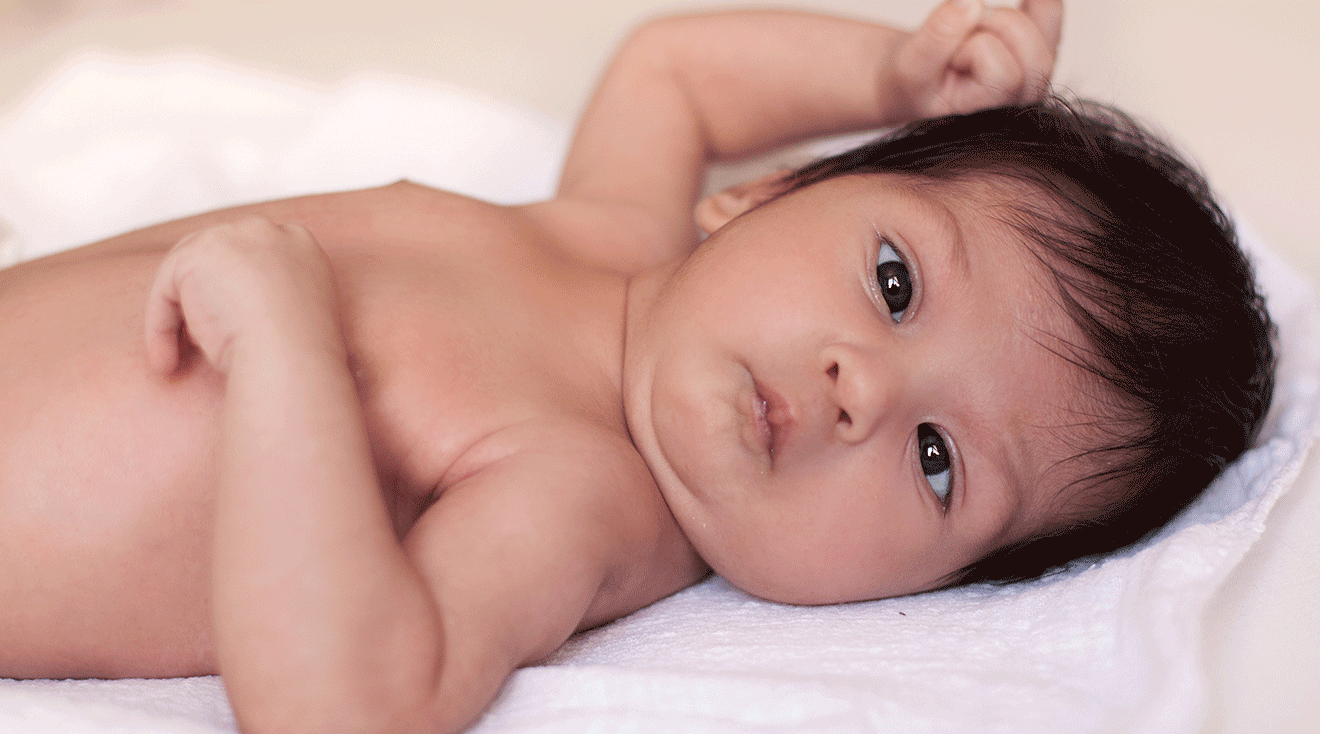

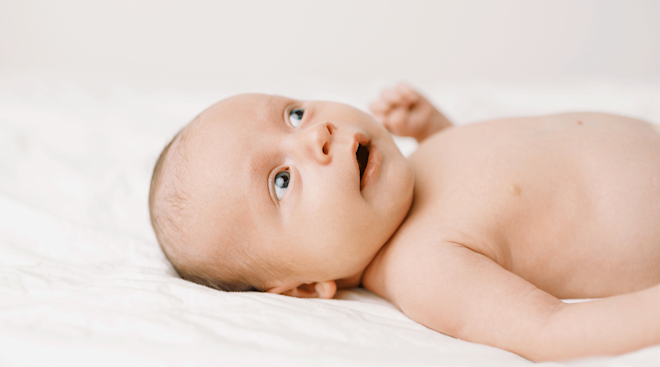
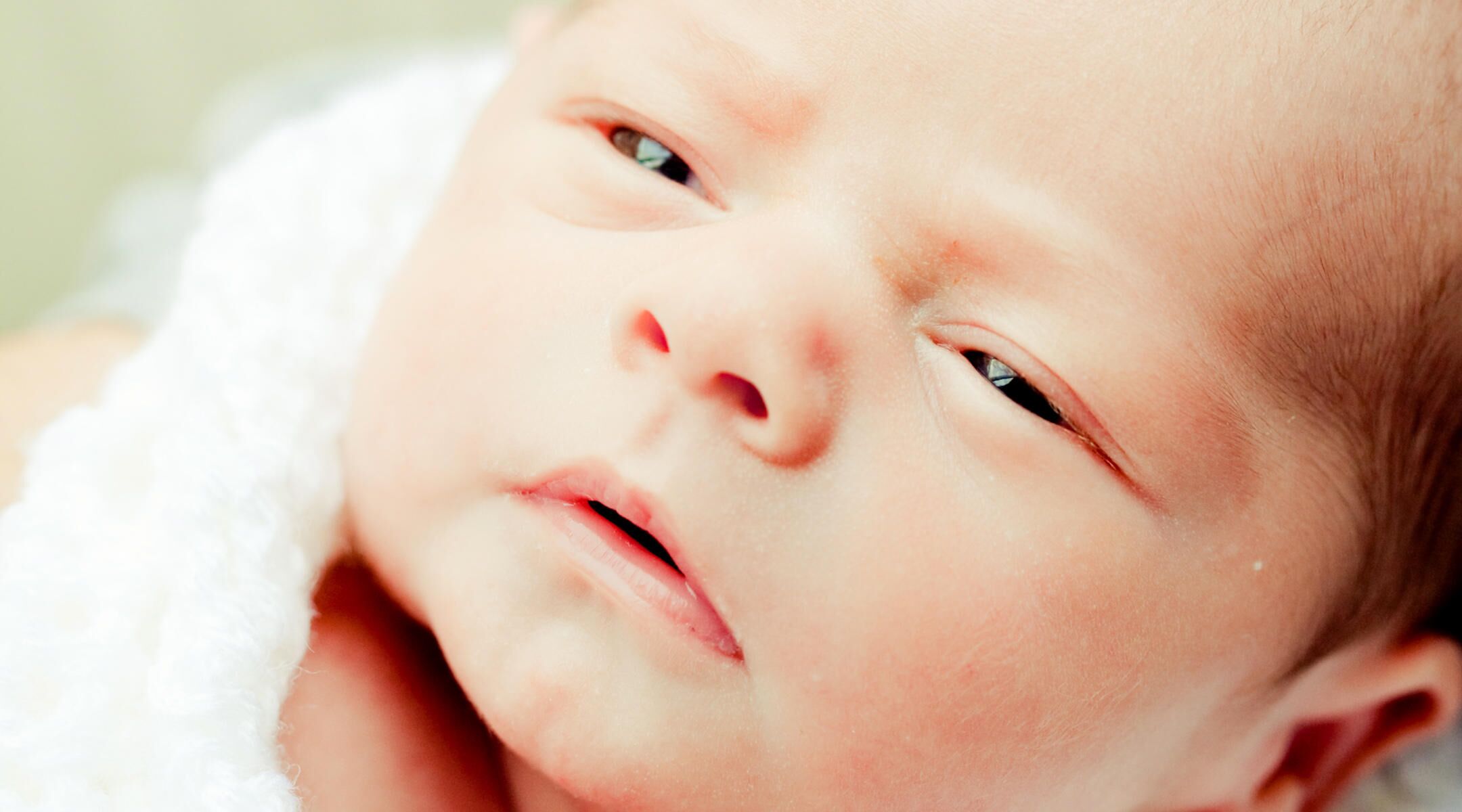
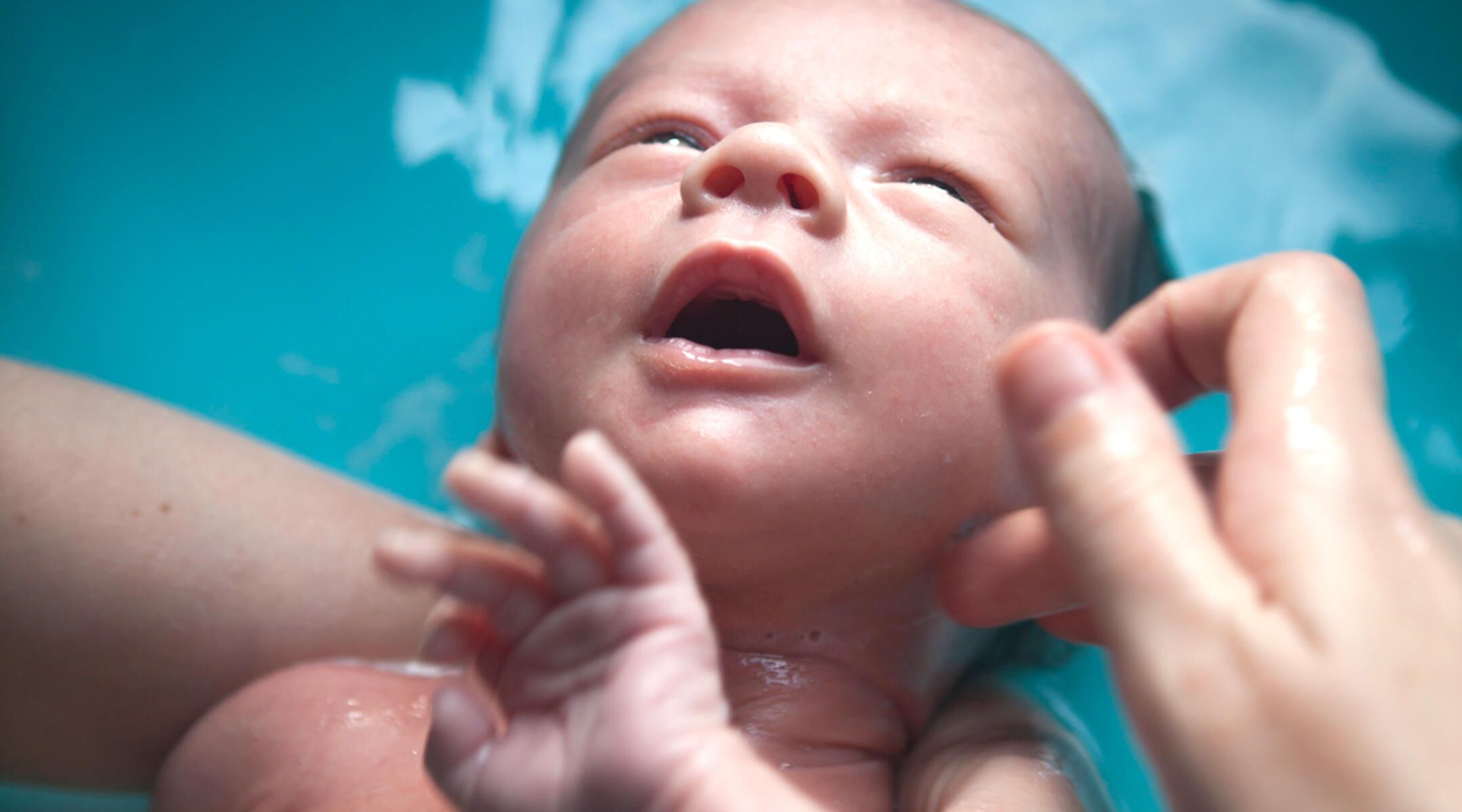
If you could spend hours gazing into your little one’s eyes, you’re not alone. But if you notice your newborn is cross-eyed, it’s understandable to have questions. It’s important to note that having crossed eyes is pretty common in babies—and it typically goes away on its own. That said, here are a few things to keep in mind from pediatric experts.
Yes, it’s totally normal for your newborn to be cross-eyed. “We get asked about this a lot,” says Naline Lai, MD, a pediatrician at Children’s Hospital of Philadelphia.
Robert Hamilton, MD, a pediatrician at Providence-Saint John’s Health Center in Santa Monica, California, and host of the podcast The Hamilton Review: Where Kids and Culture Collide, says he wouldn’t necessarily call it “normal,” but that it’s common. “You see it frequently in new babies—their eyes tend to look around, they wander,” he says.
For the first two months of life or so, a baby’s eyes don’t work well together, explains Jennifer Fogt, OD, an assistant professor in the College of Optometry at The Ohio State University. “It often can be normal, especially if it only happens momentarily,” she says.
You likely have a cross-eyed baby simply because they’re still developing. “Babies don’t have fully developed visual systems at birth,” Fogt says. Eye muscles are also weak at first, Lai says. “They need to be strengthened.”
Sometimes, there are more serious factors at play, says Lai. Risk factors include being born premature or with a low birth weight and having cerebral palsy, she adds.
A cross-eyed baby can have eyes that drift inward and don’t look at things straight on, Lai says. “One trick we use is we shine a light at baby’s eyes and see where the light reflex falls,” she says. “That little glimmer of light on the eyeball should land on the same spot on both eyes.”
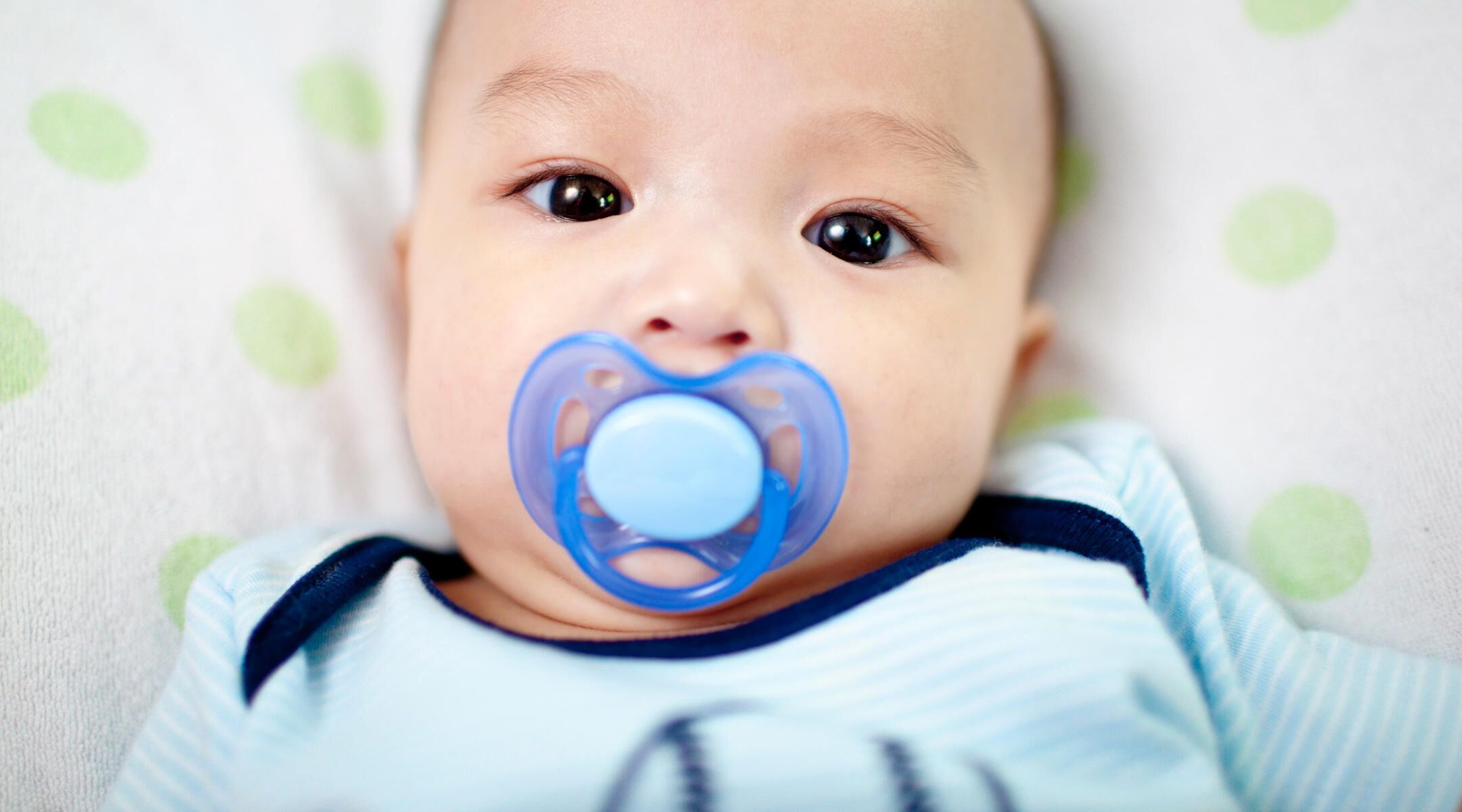
Every child is different, but most experts say that a baby’s eyes will typically stop crossing by about 4 months. “If it goes beyond 3 or 4 months, I’ll refer them to an ophthalmologist,” Hamilton says. “In kids, the [eye] muscles can be slow to mature.”
If baby’s eyes aren’t working together by 4 months or so, they might have strabismus, a condition that happens when eyes don’t line up or when one or both eyes wander. It can run in families, and can be caused by a problem with the eye muscles.
“Strabismus is a concern in baby, because baby’s only using one eye and can’t develop normal vision in the eye that’s not being used,” Fogt says.
If you think baby might need treatment for crossed eyes, make sure to ask your pediatrician to refer you to an eye doctor who works with infants, Fogt says. “An optometrist who works with infants or a pediatric ophthalmologist must perform a dilated eye exam to determine the cause of an eye turn and the type of treatment needed,” she says.
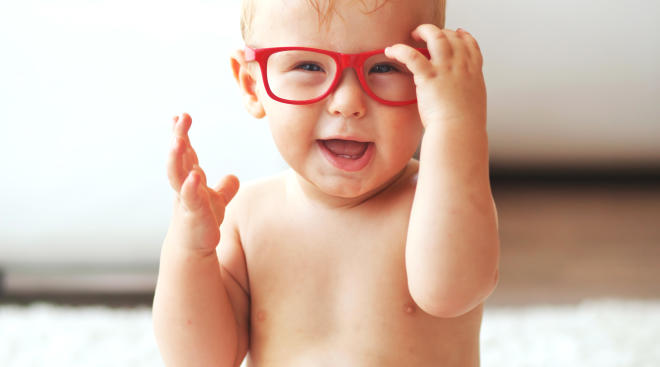
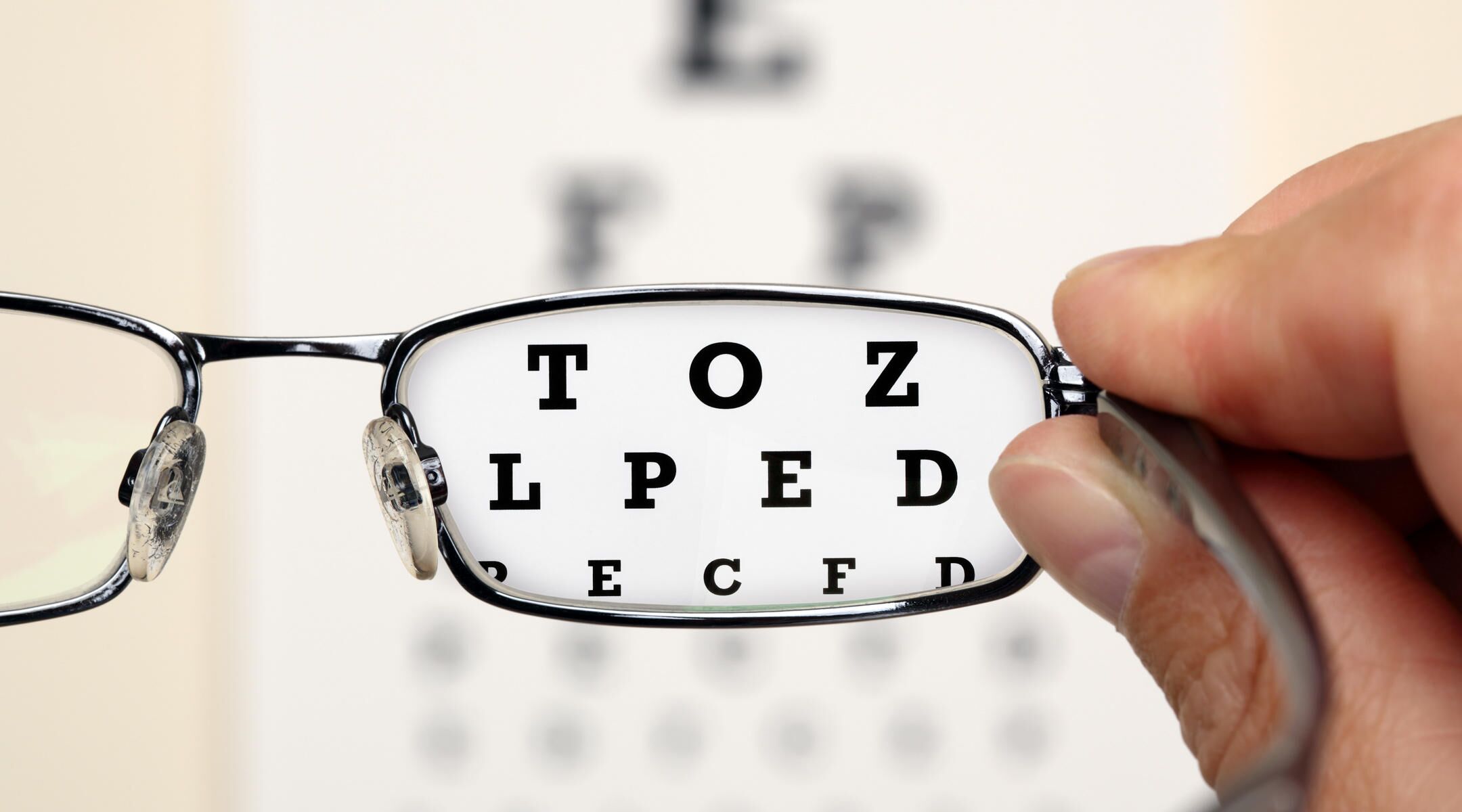
There are a few possibilities for treatment, including putting a patch over one of baby’s eyes. “If one eye is not being used, the cause is determined, and then eye-patching of the ‘good’ eye is done to make sure the other eye is used and can develop vision,” Fogt says. Your provider can also use eye drops to dilate the stronger eye to encourage baby to use their weaker eye to focus, Hamilton says. Glasses are also an option, as is surgery.
If you’re concerned about baby’s crossed eyes, make sure to bring it up with your provider. “The sooner strabismus is treated, the less likely that extended eye-patching will be needed, and the more likely baby will grow up to have two great-seeing eyes,” Fogt says.
Please note: The Bump and the materials and information it contains are not intended to, and do not constitute, medical or other health advice or diagnosis and should not be used as such. You should always consult with a qualified physician or health professional about your specific circumstances.
Plus, more from The Bump:
Jennifer Fogt, OD, MS, FAAO, FSLS, is an assistant professor in the College of Optometry at The Ohio State University. She earned her Doctor of Optometry and Master of Science in Pharmacology degrees from The Ohio State University.
Robert Hamilton, MD, is a pediatrician at Providence-Saint John’s Health Center in Santa Monica, California, and the host of the podcast The Hamilton Review: Where Kids and Culture Collide. He earned his medical degree from the University of California Los Angeles.
Naline Lai, MD, FAAP, is a pediatrician at Children's Hospital of Philadelphia. She earned her medical degree from the University of Pittsburgh School of Medicine.
Nemours KidsHealth, Strabismus, March 2022
Learn how we ensure the accuracy of our content through our editorial and medical review process.
Target Baby Registry
Free $100+ Value Welcome KitFree $100+ Value Welcome Kit
15% Completion Discount15% Completion Discount
Free 1-Year ReturnsFree 1-Year Returns
20+ Exclusive 20% Off
Deals For Mom & Baby20+ Exclusive 20% Off Deals For Mom & Baby1:1 Concierge With
Baby Gear Specialists1:1 Concierge With Baby Gear Specialists

*Subject to availability and Retailer's terms.
We earn commissions from these links.