
























Is Santa Real? The Ultimate Guide for Parents Balancing Magic and Truth

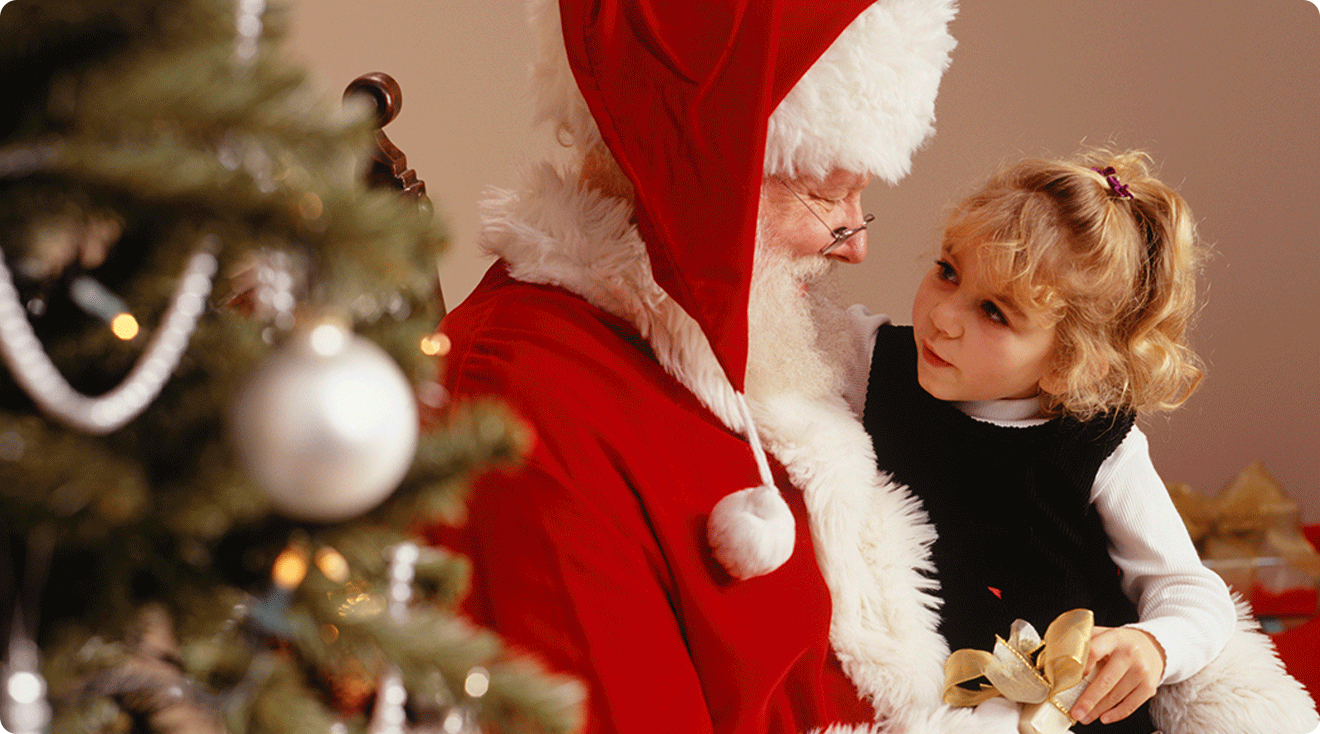

As a kid, I was what you might call an advanced-aged Santa believer. In fifth grade, my friends kept offering me “proof” that Santa isn’t real. I felt bad for them—they were so jaded, I thought. Santa and I were BFFs, and that wasn’t changing anytime soon. Needless to say, it took me a while to accept the truth (well, what most adults choose to believe is true) about Santa.
Of course, every child is different. While some little ones eagerly believe that Santa chutes down our chimneys every Christmas Eve to deliver presents that were most certainly not one-click-ordered by their parents the day before, others are ready for the cold, hard truth much earlier. This leaves many parents wondering: What should you say when your child asks, “Is Santa real?” And when do kids stop believing in Santa, anyway?
We talked to child psychologists and real parents to help you find a balance between magic and reality. Spoiler alert: There’s no right or wrong answer here, and every family has their own individual approach to the holiday season and the loaded Santa question.
- There’s no “right” age to have the “Santa talk.” It depends on your child’s maturity, curiosity and emotional readiness.
- Keeping the Santa magic alive isn’t lying—it’s engaging in age-appropriate make-believe.
- When in doubt on what to do when asked “Is Santa real?”, follow your child’s lead and tune in to their readiness.
For parents who celebrate Christmas, figuring out when, how or even if you should have the “Santa talk" can be tricky. What’s a thoughtful parent to do? Read on for expert considerations and advice.
Remember that fantasy is an appropriate part of a child’s world
It’s common for parents to worry that going along with the Santa story is deceiving their kids. However, psychologists say that’s not the case. “Young children live in a world where reality and fantasy overlap,” says Robyn Koslowitz, PhD, a clinical child and family psychologist and author of Post-Traumatic Parenting: Break the Cycle, Become the Parent You Always Wanted to Be. “From a developmental perspective, believing in Santa is no different from believing that a stuffed animal has feelings or that the moon follows them home. Adults stepping into that imaginative world is about playing together, not about ‘tricking’ them.”
When in doubt, follow your child’s lead
Before spilling the beans about Santa, get clear on whether or not your little one is truly prepared. “Ask yourself: Is your child actually ready to hear the truth, or are they still enjoying the fantasy?,” advises Koslowitz. “Some ask because they want to know, others because they want reassurance. Follow their lead, rather than an arbitrary age.”
Jim Manning, aka “Santa Jim,” a full-time children’s entertainer who has been Boston’s premiere Santa Claus for over 20 years, adds, “I believe every parent knows their child’s curiosity and readiness best. Whether you keep the magic going a little longer or begin shifting to explaining the bigger lesson that Santa is about kindness and generosity, what matters is helping your child feel included and special.”
Plan to revisit the conversation
Some parents want to rip off the Band-Aid and tell the truth about Santa from the get-go, and that’s a perfectly valid choice. But your youngest kids may not be able to wrap their heads around the concept the first time you dive in. “As kids deepen their understanding of the world, you may have to revisit the conversation,” says Marilyn Cross Coleman, LCSW, a psychotherapist and founder of Shameless Mama Wellness. “This takes a little pressure off, as there’s no need to get it ‘perfect’ in one conversation!”
Prioritize emotional safety
As a parent, it’s normal to grieve the loss of the Santa magic—especially if your child is still quite little. But it’s important to be straightforward with your child when they’re asking “Is Santa real?” and are ready for the truth—and some kids can be ready surprisingly early! “When kids ask big questions, the content matters less than the emotional tone of the conversation,” advises Koslowitz. “Your goal is to keep the parent-child bond strong, not just to transfer information. If they’re skeptical, don’t keep the illusion going. Answer honestly and gently.”
Make honesty gentle, not abrupt
Even if your child is ready to hear that Santa’s actually Mom and Dad, you should still deliver the news gently. Koslowitz suggests saying something like: “Santa is a story adults tell to make the holidays magical. Now… you get to be part of creating that magic too.” You can transform “the talk” into a bonding moment by helping them process the news with care.
Validate your child’s feelings
All kinds of emotions may arise when you have the Santa talk with your child. Support and validate their feelings as they process the news. “Children may feel surprised, disappointed or proud to be ‘in on it.’ All of those reactions are valid. Reflect their emotions, rather than brushing them aside,” says Koslowitz.
Promote your child to Santa’s helper
If your child has younger siblings, deputizing them as “Santa’s helper” can help ease the transition away from belief and give them a way to keep the magic alive. “Many children love being included in keeping the tradition alive for younger siblings. It turns a potentially disillusioning moment into a rite of passage,” says Koslowitz. Manning adds, “That sense of responsibility and pride helps them carry the tradition forward instead of feeling like it ended.” When I was finally ready to hear that Santa isn’t real (sorry, little Kristen), my parents made sure to do this for me, and it helped my transition tremendously.
Keep siblings and peers in mind
If your kids are in on the Santa secret, talk to them about respecting the beliefs of their younger siblings and believer classmates. “If older children know, help them understand the importance of respecting younger children’s developmental stage, just as adults respected theirs when they believed,” says Koslowitz.
Every family has their own unique approach to the Santa topic. As long as children’s emotional safety is taken into account, you can’t go wrong. Here are a few examples of how different families approach this holiday conundrum.
-
“I’m a mom of two (almost 10 and almost 7). We decided early on to let them believe in Santa for as long as they want (and yes, they still do!), but also to set things up in a way that would make keeping the magic realistic for us. From the start, we told them that not all gifts come from Santa: Some are from the people who love you. We also explained that most of the Santas they see aren’t the real Santa, which actually makes spotting the ‘real one’ more fun.” — Sarah B., mom of two in Bethesda, Maryland
-
“I never had the Santa talk with my parents. All of us just kept up the charade forever. And I never felt like my parents lied to me. I just sort of understood that it was part of the fun of Christmas. Here I am now with two kids, and we haven’t had the Santa talk. I’ve made it clear I’ll answer questions about anything they ever want to talk about, but Santa appears to be off-limits for them. Maybe they don’t want to know. Hey, sometimes it’s just more fun to believe in magic, and there’s nothing wrong with that.” — Tess K., mom of two in Kansas City, Kansas
-
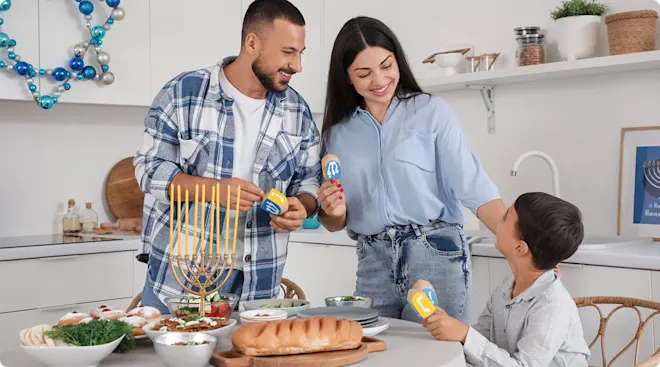
“As Jewish parents, we have a unique challenge when it comes to the ‘Santa talk.’ Instead of grappling with Santa being real or not, we have to navigate teaching our children to be respectful of others and their beliefs and not to interfere with how their families deal with the subject.” — Scott R., dad of two in Burbank, California
-
“As the parents of an only child, we found that the magic of Santa lasted a little longer. With no older siblings around to spill the beans, the belief held strong until our daughter finally asked us directly if Santa was real. We had always agreed we wouldn’t lie when that moment came. So we told her the truth: That the magic of Santa lives in all of us. And when you’re old enough, it becomes your turn to help spread that magic.” — Nancy S., mom of one in Weymouth, Massachusetts
-
“Maybe I’m a little too ‘Bah humbug’ about it all, but I grew up thinking Santa was just a fun character and I’m pretty sure my 4-year-old son thinks the same. We give presents with a wink, like ‘Haha, it’s from Santa,’ but it’s obviously not. I think it’s really magical and sweet that so many families keep the Santa story going, but it was just never that big of a deal for us!” — Natalie Gontcharova, senior editor at The Bump and mom of one
A fun way to help your kids transition from belief to partnership is telling them the origin story of Santa—after all, St. Nicholas was a real person! According to the Museum of Arts and Sciences in Central Florida, St. Nicholas of Myra was a 4th-century Christian bishop living in Turkey. He was known for secret gift-giving, especially to children and the poor. In the Middle Ages and beyond, his story evolved into a tradition where people placed gifts in children’s shoes. In Holland, they called this “Sinterklaas.” Finally, in the 19th century, the story further evolved through various creative works into our modern-day Santa Claus tradition.
Frequently Asked Questions
At what age should you talk to your kids about Santa?
You know your kids best, and there’s no “correct” age to talk to them about Santa. “The right time depends on your child’s curiosity, maturity and emotional readiness, not a number,” says Koslowitz. Coleman adds, “There’s room for truth and fantasy with young kids. Their world is full of this dichotomy. Young children live somewhere between imagination and reality. We see this in their behavior every day, and their brains are wired for it.”
When do kids stop believing in Santa?
There’s no specific age when kids stop believing in Santa. “In my experience, most children begin to question the myth at about 7 or 8 years old, but the ages vary widely,” says Coleman. In other words, they could be much younger—or much older—than that. “Generally, the questioning begins as they start to receive information about it from their peers.” Koslowitz adds, “Some hold on to belief longer, especially in families that encourage imaginative play.”
What should you do if another kid tells your child Santa isn’t real?
This is a good time to tune in to your child’s readiness. “Ask what your child heard and how they feel. If they seem ready, have the conversation honestly. If not, you can say that different families believe different things and they can decide what feels right for them,” says Koslowitz. Coleman adds, “I’ve found that when kids come to their parents with these types of revelations, it’s often to test the parent’s reaction to what they’re sharing more than to hear an answer to any question.”
How should you answer the question “Is Santa real or is it your parents?”
First, ask what they think the answer is. If you sense that they're ready for the truth, Koslowitz suggests saying something like, “Santa is how grown-ups make the holidays magical. Parents help make that magic happen.” Coleman suggests a similar response: “The story of Santa is meant to be about joy and generosity. It’s a story that families tell one another to keep the magic of the season alive.”
How does Google answer the question, “Is Santa real?”
The answer may slightly vary by user. Google’s AI overview may read something like: “No, the figure of Santa Claus is not a real, single person, but the legend is based on the historical figure of St. Nicholas, a 4th-century bishop known for his generosity and kindness. The modern Santa Claus is a composite figure that evolved from this legend and was popularized through storytelling and commercialization.”
Is it okay to “lie” to kids about Santa?
In short, yes—because it’s engaging in make believe, rather than lying. “I’d consider it keeping a myth alive more than lying, and we keep many myths alive for ourselves and for our children,” says Coleman. “Imaginary play is a fundamental milestone of early childhood development, and Santa is a big part of this.” Adds Koslowitz, “Imagination builds creativity, symbolic thinking and emotional resilience.”
The Santa story is a magical and age-appropriate part of a young child’s world. It’s perfectly okay—and not “lying”—to engage in the story of Santa as long as your child’s on board. It’s also a completely valid choice to tell the truth about Santa from the beginning. No matter your approach, there are many other ways to make the Christmas season feel magical, and your stance on Santa won’t make or break the holidays. What’s important is that you’re doing what feels right for your family and the traditions you choose to keep—or not keep.
Please note: The Bump and the materials and information it contains are not intended to, and do not constitute, medical or other health advice or diagnosis and should not be used as such. You should always consult with a qualified physician or health professional about your specific circumstances.
Plus, more from The Bump:
Marilyn Cross Coleman, LCSW, is a psychotherapist and founder of Shameless Mama Wellness. She earned her master’s of social work degree from The University of Texas at Austin.
Robyn Koslowitz, PhD, is a clinical child and family psychologist, and the author of Post-Traumatic Parenting: Break the Cycle, Become the Parent You Always Wanted to Be. She earned her doctorate in clinical child psychology from New York University.
Jim Manning, or “Santa Jim,” is a full-time children's entertainer who has been Boston’s premiere Santa Claus for over 20 years.
Museum of Arts and Sciences, The Evolution of Santa Claus
Real-parent perspectives:
- Natalie Gontcharova, senior editor at The Bump and mom of one
- Jason B., dad of two in Austin, Texas
- Nancy S., mom of one in Weymouth, Massachusetts
- Sarah B., mom of two in Bethesda, Maryland
- Scott R., dad of two in Burbank, California
- Tess K., mom of two in Kansas City, Kansas
Learn how we ensure the accuracy of our content through our editorial and medical review process.
Target Baby Registry
Free $100+ Value Welcome KitFree $100+ Value Welcome Kit
15% Completion Discount15% Completion Discount
Free 1-Year ReturnsFree 1-Year Returns
20+ Exclusive 20% Off
Deals For Mom & Baby20+ Exclusive 20% Off Deals For Mom & Baby1:1 Concierge With
Baby Gear Specialists1:1 Concierge With Baby Gear Specialists

*Subject to availability and Retailer's terms.
We earn commissions from these links.