

























6 Parenting Trends to Keep on Your Radar in 2026


Parenting is always changing—and as 2026 approaches, a fresh set of trends is starting to take shape. With the oldest members of Gen Z now at the helm, a growing number of moms and dads are rethinking old rules and finding new ways to make raising kids work for them.
For many, this means blending different parenting styles, setting clearer boundaries without losing warmth and getting serious about sharing the load at home. Tech is playing a bigger role too, helping parents save time, cut down on decision fatigue and be more present with their kids. At the same time, there’s a growing push to break unhelpful cycles, ease up on picture-perfect expectations and rethink how much screen time and stimulation kids really need.
All of this is playing out at a time when parents are increasingly stressed and isolated. “We typically don’t have the same support system previous generations had access to,” says Alexandra B., a 29-year-old mom and The Bump user. “Many young mamas are trying to recreate some kind of stability and security for their kids in these quite messy and difficult times, but struggling because of the massive load of work, taking care of the home and the kids.”
Here are some of the biggest parenting trends poised to shape family life in 2026—and what they reveal about where modern parenting is headed.
- A shift in parenting styles. Parents are increasingly stepping away from strictly “gentle parenting”; Gen Z reports often using a hybrid approach. They’re also leaving Pinterest perfection behind in 2025.
- Sharing responsibility. Split-shift parenting is becoming more popular, with one parent focusing on parenting while the other works, does chores or takes care of themselves.
- Trauma-healing. At the same time, this generation is breaking harmful cycles passed down from parents and grandparents.
- Tech fluency. Parents are using AI to streamline their routines, but limiting kids’ screen time and social media. Both habits allow parents to be more present.
Sure, gentle parenting is all about validating kids’ feelings—which is important! But focusing on feelings 100 percent of the time (or close to it) has left a lot of parents tapped out. “Somewhere along the way, gentle parenting got confused with permissive parenting, leading to poor boundary development in social settings,” says David Bruce, RP, an individual and couples psychotherapist based in Toronto.
Those who are just entering the parenting world are taking notes. Fewer than 40 percent of Gen Z’ers say they use gentle parenting themselves, recent research shows. One poster on the Gen Z subreddit put it this way: “Parenting should always be loving, but sometimes that entails making a decision your child doesn’t like.” In fact, research also shows that the vast majority of 20-something moms and dads use a blend of different parenting styles instead of rigidly sticking to one. The approach, sometimes termed hybrid parenting, is where you pick and choose elements of different parenting styles to come up with a personalized approach that works for your family.
“There are some principles of gentle parenting that I’ve adopted, like showing my daughter what it looks like to be calm. I also show her how to say ‘thank you’ and ‘please’ when the time calls for these responses,” says Abby P., a 26-year-old mom of one in Virginia. When it comes to discipline, though, she skews more authoritative. “I try to set clear, firm boundaries. [But] I also try to give my child reasons as to why we don’t do something, rather than just saying ‘because I said so’ or ‘no,’” she says.
We’ve all heard about how it takes a village to raise kids. But many parents feel like community support is harder than ever to come by. Increasingly, more of us are turning to tech to fill that gap. The launch of new AI-powered apps like Joy and Milo can lighten the load by easing decision fatigue, streamlining schedules and tasks, whipping up meal plans and even coming up with bedtime stories that don’t suck. And that, many parents say, is freeing up valuable brain space.
When used correctly, AI can also help enable parents to be more present with their kids. “These applications are silent background runners and require minimal effort on the part of parents,” says Cassidy Blair, PsyD, a clinical psychologist based in Beverly Hills, California. “It makes the parents less tired and absent, and their contact with their children more significant and concentrated.”
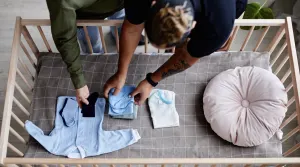
Of course, being a parent is a 24/7 job. But increasingly, we’re finding ways to slice up the duties so both partners can get a break, with one in two Gen Z parents saying they divide career and household responsibilities evenly.
One way that’s happening: Split-shift parenting, where each parent takes a shift with the kids while the other one tackles other to-dos or just does their own thing. “We trade. On Saturday morning, my husband gets to sleep in and rest, and on Sunday morning I get to sleep in and rest. I always advise everybody to do this! During the afternoons, we do family time together, but the alone mornings are very important for us,” one user recently shared on the toddlers subreddit. With babies, this might look like splitting overnight duties so everyone can get some sleep.
Not only does shift-splitting help everyone feel more rested—it can help partners get along better and parent better, since one person (usually Mom) isn’t angry and burnt out from doing it all. “You’re relieved of the constant stress of trying to do everything. It gives you some breathing space,” says Blair, who often encourages couples in her practice to try splitting shifts.
Spend a few minutes on Instagram or TikTok, and you’ll no doubt come across reels and videos from therapists with advice on healing trauma from your childhood so you can get intentional about not repeating those dynamics with your own kids. Rather than just doing things the way our parents did, many new parents are stopping and asking: How can we do it better?
For some, the answer may lie in small habit shifts. “One of the things that I strive to make better is to be on my phone less than my mom. I try to give my daughter my undivided attention first thing in the morning when she wakes up, right after nap time and once I log off work for at least 30 minutes,” says Abby P. For others, it might mean being more willing to talk about their feelings or not ascribing to rigid gender roles, says Kim Vander Dussen, PsyD, a clinical psychology professor at The Chicago School in Anaheim, California.
It goes even deeper for some of us, like TikTok user @TheCochranfam, who reveals how she’s broken the cycle of domestic violence by showing how her kids respond to seeing things like wooden spoons and belts, which her own parents used to hit her with. “My kids will never fear me or any household items,” she wrote.
No mom or dad gets it right all the time—and more of us are willing to be upfront about that and not beat ourselves up over it. “Getting frustrated with your kids doesn’t make you inadequate. Forgetting a lunch doesn’t make you inadequate. Having little to no patience or being distracted at times each day doesn’t make you inadequate,” family therapist Eli Harwood, LPC, shares on TikTok.
The it’s-okay-to-not-always-be-okay mindset has also started to chip away at the once-prevalent idea that your home and family life has to be perfectly curated (we’re looking at you, Pinterest nurseries and birthday parties). “We’re shifting away from Instagram parenting,” says Vander Dussen. Taryn P., a mom of two, says the pressure to make everything polished and pristine is “exhausting. It’s great [for others] if they can do it, but I have a full-time job; am running for public office; and have two kids, a husband and a dog. I’m proud when I remember to order balloons and a cake.”
As the scary downsides of screen use and social media for kids has gotten more attention, lots of us are making major efforts to pull back. For parents of babies and toddlers, that means offering more real-world play options and while the grownups stay as phone-free as possible during family time. “We try to avoid screens in our household. We spent a lot of time outside exploring, hitting playgrounds and splash pads, playing games inside with blocks, coloring and hide-and-seek,” says Taryn P.
Speaking of real-world play, it also means stressing less about having “activities” at all. Sometimes, having nothing to do can be good! “Gen Z parents are talking about how they recognize that their children need to be bored. They’re conscious of avoiding overstimulation,” Vander Dussen says. “Millennial parents weren’t necessarily aware of how important that was, so there might be some correction now.”
Parenting in 2026 is shaping up to be less about following strict rules and more about finding what truly works for your family. From saying bye-bye to gentle parenting to smarter use of tech and lower expectations around perfection, we’re prioritizing balance—and our sanity. The common thread? A move toward raising children that feels more sustainable, more human and far less performative—with happier parents and kids as the goal.
Please note: The Bump and the materials and information it contains are not intended to, and do not constitute, medical or other health advice or diagnosis and should not be used as such. You should always consult with a qualified physician or health professional about your specific circumstances.
Plus, more from The Bump:
Cassidy Blair, PsyD, is a clinical psychologist based in Beverly Hills, California.
David Bruce, RP, is an individual and couples psychotherapist based in Toronto.
Kim Vander Dussen, PsyD, is a clinical psychology professor at The Chicago School in Anaheim, California.
Real-parent perspectives:
- Abby P., 26-year-old mom of one in Virginia
- Alexandra B., 29-year-old mom in Malaysia
- Taryn P., mom of two
Learn how we ensure the accuracy of our content through our editorial and medical review process.
Target Baby Registry
Free $100+ Value Welcome KitFree $100+ Value Welcome Kit
15% Completion Discount15% Completion Discount
Free 1-Year ReturnsFree 1-Year Returns
20+ Exclusive 20% Off
Deals For Mom & Baby20+ Exclusive 20% Off Deals For Mom & Baby1:1 Concierge With
Baby Gear Specialists1:1 Concierge With Baby Gear Specialists

*Subject to availability and Retailer's terms.
We earn commissions from these links.