

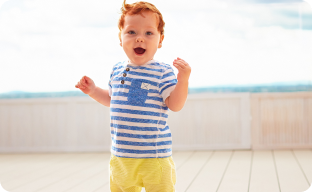

Can You Put Sunscreen on a Newborn? (And How to Protect Baby for Now)


My three boys have always loved being outside—even when they were babies, we would take trips to the park, the beach, the zoo…you name it. Of course, as a brand-new mom I worried about exposing my newborn’s super-delicate skin to the sun’s harmful rays. So I asked my pediatrician if I could put sunscreen on him. (I thought I’d get a resounding “yes.”)
But, as it turns out, experts don’t recommend sunscreen for newborns and babies younger than 6 months.
So how do you protect your newborn from the sun without slathering on the sunscreen? Here, we break down everything to know about baby sun protection—including when you finally can break out the SPF.
- Age guidelines: Pediatricians don’t recommend sunscreen for newborns or babies younger than 6 months old. After 6 months, a broad-spectrum mineral sunscreen with a minimum SPF of 30 is recommended.
- Protecting newborns from the sun: Help your newborn or baby avoid direct sun exposure by keeping them out of the sun, dressing them in protective gear and lightweight clothing and keeping them hydrated.
- Exceptions to the rule: If you can’t avoid the sun, you can put a small amount of mineral sunscreen on a newborn’s exposed areas to prevent a sunburn.
Pediatricians don’t recommend putting sunscreen on newborns or infants under 6 months of age.
“Under 6 months, baby’s skin isn’t built the way older kids’ skin is,” explains Dr. Wendy Hunter, MD, a pediatrician at Rady Children’s Hospital in San Diego and host of The Pediatrician Next Door podcast. “The outer layer is thinner and the cells are less tightly packed, so the skin doesn’t work as effectively as a barrier the way it does in older kids and adults.”
As a result, Dr. Hunter says that younger babies absorb the chemicals in sunscreen more easily, and “their bodies aren’t ready to process those exposures.”
Plus, the ingredients in sunscreen can be harsh on newborn skin, leading to potential skin irritation and rashes. “Younger infants tend to have more sensitive skin, which can become irritated by the chemical ingredients present in many sunscreens,” explains Dr. Caroline Brown, MD, IBCLC, a pediatrician in Winston-Salem, North Carolina.
Finally, the U.S. Food and Drug Administration, (FDA) hasn’t approved these products for babies under 6 months.
That said, direct sun exposure isn’t good for baby either. Baby skin is thin and vulnerable, so it’s important to take extra steps to protect it from the sun’s harmful rays. After all, newborns and young babies “have very little melanin, which means they’re even more susceptible to sun damage,” explains Dr. Hunter.
When my babies were under 6 months, I was diligent about keeping them in the shade. If they were in the sun, they had clothes and a hat on.
“Most babies can start wearing sunscreen around 6 months of age,” says Dr. Hunter. “By then, their skin barrier is more developed and they handle topical products better.” (In other words, you don’t have to worry as much about chemical absorption and irritation.)
Guidance for babies under 6 months old
It’s best to avoid direct sun exposure for newborns and young babies, according to the American Academy of Pediatrics (AAP). This means using sun tents, umbrellas, stroller canopies and protective clothing—as well as keeping baby in shaded areas.
That’s what Melissa F., a mom of four in Fairfield, Connecticut, did. “We avoided long beach or pool days at this age, or used a baby tent on the beach with a fan attached to keep baby protected from the sun,” she says.
There is an exception to the no-sunscreen rule for babies under 6 months: If staying out of the sun is unavoidable, using a bit of mineral sunscreen (with titanium dioxide or zinc oxide) is not only okay—it’s recommended. “If you truly can’t avoid the sun, it’s safer to use a small amount of sunscreen on exposed areas rather than risk a burn,” says Dr. Hunter.
“Using it is better than your baby burning,” agrees Dr. Leslie Treece, MD, FAAP, a pediatrician in Tennessee. “Remember that skin damage is cumulative and early sunburns increase lifetime risk of developing skin cancer when you’re older.”
Guidance for babies 6 months and older
For babies older than 6 months, apply a mineral sunscreen with a minimum SPF of 30 on exposed areas 30 minutes before going outside. And remember to reapply—every two hours if dry, and every 40 minutes if wet, suggests Dr. Treece.
Because baby’s skin is still sensitive, you should continue to avoid direct sun exposure and use gear like protective clothing, tents and umbrellas.
We first took my son to the beach when he was 2 months old, and we brought a baby beach tent. We also tried to time our outings around morning and sunset, to avoid the sun when it’s at its highest.
With sunscreen (generally) off the table for newborns and babies under 6 months old, here are some pediatrician-recommended tips for avoiding newborn sunburn.
Stay out of the sun, especially during peak hours
If possible, avoid the sun completely from 10 a.m. to 2 p.m., since that’s when UV rays are strongest. “Plan your day around the sun,” suggests Dr. Hunter. “Aim for early morning or late afternoon outings when UV exposure is lower.”
Use protective gear
Again, tents and umbrellas are key for protecting baby from the sun. Also, look for shaded areas. “Keep baby in the shade as much as possible,” advises Dr. Hunter.
Use a stroller with an extended canopy
“I’ve had several of my young patients come to my office with sunburns on their lower legs from their feet hanging out of the stroller,” Dr. Hunter says. “Babies can get too much sun so easily!” An extended canopy—or breathable stroller cover—can help protect your newborn from sunburn.
Dress baby in thin, protective clothes
Dressing your newborn in lightweight, breathable, long-sleeve shirts and pants is one of the best ways to protect them from the sun. Look for clothes made with a tight weave or with an Ultraviolet Protection Factor (UPF) label. Also, “rash guard shirts with SPF can be really helpful,” says Dr. Treece. Melissa F. agrees: “For my little ones, we use rash guards,” she says. “It’s an easy way to prevent sunburns.”
Put a wide-brimmed hat on baby
“Hats with at least a 3-inch brim or bill are very helpful,” says Dr. Brown.
Use baby sunglasses
Baby’s skin isn’t the only thing that needs protecting—their eyes need shielding too. Dr. Brown recommends looking for baby sunglasses that provide at least 97 percent protection from both UVA and UVB rays. (Bonus: Shades will look pretty cool on your little one!)
Use a portable fan
A stroller fan can help prevent overheating, which Dr. Treece says is a risk especially if baby is in an enclosed space like a tent, covered stroller or car seat.
Hydrate, hydrate, hydrate
Dehydration in baby can be a concern when they’re out in the sun. “Hydrate with breast milk or formula,” Dr. Treece recommends. She adds that babies shouldn’t drink water until they’re 6 months old.
If absolutely necessary, use sunscreen
Again, if you absolutely can’t avoid the sun, it’s better to dab a small amount of mineral sunscreen on a newborn or younger baby than risk a sunburn.

Even when you’ve taken every precaution, newborn sunburn can still happen—and it’s important to take it seriously. “Even a mild burn at this age can be a bigger deal than it looks,” warns Dr. Hunter. “The first step is to get them completely out of the sun.”
Then, focus on keeping baby’s skin cool. Give your little one a lukewarm (not cold) bath, and place gentle, cool compresses on their skin.
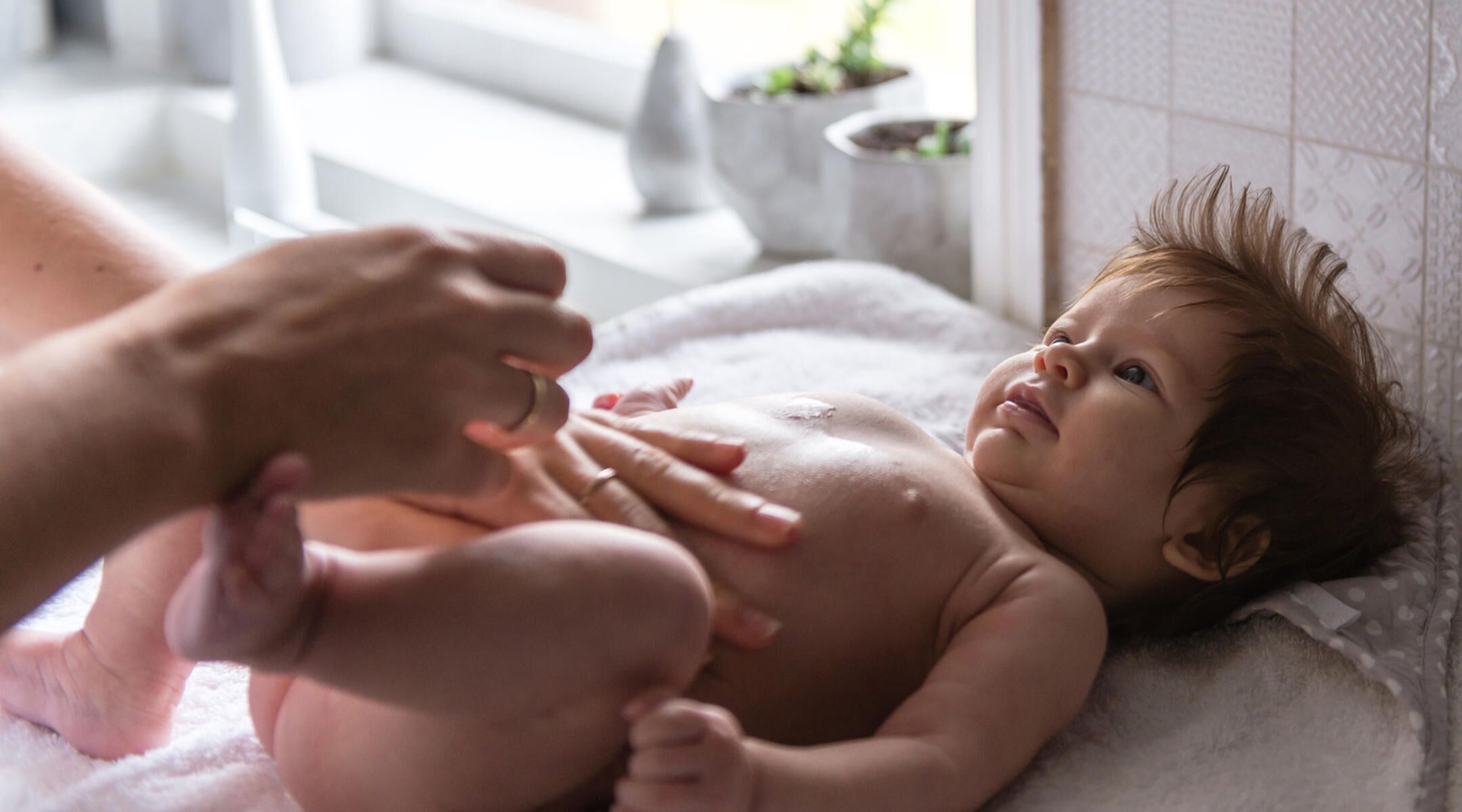
Once baby’s dry, you can use a fragrance-free baby lotion or plain petroleum jelly to protect and soothe their skin, but avoid medicated creams, advises Dr. Hunter. Make sure to offer to feed baby frequently too, since newborn sunburn can lead to fluid loss, she adds.
Most importantly, make sure to contact your pediatrician if your newborn—or baby of any age—has a sunburn.
“If you see blistering, significant redness, fussiness, fever or baby seems uncomfortable, call your pediatrician,” Dr. Hunter advises. “Newborn skin is fragile, and we have a lower threshold to evaluate burns in this age group.”
Frequently Asked Questions
Can newborns wear sunscreen?
“It’s best to avoid sunscreen in babies under 6 months old,” reiterates Dr. Treece. “Their skin is still very thin and absorbent and they can develop rashes from the sunscreen.” But if sun exposure is unavoidable, you can use a small amount of mineral sunscreen on baby—it’s better than a potential sunburn.
What sunscreen is safe for newborns?
While newborns generally shouldn’t wear sunscreen, the best sunscreen for newborns—in those exceptions when you can’t avoid the sun—is mineral-based, with either zinc oxide or titanium dioxide. These are designed to sit on top of the skin, rather than be absorbed by it, and act as a physical block for the sun instead of a chemical block, says Dr. Treece. They’re also “less likely to be irritating and less likely to make their eyes burn if water causes it to run into their eyes,” she adds.
What to look for in sunscreen for baby?
“There’s no such thing as a perfect sunscreen, but there are definitely better choices,” Dr. Hunter says. She suggests seeking out a broad-spectrum sunscreen, which means it protects against both UVB rays (the ones that cause sunburns) and UVA rays (the ones that are linked to skin damage and skin cancer). “A lot of parents don’t realize that SPF only tells you about UVB protection, so that ‘broad-spectrum’ label really matters,” she adds.
Experts also recommend using a mineral-based sunscreen—with either zinc oxide or titanium dioxide as the main ingredient—for babies and toddlers. These don’t get absorbed into the skin, and are less likely to be irritating.
But “convenience matters more than parents think,” Dr. Hunter points out. “The best sunscreen is the one you can actually get on your child.” Whether that’s a stick, powder, spray or cream formula, choose a sunscreen that actually makes sense for your everyday life.
Do babies need SPF 30 or 50?
A minimum of SPF 30 is best—but many people like SPF 50. “An SPF 30 blocks about 97 percent of UVB rays, while SPF 50 blocks about 98 percent,” explains Dr. Hunter. “So higher isn’t dramatically stronger, but it does give you a little more margin of error which matters with kids, because we never apply it perfectly.” She adds: “Many parents opt for SPF 50 for extra reassurance.”
Why can't babies under 6 months use sunscreen?
Simply put, young babies’ skin is more sensitive. “Given their immature skin barrier, there’s potential for increased absorption of chemical sunscreen ingredients in very young infants,” Dr. Brown explains. Moreover, the UV filters in sunscreen haven’t been FDA-approved for this age group.
What’s the difference between sunblock and sunscreen?
In a nutshell, sunscreen absorbs and breaks down UV rays using ingredients such as avobenzone, oxybenzone and octinoxate. It’s usually lighter and doesn’t leave residue. Sunblock, on the other hand, sits on top of skin reflecting UV rays. Sometimes called mineral sunscreen, it contains titanium dioxide or zinc oxide. It’s often thicker and can leave white residue on your skin. That said, it's worth noting that the FDA banned the use of the word "sunblock" on packaging in 2011, since no product can completely block the sun.
Experts recommend avoiding putting sunscreen on baby until they’re about 6 months old. Instead, dress them in lightweight, protective clothing, use gear like baby tents and stroller canopies and stay in the shade as much as possible. After 6 months, you can slather sunscreen on baby—but continue avoiding direct sun exposure and using protective gear. Baby’s delicate skin will thank you!
It’s common for new parents to worry about baby getting sunburned while taking their first trip to the beach—or even a stroll around the block. To and learn how to protect baby’s skin before you’re able to use sunscreen, we spoke with three pediatricians and consulted sources such as the FDA and the AAP for guidance. Finally, we interviewed three moms, including one of our editors, about how they kept their babies safe from the sun’s rays. After editing, this article was vetted through fact-check and reviewed by our pediatrician medical adviser. Learn more about how we ensure the accuracy of our content through our editorial and medical review process.
About the author: Lynsey Eidell is a sun-loving freelance writer and a mom of three boys who also enjoy being active outdoors. To that end, Lynsey knows a thing or two about applying sunscreen to newborns (when absolutely necessary!), babies, toddlers and big kids alike. She’s a graduate of Villanova University and a native of Fairfield County, Connecticut, where she currently lives.
Please note: The Bump and the materials and information it contains are not intended to, and do not constitute, medical or other health advice or diagnosis and should not be used as such. You should always consult with a qualified physician or health professional about your specific circumstances.
Plus, more from The Bump:
Dr. Caroline Brown, MD, FAAP, IBCLC, is a pediatrician in Winston-Salem, North Carolina. She earned her medical degree from Wake Forest University School of Medicine.
Dr. Wendy Hunter, MD, FAAP, is a pediatrician at Rady Children’s Hospital in San Diego and the host of the podcast The Pediatrician Next Door. She earned her medical degree from the University of North Carolina-Chapel Hill.
Dr. Leslie Treece, MD, FAAP, is a pediatrician in Tennessee. She earned her medical degree from the University of South Alabama College of Medicine.
US Food and Drug Administration, Should You Put Sunscreen on Infants? Not Usually
Healthy Children (American Academy of Pediatrics), Sun Safety: Information for Parents About Sunburn & Sunscreen, August 2024
Skin Cancer Foundation, Sun-Protective Clothing, August 2025
Cleveland Clinic, Sunblock vs. Sunscreen: What’s the Difference?, March 2025
Real-parent perspectives:
- Natalie Gontcharova, senior editor at The Bump and mom of one
- Melissa F., mom of four in Fairfield, Connecticut
- Morgan K., mom of two in Fairfield, Connecticut
Learn how we ensure the accuracy of our content through our editorial and medical review process.
Target Baby Registry
Free $100+ Value Welcome KitFree $100+ Value Welcome Kit
15% Completion Discount15% Completion Discount
Free 1-Year ReturnsFree 1-Year Returns
20+ Exclusive 20% Off
Deals For Mom & Baby20+ Exclusive 20% Off Deals For Mom & Baby1:1 Concierge With
Baby Gear Specialists1:1 Concierge With Baby Gear Specialists

*Subject to availability and Retailer's terms.
We earn commissions from these links.