


























CircleBumpCheckedFilledMedicalBookmarkBookmarkTickBookmarkAddCheckBoxCheckBoxFilled

When to Take Baby to the Dentist, According to Experts and Parents

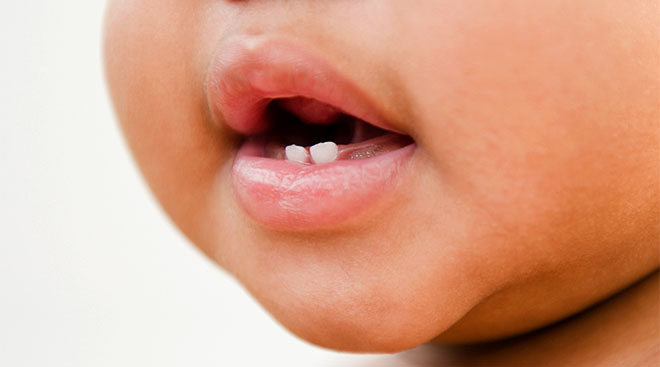
Has your little one cut their first baby teeth? If so, it’s time to schedule baby’s first dental visit.
save article
profile picture of Nehal Aggarwal
By Nehal Aggarwal, Editor
Updated June 24, 2025
mom and baby sitting in dentist chair for baby's first dental check up
Image: KAY4YK | Shutterstock

Going to the dentist isn’t anyone’s idea of a good time, but it’s important to keep up with it—and it starts really early on. You may be surprised—and a little confused—to learn that babies should start going to the dentist in that first year, given that most babies only have a couple of teeth by their first birthday. But that inaugural dental appointment is a crucial part of setting baby up for lifelong success when it comes to oral health and hygiene.

“One thing I always tell parents: caring for baby teeth is not just about today, it’s about setting lifelong habits. Children who develop cavities in baby teeth are much more likely to develop cavities in their adult teeth,” says Ashley Lerman, DDS, a board-certified pediatric dentist at Firstgrin. “Early prevention, regular visits and good home care can set your child up for a lifetime of better oral health.” So when should you take baby to the dentist? How often? And what happens at baby’s first dental visit? Here, experts answer all your questions.

Key Takeaways

  • Babies should start going to the dentist within six months of their first tooth appearing or by their first birthday, whichever comes first.
  • At their first visit, baby will likely have a “lap exam.” The dentist will examine baby’s gums, teeth and bite from the comfort of your lap. They’ll also look for signs of any issues, like a tongue or lip tie.
  • There may be some tears at the first appointment, but keep things fun and positive rather than fearful. The first visit is a good time to start building a positive relationship with the dentist.
  • Babies can see family dentists that have experience with infants and toddlers or a pediatric dentist. Pediatric dentists typically have a few more years of training where they specifically learn how to treat babies.

When Should Babies Start Going to the Dentist?

Babies should start going to the dentist by the time they’re one year old, or within 6 months of their first tooth coming in, “whichever comes first,” Lerman says. “The earlier we start, the better chance we have of preventing problems rather than treating them later.”

Michelle Jorgensen, DDS, a holistic dentist in Utah, agrees, noting these early visits are more about getting baby comfortable with the dentist than anything else. “These early visits aren’t about drills or cavities,” she says. “They’re about building trust, prevention and learning.”

Related Video

How often should babies and toddlers go to the dentist?

According to Jorgensen, babies should go to the dentist every six months, similar to adults. This will help them monitor baby’s oral development, check for issues like tongue and lip ties and catch any early signs of tooth decay. You may be surprised to hear that baby’s brand new teeth can be susceptible to decay, but “baby teeth are surprisingly vulnerable,” Jorgensen explains. “They have thinner enamel than adult teeth, so decay can move quickly and silently. Starting dental care early allows small problems to be caught (and sometimes even reversed) before they become big ones.” In fact, Lerman notes that young kids at higher risk for cavities may be asked to come in every three months for appointments.

What Happens at Baby’s First Dental Appointment?

As Lerman notes, “The first visit is really about prevention and education.” At the appointment, your pediatric dentist will do an exam while baby remains seated on your lap. They’ll look at baby’s incoming teeth and gums, check their bite and monitor for any signs of issues. Then, they’ll clean baby’s teeth and apply fluoride, if needed, as well as answer any questions parents may have about teething, feeding, thumb sucking and baby’s oral care routine.

During this exam, baby may cry, but don’t be startled by this, says Jorgensen. “It’s not fear, it’s unfamiliarity. When parents stay calm and upbeat, the child usually follows their lead.”

We don't have pediatric dentists but just go to our family dentist—they’re great with our daughter. The first time they didn't even do anything with her teeth, just let her sit in the chair, look at the instruments and watch the overhead TV. They also gave her a toy from the treasure chest. My husband and I have been taking her with us to our appointments since she was one year old, so she has been watching everything that happens.

The Bump community member

How to Choose Baby’s Dentist

The key is to find a care provider that’s confident in treating tiny mouths and will help ensure baby’s relationship with the dentist starts off as—and continues to be—a positive one. Given this goal, one of the most-commonly asked questions when it comes to baby’s dentist is whether they should see a pediatric dentist, specifically. While family dentists are certainly well-equipped to care for babies, pediatric dentists who “work frequently with children may be more attuned to the subtleties of a developing mouth,” Jorgensen says.

Lerman agrees, noting that pediatric dentists attend an extra two to three years of training after dental school to learn how to specifically care for babies, toddlers and young children with special needs. “We know how to make the experience positive and age-appropriate,” Lerman says. “While some general dentists are very comfortable seeing young children, I recommend choosing a pediatric dentist, if possible, especially for your child’s first visits.” Pediatric dentists will normally see kids from birth through age 18.

As you look for a pediatric or family dentist, ask your circle for their recommendations and look online for office reviews. You’ll also want to call and confirm the office takes baby’s dental insurance, if applicable, for the appointment.

My children’s dentist always says to lay off the chips and cheddar snacks—and to limit the between-meal snacks, in general. Way easier said than done for my perpetually hungry littles! Of course, for some reason, when the dentist asks my kids to do something, they actually listen. She once told my middle daughter—who was 3 at the time—that it was time to give up the binky. The next day, my girl ditched it cold turkey and never looked back!

Lauren Barth

Associate content director at The Bump and mom of 3

Tips for Making Baby’s First Dental Visit a Breeze

While baby’s first dental visit may sound stressful, experts offer a few strategies to help make sure it goes smoothly:

  • Schedule it smartly: You’ll want to schedule the visit for when baby’s rested and fed, advises Lerman. This also means not scheduling it too close to baby’s nap time in case it takes a while.
  • Keep it positive and fun: If you don’t like going to the dentist as an adult, you’re not alone. According to Cleveland Clinic, 36 percent of American adults are actually afraid of the dentist. But it’s important to teach your littles that the dentist isn’t something to be feared by keeping the communication around the appointment light and fun. Talk about it as if it’s a new adventure and avoid using words like “hurt,” “shot” or "scared,” even if you’re just trying to reassure your little one.
  • Come prepared: Come prepared with bottles, snacks and toys for baby in case the wait time is a little longer. Plus, bring comfort items to help soothe them, such as a pacifier or blanket, suggests Lerman.
  • Stay calm: It can be anxiety-inducing as a parent to watch your baby go to the dentist for the first time, but remember that baby will pick up on how you’re feeling. In other words, if you’re nervous, they’ll be nervous too.

It was an easy visit. She sat on my lap and they peeked in her mouth. They gave us a nice toddler brush and went over proper brushing with me… We go back next week to learn flossing… My dentist said she’s seen 2-to-3 year olds with a mouth full of cavities and some decay because parents don't know they're supposed to floss and—even if they think they are—they're not brushing right.

The Bump community member

How to Care for Baby’s Teeth at Home

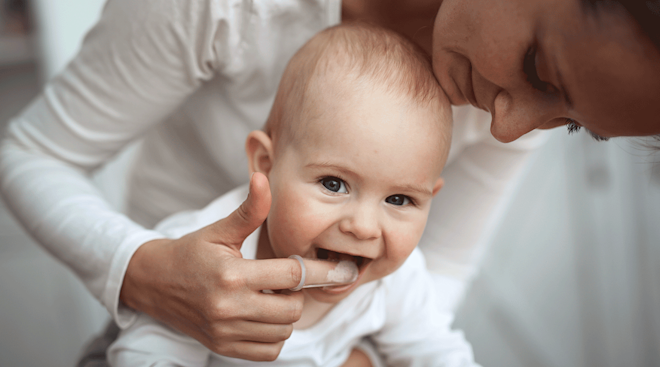
You can start caring for baby’s oral health even before their first tooth arrives. To do so, use a clean and warm washcloth or a silicone finger brush to gently clean baby’s gums. Not only does this help get rid of any milk residue, but it also helps baby to get used to an oral care routine, which will come in handy when they start brushing their teeth.

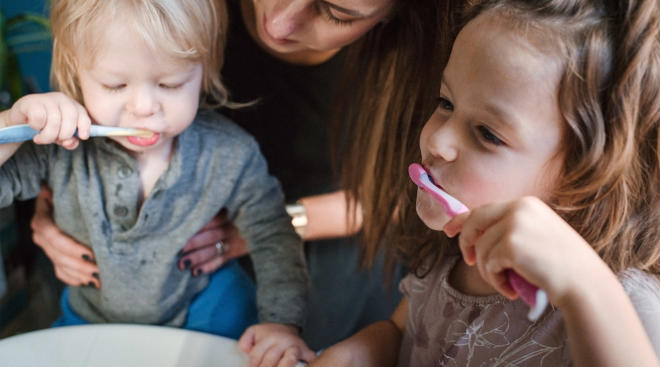
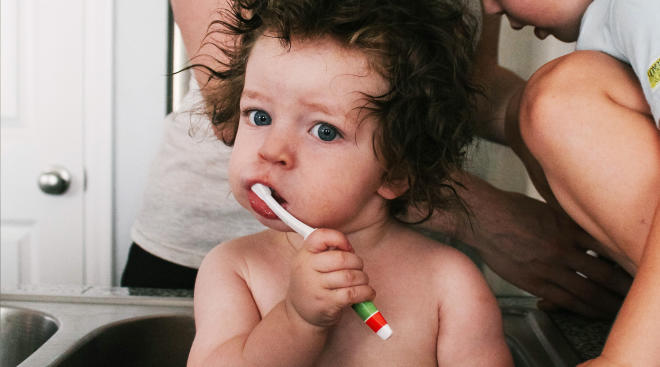
When their teeth start coming in, use a soft toothbrush with a small grain of toothpaste to brush twice a day (rinse the toothpaste off for them since they can’t spit out yet). Help your kids brush their teeth and brush for them until they get the hang of it (this likely won’t happen until around age 7), to make sure everything’s getting properly cleaned. Once their teeth start to touch, you’ll want to introduce floss, Jorgensen says.

Lastly, along with baby’s oral care routine, look at their diet and limit sugary snacks and drinks, Lerman says. You should also limit sticky foods, like dried fruit and vitamin gummies, as these can lead to cavities. “Offer water between meals, and make sure to lift the lip and look at the teeth regularly so you can spot any early signs of trouble,” Lerman adds

Frequently Asked Questions

When do I take baby to the dentist?

According to both experts, take baby to the dentist within six months of their first tooth coming in or by their first birthday, whichever happens first.

What are the risks of delaying baby’s first dental visit?

Delaying baby’s first dental visit allows potential problems to go undetected and untreated. According to the Centers for Disease Control and Prevention, over half of American kids will have a cavity by the time they’re 8 years old, causing pain, infection and impacting the development of their permanent teeth.

Delaying dental visits can also lead to delays in fixing any issues causing your toddler to snore or grind their teeth. These issues can “affect sleep, behavior and even growth,” Jorgensen says. “A trained dentist can spot these subtle signs and guide parents toward solutions.”

What is bottle rot?

Bottle rot is tooth decay that’s caused when baby is often put to bed with a bottle of milk, formula or juice. “The sugars from these drinks feed cavity-causing bacteria, which can lead to severe decay in baby teeth,” Lerman says. You may not think this is a huge deal, since baby’s teeth will be replaced by their permanent teeth anyway, but Jorgensen says baby teeth play an important role in speech development and nutrition. They also “guide the adult teeth into place,” she adds.

What are milk teeth?

Despite their name, milk teeth actually have nothing to do with milk. Milk teeth is just another name for baby teeth or primary teeth, Lerman says. This is the first set of teeth that baby will have before their adult teeth come in and help babies chew, speak and smile, as well as serve as markers for baby’s permanent teeth.

What age range do pediatric dentists usually see?

Pediatric dentists usually see babies from birth through age 18, Lerman says, adding that in some special circumstances, it can even go beyond age 18.

How soon should I start wiping baby’s gums?

You can start wiping baby’s gums as soon as they’re born, Lerman says. This not only helps keep their mouth clean, but it also helps them get used to an oral care routine.

When can I start using toothpaste with baby?

Parents can start using a fluoride toothpaste as soon as baby’s first tooth comes in. You’ll want to use the tiniest amount—around the size of a grain of rice—to brush their tooth. “Fluoride helps protect against cavities from the start. Studies show that fluoride toothpaste is safe and effective when used in this small amount,” Lerman says.

When do kids need dental X-rays?

Unfortunately, there’s not a clear answer here, as when your child needs their first dental X-ray will depend on their needs and risk factors. “In general, most children will have their first X-rays taken when the back teeth (molars) start to touch, which is typically between ages 4 and 6,” Lerman explains. “At that point, X-rays can help detect cavities between teeth that can’t be seen during a visual exam.” That said, the situations in which your child may need an x-ray sooner include if your dentist:

  • Suspects decay
  • Is monitoring dental or jaw development
  • Evaluating for trauma
  • Checking for congenital conditions

“The goal is always to use x-rays only when the benefits outweigh the risks, and to use the lowest radiation dose possible,” Lerman adds.

Taking baby to their first dental appointment can be a bit nerve-wracking for you, but it’s an important part of setting them up for lifelong success when it comes to their oral hygiene and health. “Early, consistent dental care isn’t just about teeth—it’s about a child’s whole-body wellness and development,” notes Jorgensen. “When we support their mouths, we support their health, their growth and their confidence—one tiny tooth at a time.”

Please note: The Bump and the materials and information it contains are not intended to, and do not constitute, medical or other health advice or diagnosis and should not be used as such. You should always consult with a qualified physician or health professional about your specific circumstances.

Sources

Ashley Lerman, DDS, is a board-certified pediatric dentist and the founder of Firstgrin, which provides personalized oral care boxes to help caregivers focus on dental health from a young age. She received her bachelor's degree from the Rensselaer Polytechnic Institute and earned her doctorate of dental surgery from Columbia University College of Dental Medicine.

Michelle Jorgensen, DDS, BCTN, is a holistic dentist in Utah with over a decade of experience, as well as an author, speaker and board-certified traditional naturopath. She earned her certifications from the American Naturopathic Medical Certification Board and her dental degree from Creighton University.

Cleveland Clinic, Dentophobia (Fear of Dentists), March 2022

Centers for Disease Control and Prevention (CDC), Managing Oral Health in Schools, July 2024

Learn how we ensure the accuracy of our content through our editorial and medical review process.

save article
ADVERTISEMENT

Next on Your Reading List

Article removed.
Article removed.
Name added. View Your List