























Which Wearable Ovulation Test is Best? Ava vs. Femometer vs. Tempdrop


In a nutshell:
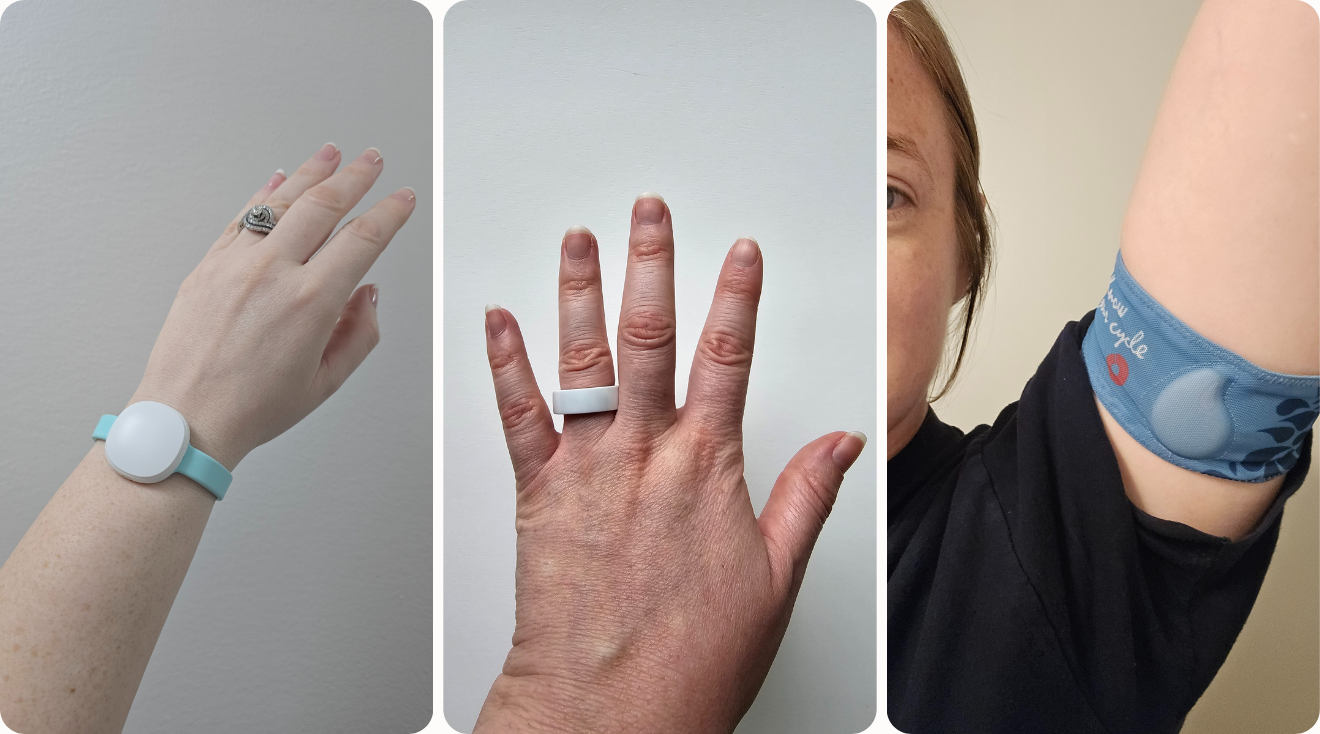
The Ava, the Femometer and the Tempdrop are all wearable ovulation devices that allow women to predict their fertility windows by tracking various health metrics, like basal body temperature (BBT), typically while they sleep. The Ava Bracelet is the most expensive, but it provides a comprehensive health overview thanks to its ability to track five physiological signals. The Femometer Ring offers clear BBT and sleep tracking displayed on a simple app, and it’s relatively affordable for a wearable. Meanwhile, the Tempdrop Fertility and Ovulation Digital Thermometer Tracker delivers BBT tracking via a comfortable, convenient armband, and can parse data from as little as three hours of sleep.
When it comes to tracking your fertility window, you’ll want something that’s accurate, easy to use and simple to integrate into your daily routine. In recent years, wearable devices have become a popular choice for these reasons. Compared to traditional ovulation tests, wearables offer continuous, automated tracking at night, allowing them to detect subtle patterns and offer a more nuanced portrayal of your cycle rather than a quick snapshot. By analyzing your health data over time, the wearables are able to predict your fertility window in advance, rather than confirming it after the fact. They can also be a great option for people with irregular cycles and PCOS, who may have higher baseline levels of luteinizing hormone (LH) which can produce false positives on hormonal ovulation tests.
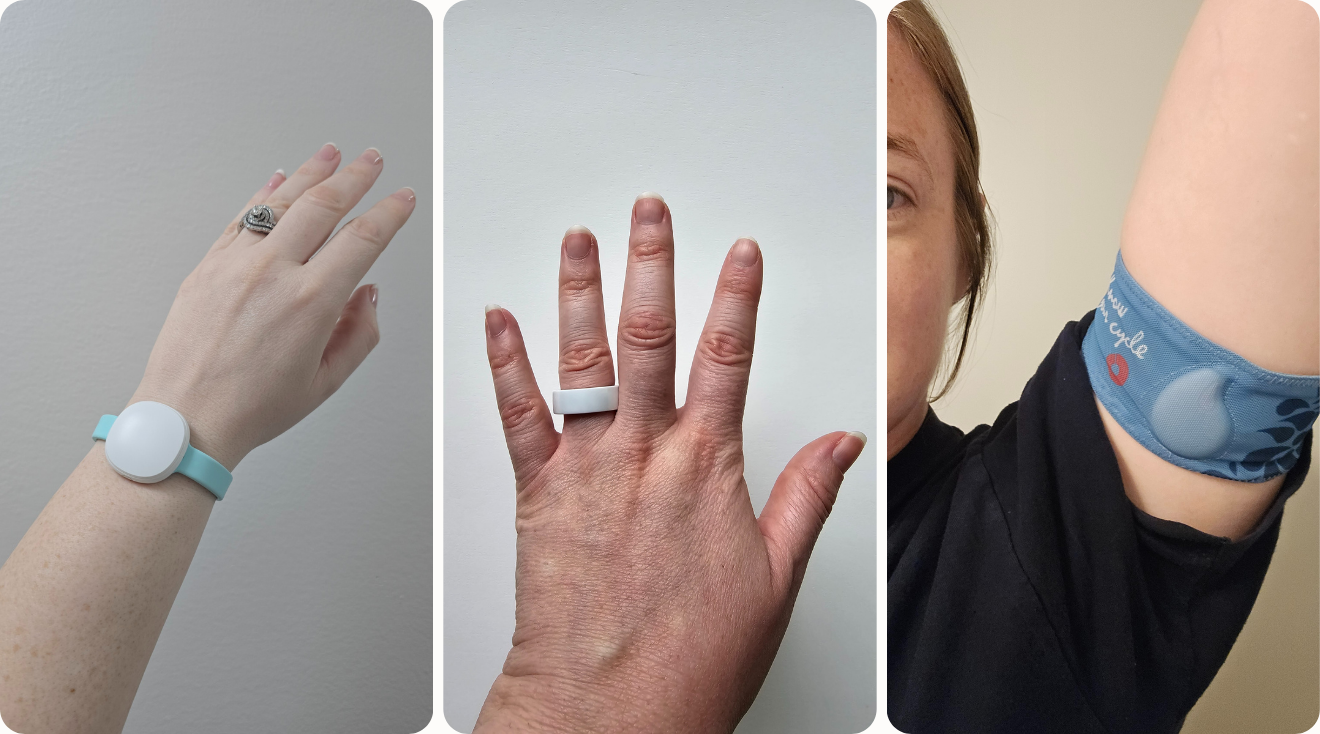
To simplify your search for the best ovulation wearables, we asked one woman to put three leading devices—the Ava Bracelet, the Femometer Smart Ring (now called the Cyra Ring Pro) and the Tempdrop Fertility and Ovulation Digital Thermometer Tracker—to the test. Here’s how they compare across categories like ease of use, set up, comfort and, of course, effectiveness.
The Bump editors did extensive research into the needs and current pain points of women who are trying to conceive, and created a shortlist of leading wearable ovulation tests on the market designed to meet those specific needs. From there, we took the following steps:
- Over the course of two years, The Bump contributor Lindsay personally tested the Ava, the Femometer and the Tempdrop throughout at least one full menstrual cycle. During testing, she set up these wearables according to their instructions, wore them when sleeping and synced the data with her phone every morning. She then evaluated each wearable, on ease of use, clarity of results, quality of the app, accuracy, overall experience and value for money.
- When choosing which wearables to feature in this article, we considered several factors, such as device type, what it tracks and how many fertility days it measured, to name a few.
- To see how these three wearables worked for a variety of women on their conception journey, we scoured online forums, external message boards and customer reviews to find out what people across the country were saying about the ovulation wearables they’ve used.
Editorial integrity is at the heart of everything we publish. Read more about how The Bump develops our product reviews.
Ava vs. Femometer vs. Tempdrop Comparison Chart
| The Ava | The Femometer | The Tempdrop | |
|---|---|---|---|
Overall Best 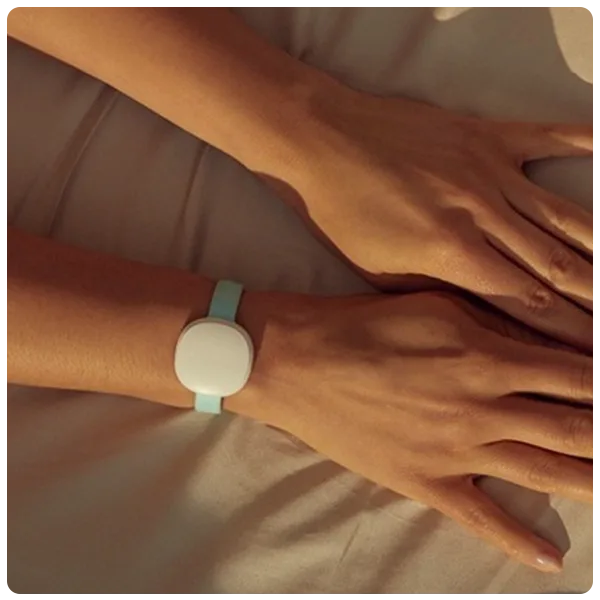 Ava Bracelet | 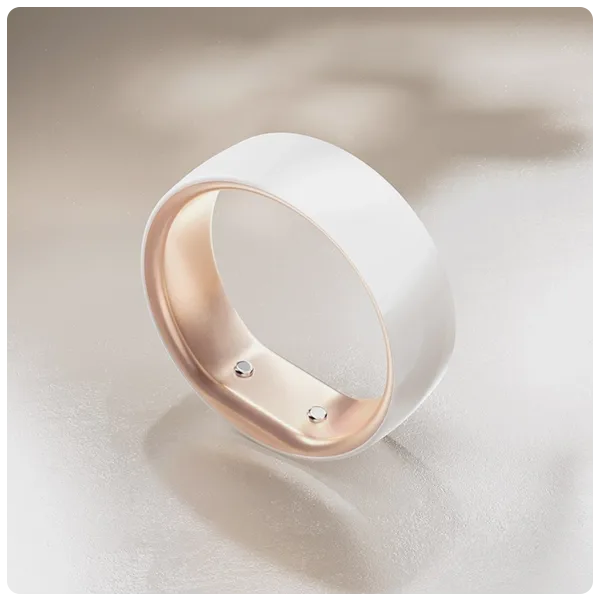 Femometer Smart Ring (now called Cyra Ring Pro) | 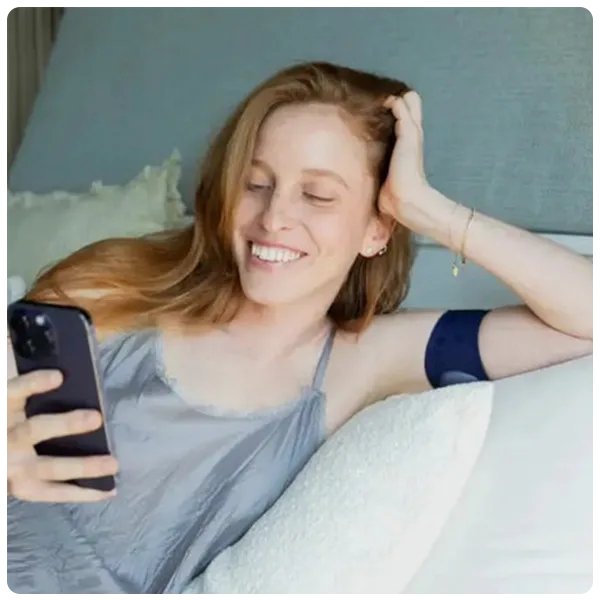 Tempdrop Fertility and Ovulation Digital Thermometer Tracker | |
| Price | $$$ | $ | $$ |
| Type | Bracelet | Ring | Armband |
| Subscription fee | |||
| Rechargeable battery | |||
| FSA/HSA eligible | |||
| Fertile days measured | Up to 5 | Up to 7 | 5 to 7 |
| Buy NowRead Full Review | Buy NowRead Full Review | Buy NowRead Full Review |
Setting up
At a Glance:
- The Ava Bracelet connects to the Ava app and syncs to your phone in the morning to provide personalized fertility tracking insights on five metrics. After two to three menstrual cycles, it should be able to provide an accurate ovulation prediction window.
- The Femometer Smart Ring connects to the Femometer app on your phone and syncs every morning to share BBT and sleep data. It also takes up to three cycles for precise fertility window predictions.
- The Tempdrop Fertility and Ovulation Digital Thermometer Tracker connects to the Tempdrop app and sends BBT data to your phone once you wake up and press the sensor button. It only has to be worn for a minimum of three hours at night, and it takes up to 30 days to optimize readings.
All three wearable ovulation devices came with detailed instructions that explained how to get started and connect to their associated apps. While the Ava and the Femometer were straightforward for Lindsay to begin using, she found the setup for the Tempdrop a bit more time-consuming. “The instructions are longer than other tests because it’s a wearable [armband] device, so not totally comparable to other products,” she explains. “However, the instructions are clear and detailed enough for me to understand what I need to do. I had no issues following along, installing the app, and setting up my device.”
After Lindsay downloaded all three apps, she then synced each device to her phone every morning to record her results. This process was easy, especially for the Ava Bracelet. “You wear the bracelet each night on the same notch and then sync the data to your phone each morning. I found it easy to remember to wear the bracelet because I charged it next to my other nighttime essentials,” she tells us. To ensure the bracelet was adjusted to the same notch every night, Lindsay said she used a permanent marker to mark the exact positioning, making the process even easier. Plus, she found the app “incredibly easy to use and navigate around.”
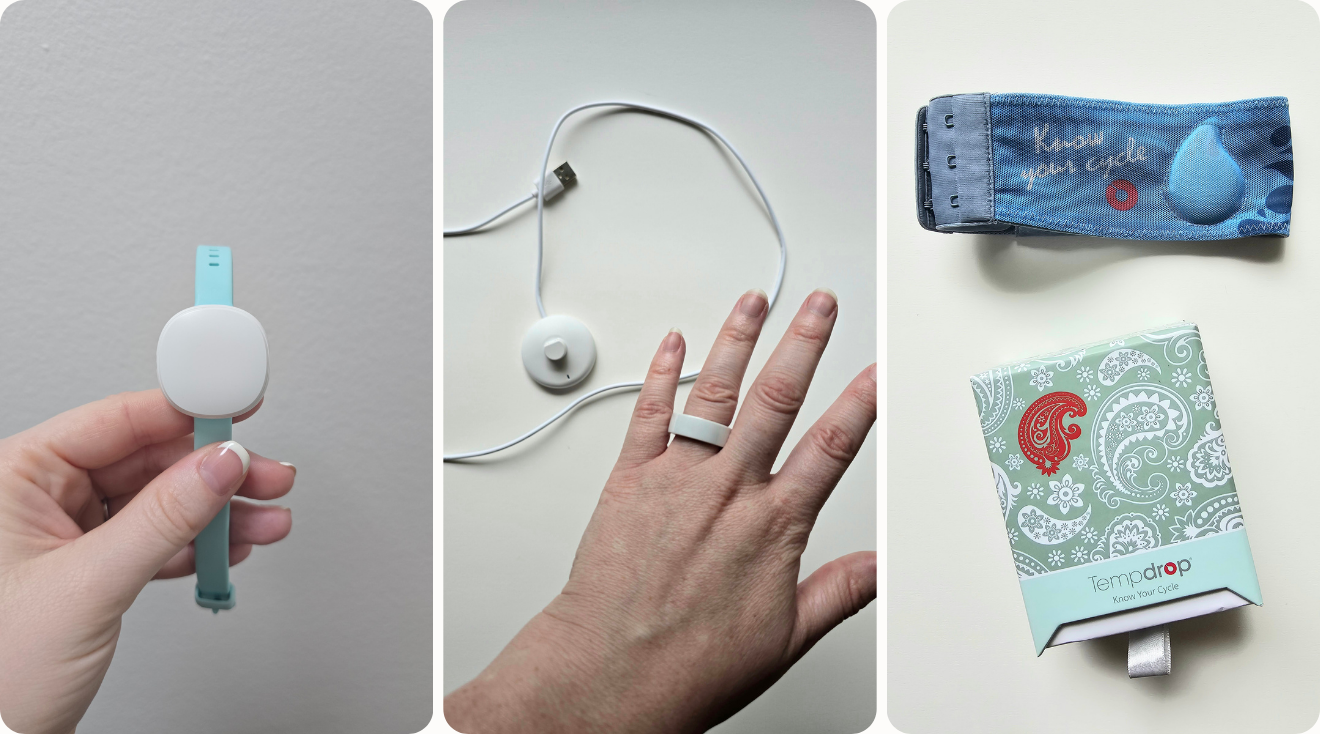
To track your cycle effectively, Ava states that you have to “wear your bracelet for at least four hours of sleep time. If you wear your bracelet for a shorter period, the data from that night will not be included in the algorithm for your fertility predictions.” After one full cycle, the Ava can identify your ovulation cycle—and after two to three cycles, the fertility prediction window should become much more accurate.
Using the Femometer Smart Ring was also straightforward. “You have to remember to charge the ring every few days, but other than that, it’s very simple to use,” Lindsay shared. Though she did note that there were connection issues between her ring and phone a few mornings, this was typically resolved after a few tries. “It also syncs faster than the other temperature-monitoring device I tested,” Lindsay praises. Like the Ava, Femometer recommends wearing the ring for “at least four hours of continuous sleep. This ensures that the device can gather accurate data during your sleep cycle.” The brand advises to wear it for at least one full menstrual cycle to start detecting patterns, and two to three cycles for reliable ovulation prediction.
As for the Tempdrop, all you have to do is slip the band on your upper arm before you go to bed, press the drop-shaped button to turn on the sensor and you’re all set. “The app is straightforward. It syncs to your device automatically after you hold the button and open the app,” explains Lindsay. Unlike the other wearables we tested, it only needs to be worn for three hours, according to Tempdrop. To provide effective tracking, the brand states: “We recommend giving Tempdrop up to 30 days to ensure you are wearing the sensor properly, that everything is settled, and readings are as optimal as possible.”
Tracking your cycle
At a Glance:
- The Ava Bracelet tracks five physiological signals—including pulse rate, skin temperature, breathing rate, sleep, and heart rate variability (HRV) ratio—for more complete insights into your overall health.
- The Femometer Smart Ring offers BBT and sleep tracking. Lindsay told us she liked this app the best because it was easy to navigate and clearly displayed the data.
- The Tempdrop Fertility and Ovulation Digital Thermometer Tracker also tracks your BBT; sleep insights are available for an additional cost.
When it comes to tracking your cycle, each wearable takes around a month to notice subtle patterns in your temperature data and then about two to three cycles to begin providing precise fertility window readings. However, the algorithms and apps of the Ava, the Femometer and the Tempdrop all do this a bit differently.
Compared to most other ovulation devices, which just track temperature, the Ava offers a more comprehensive analysis. The bracelet’s sensor records your resting pulse rate, skin temperature, breathing rate, sleep and HRV ratio, every 10 seconds as you sleep, offering a more in-depth view of your health. This allows those who are TTC to understand not only when they’re most fertile, but also when they’re less stressed and benefiting from more restful sleep cycles. With the Ava, you’ll be able to identify at least five of your six most fertile days every month.
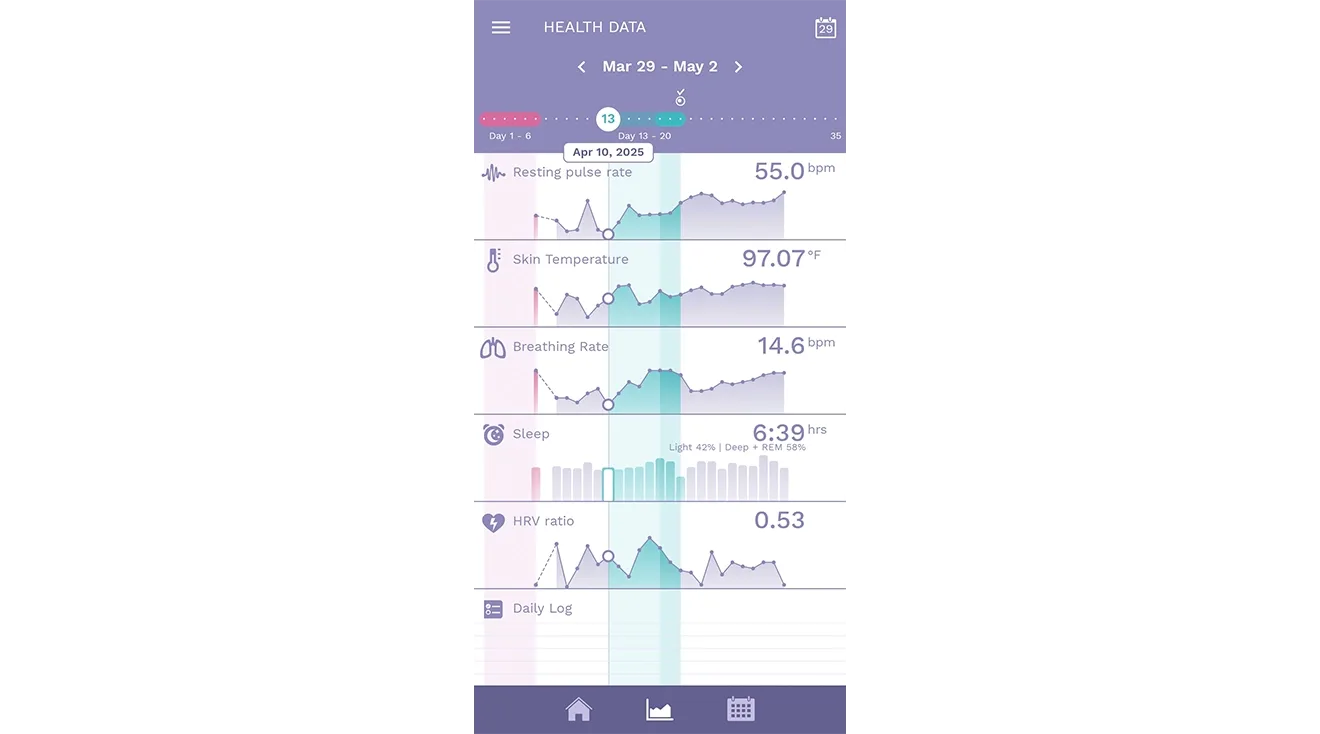
What’s more, you can also add information about your menstrual cycle to the Ava for further insights, which Lindsay appreciated. “You can download your cycle report once you have accumulated more data, which includes cycle length, menstrual flow, and predicted ovulation over a 12-month period. My favorite app feature is the ‘Health Data’ section, which gives you a great overview of your metrics each day,” she shares.
Lindsay reported that the Ava Bracelet’s syncing process took about 2 minutes in total each morning and that the app was pleasant to use. The homescreen immediately tells you if it’s a fertile day or not. Plus, the calendar view allows you to see your fertility window and overall cycle at a glance. “The app keeps all your data in one place where you can toggle through charts and graphs for a quick overview of your metrics each day. In terms of accuracy, it was in line with my results from a urine-based test that measures LH, E3G, and PdG levels. I believe the results and predicted ovulation window were accurate,” Lindsay tells us.
That said, Lindsay was the biggest fan of the Femometer app, which has an appealing, minimal white and light pink interface. “I’m impressed with the app, as it is super easy to use and not clunky like some others. Everything is easy to understand, so you can track your cycle and pinpoint the best time to try for a baby,” she shares. The Femometer offers real-time BBT and sleep tracking presented in simple charts so you can clearly identify up to seven of your most fertile days each month. According to Lindsay, you can also use the app to log your menstrual cycle, diet, sleep and more to get a better analysis of your overall health. Plus, you can add data from cervical mucus (CM) and LH tests, and even use the app to interpret these results by uploading photos. And as for accuracy, Lindsay said it worked effectively. “While I didn’t have much to compare my results to in terms of basal body temperature, the results matched very closely to my other tests,” she said.
The Tempdrop also offers BBT tracking throughout the night via the armband’s drop-shaped sensor. Lindsay found the readings to be in line with other devices she was testing. “They’re consistent enough for me to feel confident in the data. The data also aligns with my predicted ovulation time based on other fertility tracking methods,” she shares. After a morning sync, you can see your most recent BBT data on the Tempdrop app and view a chart of all your previous readings. You can count on it to measure between five and seven fertility days each month. The device can also be used to track sleep. But to do so, you have to upgrade to the premium app that requires a subscription, which Lindsay found a bit frustrating. A calendar view of your ovulation cycle is also only available with the premium subscription.
Comfort and ease of use
At a Glance:
- The Ava Bracelet can be adjusted between 4.9 and 8.1 inches to comfortably fit a range of wrist sizes. Lindsay told us it quickly became a part of her routine.
- The Femometer Smart Ring is made from a mix of porcelain and aluminum. It comes in a range of sizes, and a free sizing kit is available to help you find the best fit.
- The Tempdrop Fertility and Ovulation Digital Thermometer Tracker is an upper armband made from a stretchy fabric blend, with a medical-grade ABS plastic and stainless steel sensor. The band comes in two sizes—S/M (8.5 to 15 inches) and L/XL (12.5 to 18.5 inches)—and an extender is available.
According to Lindsay, the Tempdrop was her preferred ovulation device in terms of comfort and overall ease of use. “This is worn on the upper arm slightly below the armpit,” she explained. “Tempdrop is out of the way and doesn’t require any adjustments during the night once you have it set up.” The armband itself is made from a stretchy blend of polyester, spandex, nylon and silicon, and two size options are available. Plus, each Tempdrop comes with an extender to further adjust the size as needed.
Another reason Lindsay was a fan of the Tempdrop was that it doesn’t have to be charged. Instead, it uses a replaceable CR2032 coin cell battery, which is included in the device. This meant it didn’t need to be charged frequently like the Ava or the Femometer. In fact, “one battery lasts a few months or longer,” says Lindsay.
Lindsay found that the Femometer wasn’t very convenient for her to wear most nights. “One con was having to take the ring off each time I washed my hands in the night, which isn’t a problem if you sleep through the night. There were a few days when my kid was sick, and I was up multiple times in the night, which made it a bit inconvenient,” she shared. It’s worth noting that the Femometer Smart Ring is made from 100 percent waterproof materials. However, if you don’t like the feeling of wearing a ring while washing your hands, this could be a downside as it was for Lindsay.
That being said, Lindsay did find that the ring fit comfortably after a day or two of getting used to it. “I was apprehensive about wearing a ring to bed, but it was comfortable and didn’t bother me at all,” she said. For a secure fit, the Femometer is available in several sizes, ranging from a 6 to a 9. Its charge also lasts for a few days, so you don’t have to remember to plug it in every morning.
When testing the Ava, Lindsay said it quickly became a part of her routine after wearing it after two to three nights and that it didn’t interrupt her sleep. Plus, “it didn’t irritate my skin or feel bulky,” she noted. The bracelet is adjustable and fits wrist sizes from 4.9 to 8.1 inches, although Lindsay found it tricky to change the size. “There were several nights I had to ask my husband for help because I couldn’t get the band to latch properly,” she told us. Another downside to the Ava was remembering to charge it, as the battery only lasts for one night. “I unplugged my phone in the morning and plugged the bracelet in at the same time. However, I can see the battery being an issue for those who are forgetful,” she notes.
Cost
At a Glance:
- The Ava Bracelet has a higher price point, but due to the detailed, varied tracking it offers, Lindsay says it’s worth the price.
- The Femometer Smart Ring comes at a lower price point, and Lindsay said it offered excellent value for money.
- The Tempdrop Fertility and Ovulation Digital Thermometer Tracker comes in at the mid-price mark, and Lindsay also says it’s a great choice for those who want a simple BBT tracker. However, while the app is free to download, a premium subscription is needed for more detailed insights.
The Ava Bracelet has the highest price point of the three wearables Lindsay tested, but it’s definitely worth it if you’re interested in seeing additional physiological signals when tracking your ovulation cycle. “I like that it measures multiple metrics and not just body temperature. I enjoy checking my sleep quality and duration each morning as a bonus,” Lindsay tells us. She even recommends it as a great gift for a friend.
Next up is the Femometer, which is the most affordable of the three options, and Lindsay thought it offered excellent quality for its price point. “It’s a great value. It should last for years and could potentially save you hundreds or more on fertility tracking methods. The app is also free to download,” she explains.
The Tempdrop lands in the middle of the two other wearables, and is slightly more expensive than the Femometer. Lindsay mentioned that the battery will have to be replaced every few months which would be an extra cost. Though, “it’s worth the price if you’re looking for a hassle-free basal temperature tracker.”
All three apps associated with these devices are free to download and use. However, as mentioned previously, Tempdrop offers an upgraded subscription service that allows you to access a wider variety of and more detailed insights, such as a calendar view and sleep tracking. “I wish all the features were included with your initial purchase. It’s a bit frustrating that you have to pay for added features after buying the device,” Lindsay says.
So which should I choose?
The Ava, the Femometer and the Tempdrop all offer reliable, accurate ovulation tracking. Which wearable will be best for your needs and lifestyle is largely down to personal preference. That said, here are a few recommendations based on our extensive research and Lindsay’s product-testing insights:
- The Ava Bracelet is ideal for those who want predictive fertility framed within a more detailed health overview. The ovulation bracelet offers multi-signal tracking, whereas the others just offer BBT and sleep insights. It’s best for people with fairly regular menstrual cycles who enjoy viewing daily health metrics.
- The Femometer Smart Ring is a great option for those who want relatively affordable BBT and sleep tracking that’s displayed on a clear, easy-to-navigate app. You can also use the app to log additional health insights, such as your CM and LH tests, menstrual cycle, diet, sleep pattern and more, to get a better picture of your fertility.
- The Tempdrop Fertility and Ovulation Digital Thermometer Tracker could be perfect for those with irregular sleep patterns, new parents who are postpartum or anyone who wakes up frequently at night. Compared to the others, it only needs to be worn for three hours at night and the stretchy band sits comfortably on your upper arm, so it’s out of the way whether you’re tossing and turning, getting up to use the bathroom or changing a diaper in the middle of the night.
The Ava
- Tracks five physiological signals
- Easy to remember to wear, according to our tester
- First and only FDA-cleared wearable tracker
- Band could be easier to adjust, according to our tester
- Requires frequent charging
- High price point
The Ava Bracelet earned a 2025 Best of The Bump award due to its advanced machine learning algorithm paired with simple functionality. The adjustable bracelet, worn overnight and synced with your phone in the morning, tracks five parameters, like temperature, sleep, physiological stress and resting pulse rate, to offer a fuller picture of your health in relation to predicted fertility windows. Once it learns the subtleties of your cycle, you can count on the Ava to identify five out of your six most fertile days every month.
Type: Bracelet | What it tracks: Pulse rate, skin temperature, breathing rate, sleep and HRV ratio | Subscription fee: No | Rechargeable battery: Yes
Our community says:
I've been using the Ava Bracelet for about two weeks. So far I really like it. It predicted my ovulation date and after a few days actually moved it up, I'm assuming because of data it pulled from me when I slept. - kd0202, The Bump forum member
I ordered my Ava and have been using it for about 3 weeks. I found it super on point with my CM and dates. - Knottiee613ed6307095d90, The Bump forum member
The Femometer
- Clear app interface that’s easy to navigate
- CM and LH test results can be logged
- Several ring sizes and free sizing kit available
- Can be inconvenient if you wake up frequently
- Requires frequent charging
The Femometer Smart Ring is another Best of The Bump winner, and for a wearable device, it’s relatively affordable—the smart ring delivers clear BBT tracking, as well as sleep data, and displays it all on a simple, easy-to-navigate app interface. Like the other devices, you weart he ring to bed and sync it to the app in the morning. You can even add other key metrics in the app, such as the CM and LH levels from hormonal wand test results, for more nuanced fertility window predictions.
Type: Ring | What it tracks: BBT and sleep | Subscription fee: No | Rechargeable battery: Yes
The Tempdrop
- Convenient design doesn’t get in the way at night
- Long-lasting battery
- Two size options and an extender available
- Sleep tracking and premium app are an added fee
The Tempdrop Fertility and Ovulation Digital Thermometer Tracker provides one of the most comfortable, convenient ways to track your BBT as you sleep. Simply pull the band over your upper arm, press the sensor on and then sync your data to your phone in the morning. Plus, it’s effective on as little as three hours of sleep and it’s battery-powered, so you have one less device to charge on a daily basis. However, the device only tracks BBT without a subscription.
Type: Armband | What it tracks: BBT and sleep | Subscription fee: Yes | Rechargeable battery: No
About the writer:
Emma O’Regan-Reidy is a contributing writer and former editor for The Bump. She specializes in writing e-commerce content and has spent years researching fertility tests. Based on her extensive market knowledge, Emma strives to create supportive, informative articles to simplify the TTC journey as much as possible.
Plus, more from The Bump:
Target Baby Registry
Free $100+ Value Welcome KitFree $100+ Value Welcome Kit
15% Completion Discount15% Completion Discount
Free 1-Year ReturnsFree 1-Year Returns
20+ Exclusive 20% Off
Deals For Mom & Baby20+ Exclusive 20% Off Deals For Mom & Baby1:1 Concierge With
Baby Gear Specialists1:1 Concierge With Baby Gear Specialists

*Subject to availability and Retailer's terms.
We earn commissions from these links.