





What Is a BFP (Big Fat Positive)? Plus, What to Do Next


I was in total disbelief when I took that fateful pregnancy test and saw my very own “big fat positive” (BFP)—not trusting my eyes and quickly trying to square the fact that I was really, actually expecting! After a decade-ish of definitely not wanting to see that second pink line, it was surreal to feel so thrilled by it.
For many, the road to conception is less than smooth, so the big BFP moment can be complex. “Getting a BFP can be exciting, scary or a mix of both. All reactions are valid,” says Dr. Bridget Jones, PsyD, a psychologist specializing in perinatal mental health based in Dayton, Ohio. Below, we celebrate the rise of the BFP trend and offer hope and excitement to those embracing this big fat moment.
- The term BFP, meaning “big fat positive,” originated from pregnancy forums, where a language of acronyms has emerged to help moms share their experiences with ease and brevity.
- Seeing a BFP can bring up a flurry of (sometimes contradictory) emotions. Everything you’re feeling is valid—be gentle with yourself and seek support during this time.
- If you’re unsure whether your pregnancy test result is positive (aka it’s a barely there line instead of a glaring BFP line), retest in a day or two. You can also contact your ob-gyn for an evaluation.
- Once you’ve received a BFP, reach out to your ob-gyn to set up a plan of care and determine next steps.
- BFP is just one of the acronyms you’ll see pop up in pregnancy forums. There’s a whole shorthand language out there for people who are trying to conceive (TTC).
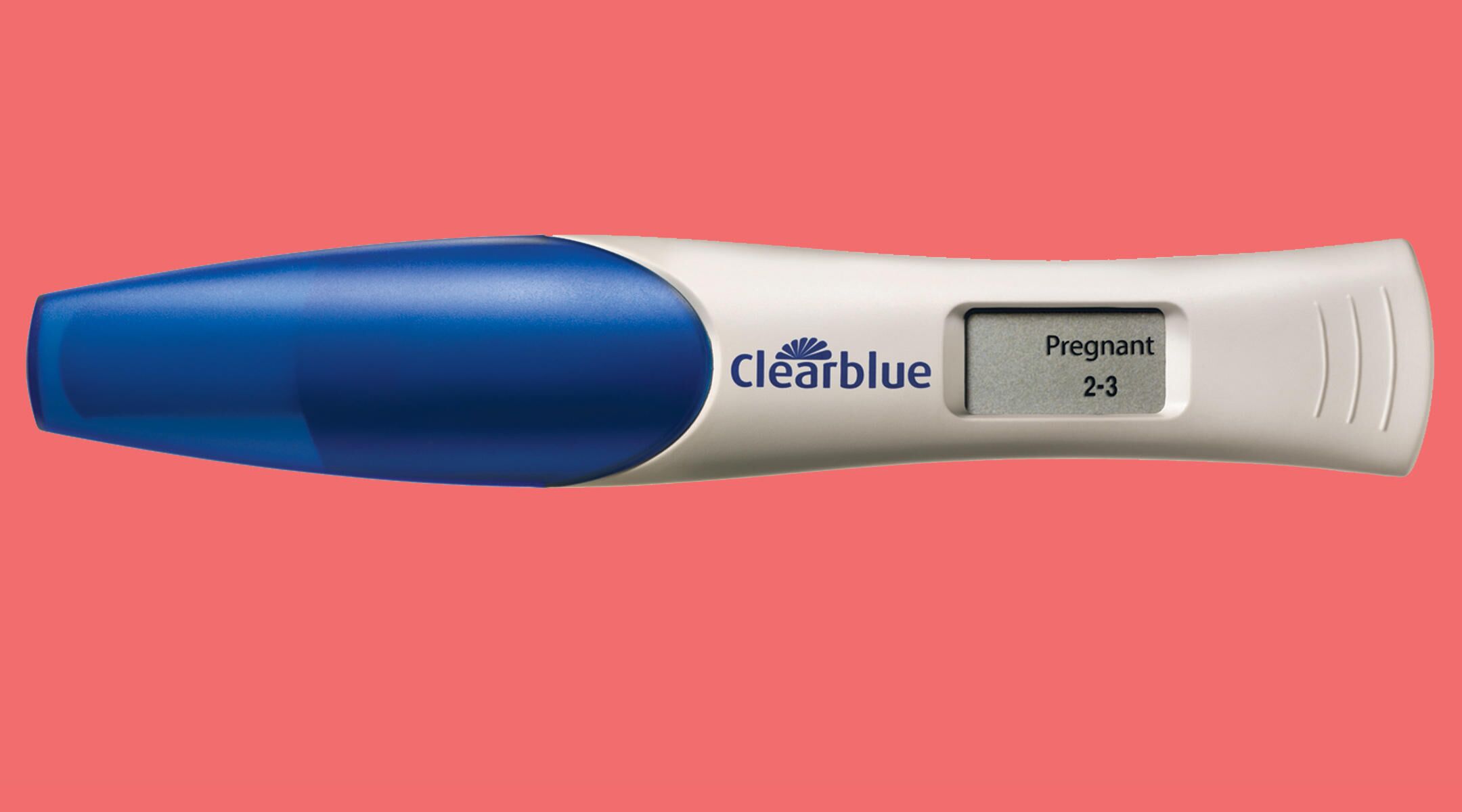
BFP stands for a “big fat positive” pregnancy test result. Depending on the type of home pregnancy test you take, it’s represented by either a second parallel line in the “test” zone on a double-line test, a plus sign on a plus sign test or a “pregnant” result on a digital test.
While the term BFP generally describes an unambiguous super-dark line, Dr. Amy Beckley, MBA, PhD, a pharmacologist and the founder of Proov, an at-home fertility hormone testing platform, says a faint-but-present line can still be considered a BFP.
The term BFP originated from pregnancy forums. Hopeful and expecting moms have created a shorthand language to share their stories and seek advice about conception and pregnancy.
You know how you’re generally supposed to wait a couple of minutes to see if the test line appears on a HPT? Well, the very first time I took a pregnancy test, that second line turned a deep, dark pink the very instant my pee stream made contact. There was no denying it—a BFP!
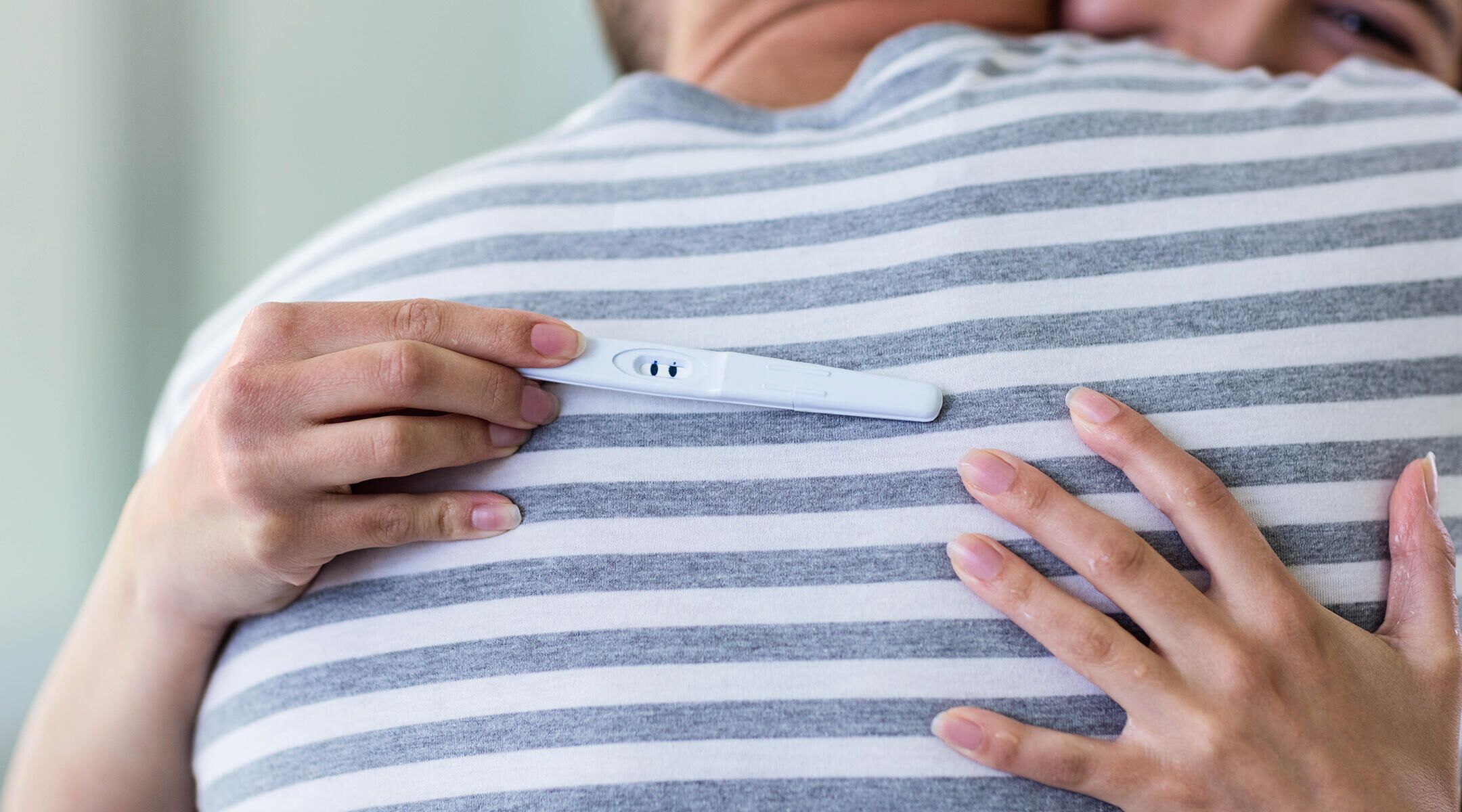
A BFP can look different depending on the type of home pregnancy test you take. On a parallel line pregnancy test, there’s an undeniable second pink or blue line. On a plus-sign test, the result is indicated by an evident plus sign. And, of course, on a digital test, it’s the word “pregnant”—shouting at you as if via a megaphone.

Tracking your cycle can help increase your chances of achieving pregnancy and, therefore, getting a BFP. “You need to have intercourse in your fertile window,” advises Dr. Beckley. “The best fertile window trackers measure two hormones, luteinizing hormone (LH) and estrogen. This gives women a four- to six-day fertile window and plenty of time to time it right.”
Taking a pregnancy test at the right time is also an important factor in getting a BFP. If your cycle is regular, waiting to test until the day after you’ve missed your period—with first-morning urine—will help ensure a clearer result.
Tania Lopez, CNM, a certified nurse-midwife at Pediatrix Medical Group, says, “You might technically be able to have a positive pregnancy test at 10 days after conception, which is about three to four days after implantation.” Dr. Beckley adds that implantation causes the pregnancy hormone human chorionic gonadotropin (hCG) to be released, eventually resulting in a positive pregnancy test.
First of all, take a deep breath and be kind to yourself! It's normal to feel either excited, ambivalent or both once you actually see that line on the stick!
Once you’ve weathered the flurry of feelings, it’s time to make an appointment with your ob-gyn to confirm your BFP and talk about next steps.
In the meantime, start making lifestyle adjustments that support your pregnancy. Lopez says to avoid harmful substances, like cigarettes and alcohol, and start taking a daily prenatal supplement with folic acid. And, if you need, seek support from other pregnant women or parents during this transitional time.
Pregnancy forums are filled with meaningful acronyms that help hopeful and expectant parents talk about their conception and pregnancy experiences with ease. However, it can look a bit like alphabet soup to those not yet in the know, so we’ve got you covered with some translations below.
- BFN: The acronym stands for “big fat negative” and is usually used to convey disappointment in (yet another) negative pregnancy test result.
- DPO: The acronym DPO stands for “days past ovulation.” People might use this acronym when sharing home pregnancy test results to indicate the potential accuracy or track the progression of their results.
- FMU: FMU stands for “first morning urine.” Many home pregnancy test kits recommend using this to achieve the most accurate results.
- HPT: This stands for “home pregnancy test,” or an over-the-counter pregnancy test.
- NTNP: This means “not trying, not preventing.” It’s used when someone is essentially rolling the dice when it comes to pregnancy, and the subtext is that a pregnancy would be welcome.
- POAS: This stands for “pee on a stick.” This acronym is used when discussing testing or having taken a home pregnancy test.
- TTC: Ever heard someone use TTC as a verb? It means “trying to conceive,” or being in active pursuit of achieving pregnancy.
- TWW: TWW stands for “two-week wait,” or the time between ovulation and a possible BFP. It represents the (sometimes agonizing) wait for answers while trying to conceive.
- VFL: This one means “very faint line” or a barely discernible (but maybe present) second line on a home pregnancy test.
A BFP can bring up lots of emotions, and it can be helpful to hear stories from other moms who’ve lived through it before. Below, we’ve gathered anecdotes reflecting a range of experiences from real moms celebrating their own BFP moment.
Olivia C.E., mom of one in Boston
When I saw the positive pregnancy test for my daughter, it was a mixture of heartache, relief, terror and joy. Only two months prior I had a miscarriage—an experience that, I came to find out, was all too common and familiar to so many women in my life.
That second positive pregnancy test put an immediate lump in my throat but filled me with hope. I screamed to my husband and immediately called my parents, my brother and his wife and my three best friends. I needed all the people who rallied around us during our loss to stand by my side for the excitement—and let’s be honest, sheer panic—right from the jump!
Sophie C., mom of one in Charlotte, North Carolina
When I decided to take a pregnancy test, in my mind it was 100 percent going to be negative. We hadn’t been trying, and I was just taking it so I wouldn’t have to have it on my mind as I waited for my late period to start. I looked at the two lines on the test and was just completely stunned for a moment before yelling for my husband.
What surprised me most was how quickly and strong the emotions came on. Suddenly, I was crying, and thinking about how I hardly felt like an adult myself (despite being 28!) and needed some air.
I went out into the yard and was pacing, crying, trying to take it all in when I saw something in the grass. I got closer and it was a newborn baby bunny (it was spring, after all). For a moment I was able to just focus on this beautiful little baby creature and it changed my perspective to be appreciative of the news I’d just gotten and the opportunity it was bringing to be a mom.”
Rhonda C., mom of one in Ontario, Canada
I went through seven years of fertility treatments, and this was our last try. I had been taking pregnancy tests all week leading up to the scheduled blood test to be performed by my doctor on Friday. All of the tests Monday through Thursday were negative. When I took the test Friday morning, I was expecting a negative result too, and what I got instead was shock and awe—a BFP. I was pregnant. My son is now 16 years old.
Angie E., mom of one in Maplewood, New Jersey
I was so used to staring at barely there ovulation test strips that I initially brushed off the clearly positive test as ‘not dark enough’ until my brain caught up. Once I realized it, I started saying ‘holy $#@&’ over and over as my husband and I stared at each other, completely unsure of what to do next. Then we high-fived, started laughing and decided to go get pizza.
Frequently Asked Questions
Where did the term BFP originate?
The term BFP originated from online pregnancy forums. Acronyms like this help people discuss all things conception and pregnancy with brevity. Dr. Beckley says the term specifically stemmed from its opposite term, BFN (“big fat negative”).
What should I do if I get a faint line on a pregnancy test?
If that second pink or blue line is so faint you have to squint or hold it up to the light to just maybe see it, it’s best to retest. “Hopefully you bought a two-pack of tests so you can repeat the test in a few days and see if the line is darker,” says Lopez. “If it’s still faint, you might call your provider to have an examination. If you're having pain or bleeding, it is especially important to call for an evaluation.”
Are digital tests better than dye tests?
Both tests have their benefits, but neither is the better option. “Digital tests aren’t ‘better’ than dye tests; it just depends on what the user wants,” says Dr. Beckley. “For example, if she doesn't want to guess if the test is positive or not, a digital is more appropriate. However, if she wants to test many days prior to a missed period, the dye tests are typically more sensitive.”
Can you get a false positive on a pregnancy test?
Unfortunately, it’s rare but possible to get a false positive on a pregnancy test. There could be an error with the test, or your pregnancy hormone levels could be elevated for unrelated reasons. It’s always important to confirm your pregnancy with your ob-gyn to clear up any doubt.
Seeing a BFP is momentous whether it was a long-awaited surprise or a total “OMG” moment. After getting all of your medical ducks in a row post-BFP, make sure to take care of yourself and honor personal pace during this time. It’s perfectly okay if your feelings are all over the place—pregnancy is kind of a big deal! Make an appointment with an ob-gyn or midwife, lean on your community and buckle up for the wild and beautiful ride ahead.
At The Bump, we know a “Big Fat Positive” (BFP) is more than just a test result—it’s a life-altering milestone. To capture the full weight of the moment, we consulted a certified nurse-midwife, a fertility hormone pharmacologist and a perinatal psychologist, alongside five parents who’ve been there too. After editing, this article was fact-checked and medically reviewed through our thorough editorial review process.
About the author: Kristen Bringe is a freelance writer and mom who experienced her own life-changing BFP moment, resulting in her now-7-year-old daughter. Through her writing, she seeks to help other moms feel seen and supported throughout their motherhood journeys.
Please note: The Bump and the materials and information it contains are not intended to, and do not constitute, medical or other health advice or diagnosis and should not be used as such. You should always consult with a qualified physician or health professional about your specific circumstances.
Plus, more from The Bump:
Dr. Amy Beckley, MBA, PhD, is a pharmacologist and the founder of Proov, an at-home hormone testing platform. She earned her doctorate in pharmacology from University of Colorado Anschutz Medical Campus.
Dr. Bridget Jones, PsyD, is a psychologist specializing in perinatal mental health based in Dayton, Ohio. She earned her master’s degree and doctorate in psychology from Loyola University of Maryland and completed her residency at MetroHealth Medical Center.
Tania Lopez, CNM, DNP, APRN, is a certified nurse-midwife at Pediatrix Medical Group. She holds a doctor of nursing practice degree from Texas Tech University Health Sciences Center and a midwifery certification from UT Southwestern Medical Center.
Real-parent perspectives:
- Lauren Barth, associate content director at The Bump and mom of three
- Angie E., mom of one in Maplewood, New Jersey
- Olivia C.E., mom of one in Boston
- Rhonda C., mom of one in Ontario, Canada
- Sophie C., mom of one in Charlotte, North Carolina
Learn how we ensure the accuracy of our content through our editorial and medical review process.
Target Baby Registry
Free $100+ Value Welcome KitFree $100+ Value Welcome Kit
15% Completion Discount15% Completion Discount
Free 1-Year ReturnsFree 1-Year Returns
20+ Exclusive 20% Off
Deals For Mom & Baby20+ Exclusive 20% Off Deals For Mom & Baby1:1 Concierge With
Baby Gear Specialists1:1 Concierge With Baby Gear Specialists

*Subject to availability and Retailer's terms.
We earn commissions from these links.