






What Is a Dye Stealer Pregnancy Test?


When I got my first positive pregnancy test, the test line was so faint that I wondered if it was actually there or if my eyes were playing tricks on me. Hoping for the best, I tested again the next morning and, to my excitement, the test line was dark enough that I felt confident the positive result was accurate.
If I had continued to test over days or weeks, I most likely would’ve seen the test line darken more and more with time. Eventually, the line probably would’ve become darker than the control line. This is what’s known as a “dye stealer.” If you’ve been pulled into the pregnancy and parenting algorithms online, you’ve likely come across dye stealer content at some point.
“A dye stealer refers to a positive pregnancy test where the test line is darker than a control line,” explains Jennifer Peña, MD, FACP, a board-certified internal medicine physician practicing in San Juan, Puerto Rico. She adds that this isn’t a clinical term, but rather a phrase often used in pregnancy forums and on social media.
Read on to learn more dye stealers, how they happen and when you can expect one.
- Dye stealer meaning: A dye stealer pregnancy test occurs when the test line of an at-home pregnancy test appears darker than the control line. The idea is that the test line is so dark because it “steals” the dye away from the control line.
- While not everyone will get a dye stealer test result, those who do can first expect it to happen when they’re between 5 and 6 weeks pregnant, as their hCG levels rise.
- Dye stealer pregnancy tests can offer reassurance in some situations, but they’re not a reliable way to monitor pregnancy health—only a doctor can do that.
Again, the phrase “dye stealer” is used to describe an at-home pregnancy test where the test line—the one that detects human chorionic gonadotropin (hCG)—appears darker than the control line. “This happens when there’s so much hCG in your urine that the test line uses up (or ‘steals’) more of the dye in the strip, leaving the control line fainter,” explains Jenna Turocy, MD, an ob-gyn, reproductive endocrinologist and infertility specialist at Columbia University Fertility Center.
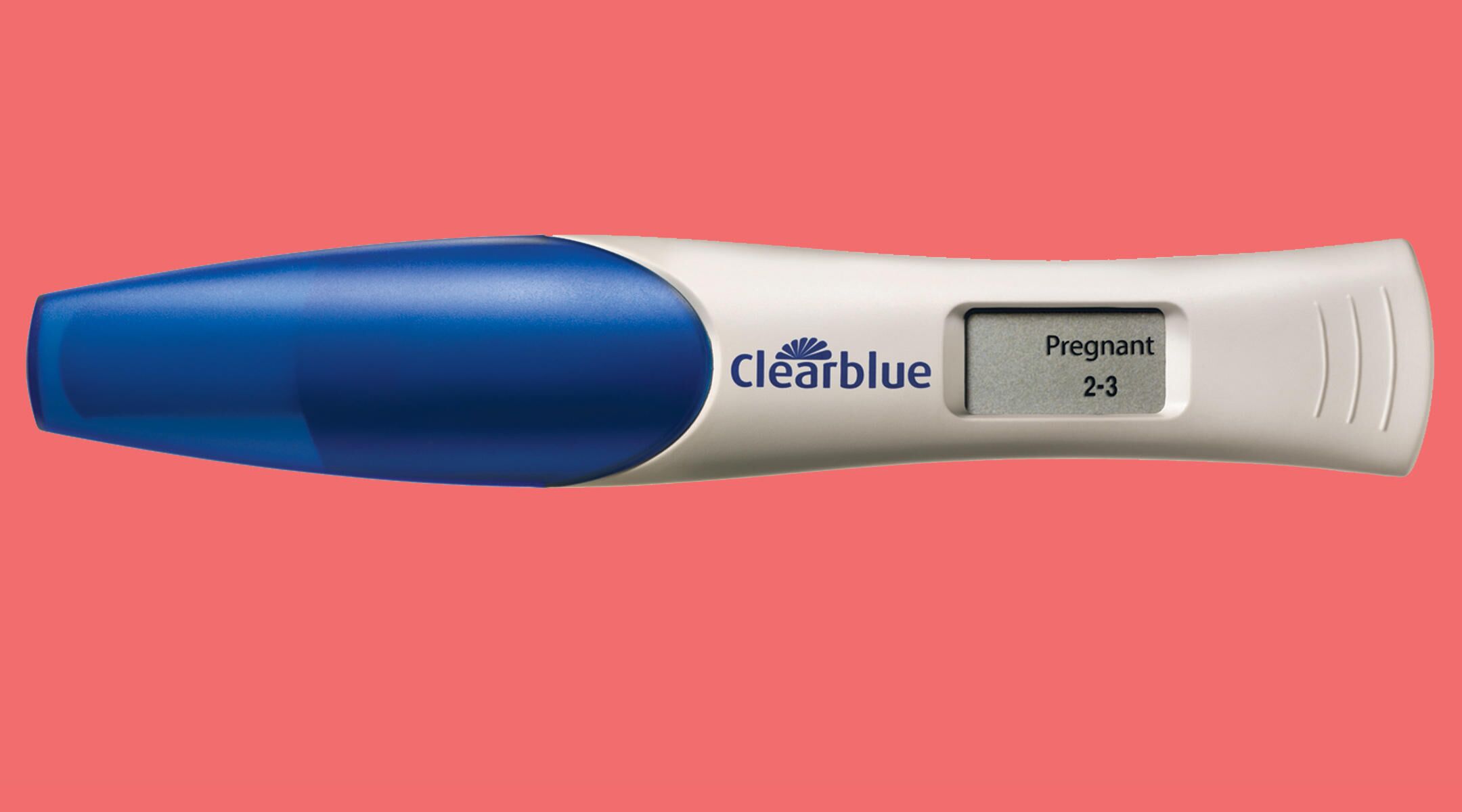
As a reminder, an at-home pregnancy test uses urine to detect the presence of hCG, a hormone released from your placenta during pregnancy. These tests are available in either analog or digital formats. The analog version—which uses a test strip with dye—is the type that can deliver dye stealer results. The tests’ design varies by brand, but there’s usually a control line, which appears whether you’re pregnant or not, and a test line, which only appears if hCG is detected in your urine (meaning, you’re pregnant).
“A dye stealer happens when hCG levels are very high—high enough that the antibodies in the test strip bind up a lot of the dye before it can reach the control line,” says Turocy. Banafsheh Kashani, MD, a fertility and IVF specialist in Aliso Viejo, California, further explains: “This can [happen] as a result of taking the pregnancy test later in the first trimester,” when hCG levels are higher.
For some, a dye stealer can provide peace of mind. “After so many months of trying for a baby, I was very worried that I’d miscarry, so I kept taking tests to see the line get darker to help me feel better,” says Courtney M., a mom of three in Raleigh, North Carolina.
Since hCG levels increase rapidly during the first 8 to 10 weeks of pregnancy, it makes sense that the test line on an at-home pregnancy test may appear to get darker with time. However, Turocy emphasizes that the only way to accurately monitor the health of your pregnancy is with the help of your doctor. If you have any concerns, you should schedule a visit with your provider to get the reassurance you need.
Kashani says you may also get a dye stealer result if you take a pregnancy test during your first trip to the bathroom in the morning, when hCG is more concentrated—especially if it’s in early pregnancy.
In rare cases, Turocy notes that a dye stealer pregnancy test result could be due to a molar pregnancy, a serious complication involving the placenta. However, she stresses, “It’s important to note a dye stealer is not a medical diagnosis—it’s just an artifact of the test chemistry.”
There’s no exact timing for when you can expect a dye stealer pregnancy test result. “It really depends on the concentration of hCG in the urine sample used for the test,” says Nap Hosang, MD, MPH, an ob-gyn practicing in Oakland, California.
Peña adds that you can can typically first get a dye stealer pregnancy test when you’re around 5 to 6 weeks pregnant, since that’s when hCG levels are high enough for the test line to darken. However, in some cases, you may have a perfectly healthy pregnancy and not end up with a dye stealer pregnancy test. “Some people never get one, and that’s perfectly normal,” says Hosang.
“While there’s no exact minimum hCG level required, it typically occurs when levels reach 500 to 1,000 mIU/mL or higher, depending on the sensitivity of the test,” explains Peña. “Since hCG rises rapidly in early pregnancy, some people may see a dye stealer as early as 21 to 28 days post-ovulation, but this varies.”
Frequently Asked Questions
What types of home pregnancy tests are best for dye stealers?
Analog, rather than digital, pregnancy tests, can be used for spotting a dye stealer. Peña adds that these dye-based tests are “known for their high sensitivity and strong visual lines.”
What does a dye stealer on a First Response test mean?
Kashani says First Response tests—especially First Response Early Result tests—are sensitive enough to pick up even low levels of hCG. If you get a dye stealer result on one of these tests, it means your hCG levels are higher than what’s needed for the test to detect even a faint positive.
What if the control line is darker than the test line?
All of our experts enthusiastically agree that even a faint test line with a dark control line is a positive pregnancy test. “[It’s] actually normal, especially in the early days,” says Hosang.
What causes a faint test line?
“In the earliest days, hCG levels are still low, so the test line will be lighter than the control,” says Turocy. As your hCG levels rise—which happens rapidly in the early weeks of pregnancy—the test line will become darker.
Does a darker test line mean twins?
Officially, the only way a doctor can confirm if you’re having multiples is through an ultrasound, notes Cleveland Clinic. However, Peña says a dye staler pregnancy test could be a sign of twins, “though it’s not medically guaranteed.”
What does it mean if your control line disappears?
In the case where the control line on a pregnancy test disappears, unfortunately, it means the test is invalid. Experts recommend taking a new test if this happens so that you can get an accurate result.
Can a darker line indicate baby’s sex?
No—you’ll need non-invasive prenatal testing or an anatomy scan to determine baby’s sex. “A home pregnancy test is a qualitative test, meaning that it answers only one question: Are you pregnant?” says Hosang.
How dark should the test line be at 4 weeks?
How dark a pregnancy test line will appear at 4 weeks pregnant can vary from person to person and depends on the sensitivity of the test, but it’s more likely to be on the fainter side. “At around 4 weeks pregnant, the test line on a home pregnancy test is often faint to moderately visible because hCG levels are just starting to rise,” says Peña.
Dye stealers can be fun and even reassuring in some cases—but it’s also important to work with your healthcare provider to evaluate the health of your pregnancy. “Once you’ve had a clear positive, continuing to test daily can create unnecessary stress—your hCG will fluctuate, and line darkness can be affected by factors unrelated to pregnancy health,” says Turocy.
Please note: The Bump and the materials and information it contains are not intended to, and do not constitute, medical or other health advice or diagnosis and should not be used as such. You should always consult with a qualified physician or health professional about your specific circumstances.
Plus, more from The Bump:
Nap Hosang, MD, MPH, is an ob-gyn practicing in Oakland, California. He earned his medical degree from The University of the West Indies in Kingston, Jamaica.
Banafsheh Kashani, MD, FACOG, is a fertility and IVF specialist in Aliso Viejo, California. She earned her medical degree from University of South Alabama College of Medicine.
Jennifer Peña, MD, FACP, AAHIVS, is a board-certified internal medicine physician practicing in San Juan, Puerto Rico. She earned her medical degree from the University of Pittsburgh School of Medicine.
Jenna Turocy, MD, is an ob-gyn, reproductive endocrinologist and infertility specialist at Columbia University Fertility Center. She earned her medical degree from Georgetown University School of Medicine.
Cleveland Clinic, Human Chorionic Gonadotropin, April 2025
Cleveland Clinic, Twin Pregnancy, July 2022
Mayo Clinic, Molar Pregnancy, November 2022
Real-parent perspectives:
Courtney M., mom of three in Raleigh, North Carolina
Learn how we ensure the accuracy of our content through our editorial and medical review process.
Target Baby Registry
Free $100+ Value Welcome KitFree $100+ Value Welcome Kit
15% Completion Discount15% Completion Discount
Free 1-Year ReturnsFree 1-Year Returns
20+ Exclusive 20% Off
Deals For Mom & Baby20+ Exclusive 20% Off Deals For Mom & Baby1:1 Concierge With
Baby Gear Specialists1:1 Concierge With Baby Gear Specialists

*Subject to availability and Retailer's terms.
We earn commissions from these links.