





Can You Get Pregnant With an IUD?


There’s a very good chance you—or someone you know—has used an intrauterine device (IUD) as birth control. IUDs are growing in popularity, with about 10 percent of reproductive-age women currently using “long-acting reversible contraception,” which includes IUDs.
While IUDs are pretty darn good at preventing pregnancy, you might be wondering exactly how effective they are—especially if you don’t want to have more kids (or any kids). Unfortunately, they’re not totally foolproof. “IUDs can fail,” says Christine Greves, MD, FACOG, an ob-gyn at the Orlando Health Women’s Institute. “It occurs incredibly rarely.”
“I got an IUD put in after my son’s birth, thinking I was set,” shares The Bump community member onnyanne. “He’ll be turning 8 months next week, and I just found out yesterday that I’m 5 weeks pregnant. I never imagined I’d be expecting again so soon… or at all.”
So, can you get pregnant with an IUD? Yes—but rest assured that it’s very unlikely. Ahead, learn all the details from experts, including your chances of getting pregnant with an IUD and what to do if this happens to you.
- IUDs are considered one of the most effective birth control methods: They’re 99.2 to 99.6 percent effective at preventing pregnancy.
- While rare, you can get pregnant with an IUD; there are both scientific case studies and anecdotal evidence of this happening.
- Potential risks of being pregnant with an IUD include miscarriage, ectopic pregnancy, preterm birth and infection.
- If you have an IUD and find out you’re pregnant, see your doctor right away. In most cases, they’ll try to remove the IUD.
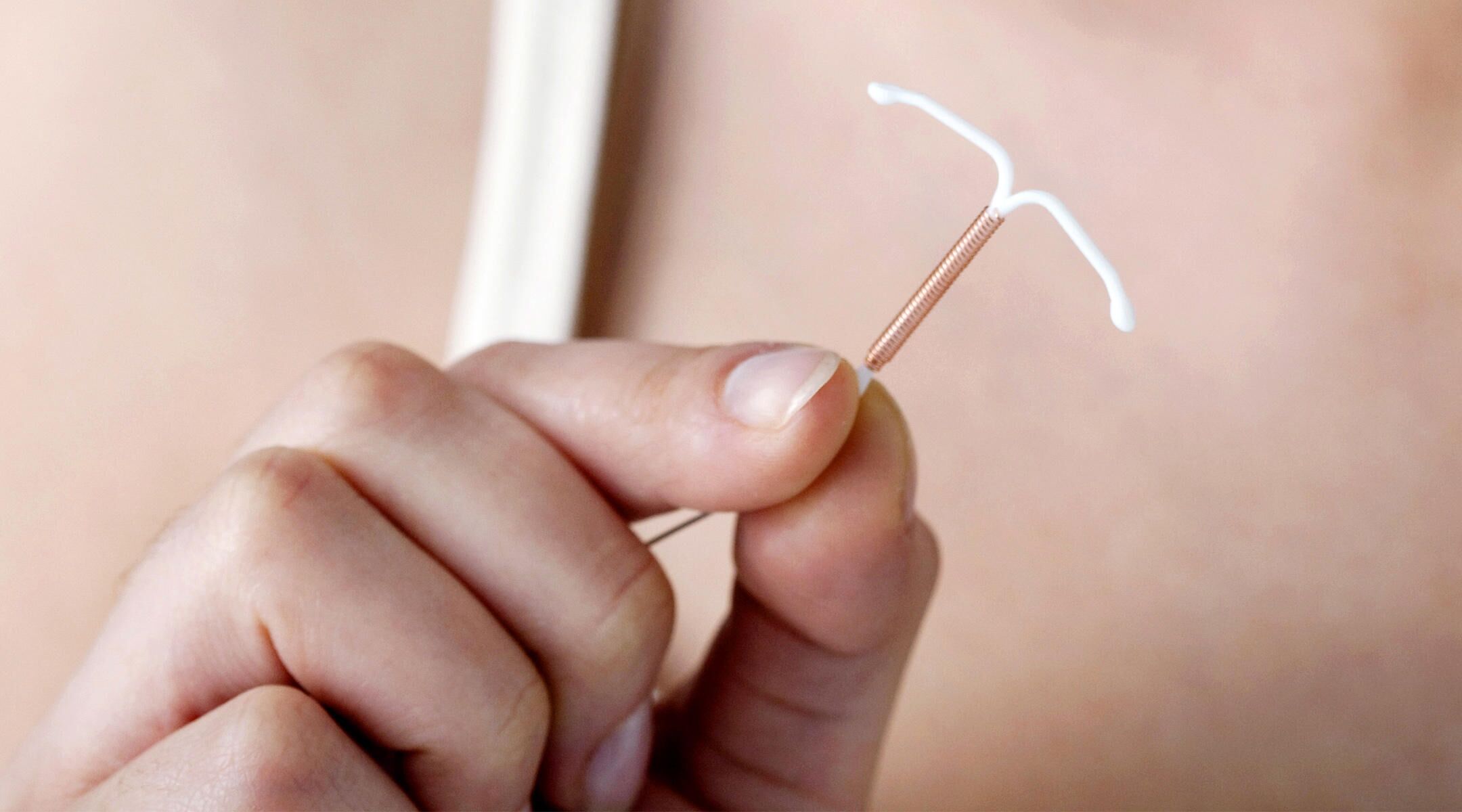
An IUD is a small, T-shaped device that’s inserted into the uterus to prevent pregnancy, according to the U.S. National Library of Medicine. An IUD has two small strings that hang outside the cervix and within the vagina—these can let you or your doctor check that the IUD’s in place and can also be used to pull the IUD out when it’s time to remove it. An IUD is considered a great option if you’re looking for a long-term, effective and non-hormonal birth control method; it can prevent pregnancy for 3 to 10 years.
Types of IUDs
There are two main types of IUDs, according to the American College of Obstetricians and Gynecologists (ACOG):
- Hormonal IUD. This releases the hormone progestin into the uterus. Each hormonal IUD is slightly different and is approved by the U.S. Food and Drug Administration (FDA) to be used for varying periods of time. While some hormonal IUDs need to be changed every three years, others can last for up to eight years before needing to be replaced.
- Copper IUD. This IUD doesn’t use hormones to prevent pregnancy. Instead, it releases copper into the uterus, which impacts the sperm’s ability to move. The copper IUD is approved for use for up to 10 years before needing to be removed.
Yes, it’s possible to get pregnant with an IUD, but it’s far from a common occurrence. “It’s very unlikely,” says Rachael Lopez, MD, an ob-gyn and the medical director of Women’s Services at MemorialCare Saddleback Medical Center’s Women’s Health Pavilion in Laguna Hills, California.
Chances of getting pregnant with an IUD
IUDs are considered one of the most effective birth control methods out there. They’re 99.2 to 99.6 percent effective at preventing pregnancy, according to ACOG. Those are similar success rates to using a birth control implant or male or female sterilization. Over time, long-acting reversible contraception methods like IUDs are 20 times more effective than birth control pills, the patch or the ring, notes ACOG.
But there are certain situations in which pregnancy may be more likely with an IUD. “If the IUD falls out or is in the wrong position—partially coming down into the cervix—pregnancy is more likely,” explains Roxanne Jamshidi, MD, MPH, director of the division of general obstetrics and gynecology at George Washington University School of Medicine and Health Science. Women who are younger, who’ve never had a baby, who have fibroids and who have heavy periods have a greater risk of their IUD falling out, she says, adding that “using an IUD beyond its recommended lifespan also increases failure rates.”
The symptoms of pregnancy with an IUD are similar to what they’d be if you didn’t have an IUD in place, says Jennifer Leighdon Wu, MD, an ob-gyn at Northwell Lenox Hill Hospital in New York City.
These can include fatigue, breast tenderness, morning sickness, cravings and food aversions, constipation, peeing more than usual and a missed period, says Greves. However, she also points out that not everyone has regular periods while using an IUD.
There are a few potential risks of being pregnant with an IUD, says Andrew Rubenstein, MD, director of the division of general obstetrics and gynecology at NYU Langone Health. “If the IUD remains in place during pregnancy, there are increased risks of miscarriage and infection,” he says.
There’s also a higher risk of having an ectopic pregnancy, which is a pregnancy that happens outside the uterus—usually in the fallopian tubes, Rubenstein says. “This is a serious condition that needs medical attention right away,” he adds.
Preterm labor and infection are other potential risks.
I gave birth to my first child six months ago… and now I'm pregnant again! I was using an IUD, and today I had my first ultrasound. The IUD had moved down near the cervix, so my OB removed it. But, of course, she warned me of the risks of miscarriage or an ectopic pregnancy. On the transvaginal ultrasound today, she could see thickening in the uterus, but no embryo sac yet. I'm so nervous! I have to go back in a few days to make sure my hCG levels are still rising.
If you suspect that you’re pregnant and you have an IUD, Wu recommends taking a pregnancy test. If you get a positive pregnancy test, contact your doctor.
Greves says that next steps are often a “case-by-case situation” depending on how far along the pregnancy is. “Usually we try to remove it, especially if the pregnancy is discovered in the first trimester,” she says.
Jamshidi adds that it’s important for your doctor to locate the pregnancy “since ectopic pregnancy is more common with the IUD in place.”
Again, it’s pretty rare to get pregnant with an IUD, but it does happen.
One case report from 2019 details the story of a 29-year-old woman who got pregnant with a copper IUD in place. During a transvaginal ultrasound, doctors discovered that she had a bicornuate uterus, which is when the uterus is divided into half. The IUD was removed from one side of her uterus, and the pregnancy progressed without complications.
Another case report, from 2011, tells the story of a 22-year-old woman who went to the hospital with vaginal bleeding one week after she got a positive pregnancy test. Doctors ultimately decided to leave the IUD in place and her pregnancy continued.
Frequently Asked Questions
How soon can you get pregnant after IUD removal?
You can get pregnant right away after your IUD is removed. “Fertility returns immediately,” Lopez says. Because of this, Greves says it’s a good idea to consider another form of birth control if you don’t want to conceive.
Can you get pregnant one week after IUD removal?
Yes, it’s possible to get pregnant one week after your IUD is removed. “IUDs don’t inhibit ovulation,” Rubenstein says. Other factors come into play here, including when you last had sex and when in your cycle you had the IUD removed, Wu says.
Can you get pregnant with a copper IUD?
Yes, you can get pregnant with a copper IUD, just as you get pregnant with a hormonal IUD. However, both forms of IUD are more than 99 percent effective at preventing pregnancy.
Can you get pregnant with an expired IUD?
Yes, you can get pregnant with an expired IUD. Once your IUD is nearing its expiration date, Greves recommends making an appointment with your doctor to either have it replaced or removed.
Can you get pregnant with an IUD while ovulating?
Ovulation’s the only time when it’s possible to (naturally) get pregnant, Jamshidi points out. So, yes, because there’s a very small chance of getting pregnant with an IUD in place, you can get pregnant with an IUD when you’re ovulating.
What’s the fastest way to get pregnant after IUD removal?
If you’re trying to get pregnant fast right after your IUD is removed, Greves recommends tracking your cycle with an ovulation kit to try to determine when you’re ovulating. Then, try to time having sex around that.
Please note: The Bump and the materials and information it contains are not intended to, and do not constitute, medical or other health advice or diagnosis and should not be used as such. You should always consult with a qualified physician or health professional about your specific circumstances.
Plus, more from The Bump:
Christine Greves, MD, FACOG, is an ob-gyn at the Orlando Health Women’s Institute. She received her medical degree from the University of South Florida College of Medicine.
Roxanne Jamshidi, MD, MPH, is the director of the division of general obstetrics and gynecology at George Washington University School of Medicine and Health Science. She received her medical degree from the Vanderbilt University School of Medicine.
Rachael Lopez, MD, is an ob-gyn and the medical director of Women’s Services at MemorialCare Saddleback Medical Center’s Women’s Health Pavilion in Laguna Hills, California. She received her medical degree from the University of California, Irvine School of Medicine.
Andrew Rubenstein, MD, is the director of the division of general obstetrics and gynecology at NYU Langone Health. He received his medical degree from Hahnemann University.
Jennifer Leighdon Wu, MD, is an ob-gyn at Northwell Lenox Hill Hospital in New York City. She received her medical degree from the University of South Carolina at Charleston.
Yale Medicine, What Women Should Know About Intrauterine Devices (IUDs), May 2025
U.S. Centers for Disease Control and Prevention, National Center for Health Statistics, Contraceptive Use, December 2023
U.S. National Library of Medicine, MedlinePlus, Intrauterine Devices (IUD), October 2024
American College of Obstetricians and Gynecologists, Long-Acting Reversible Contraception (LARC): Intrauterine Device (IUD) and Implant, April 2024
American College of Obstetricians and Gynecologists, Effectiveness of Birth Control Methods, 2025
BMJ Case Reports, Unintended Pregnancy with IUD In Situ Reveals the IUD Placement Into One of the Uterine Horns in a Bicornuate Uterus, December 2019
The Ultrasound Journal, Early Pregnancy with an Intrauterine Device in Place, May 2011
Real-parent perspectives:
Learn how we ensure the accuracy of our content through our editorial and medical review process.
Target Baby Registry
Free $100+ Value Welcome KitFree $100+ Value Welcome Kit
15% Completion Discount15% Completion Discount
Free 1-Year ReturnsFree 1-Year Returns
20+ Exclusive 20% Off
Deals For Mom & Baby20+ Exclusive 20% Off Deals For Mom & Baby1:1 Concierge With
Baby Gear Specialists1:1 Concierge With Baby Gear Specialists

*Subject to availability and Retailer's terms.
We earn commissions from these links.