
























Should You Embrace the So-Called FAFO Parenting Trend?

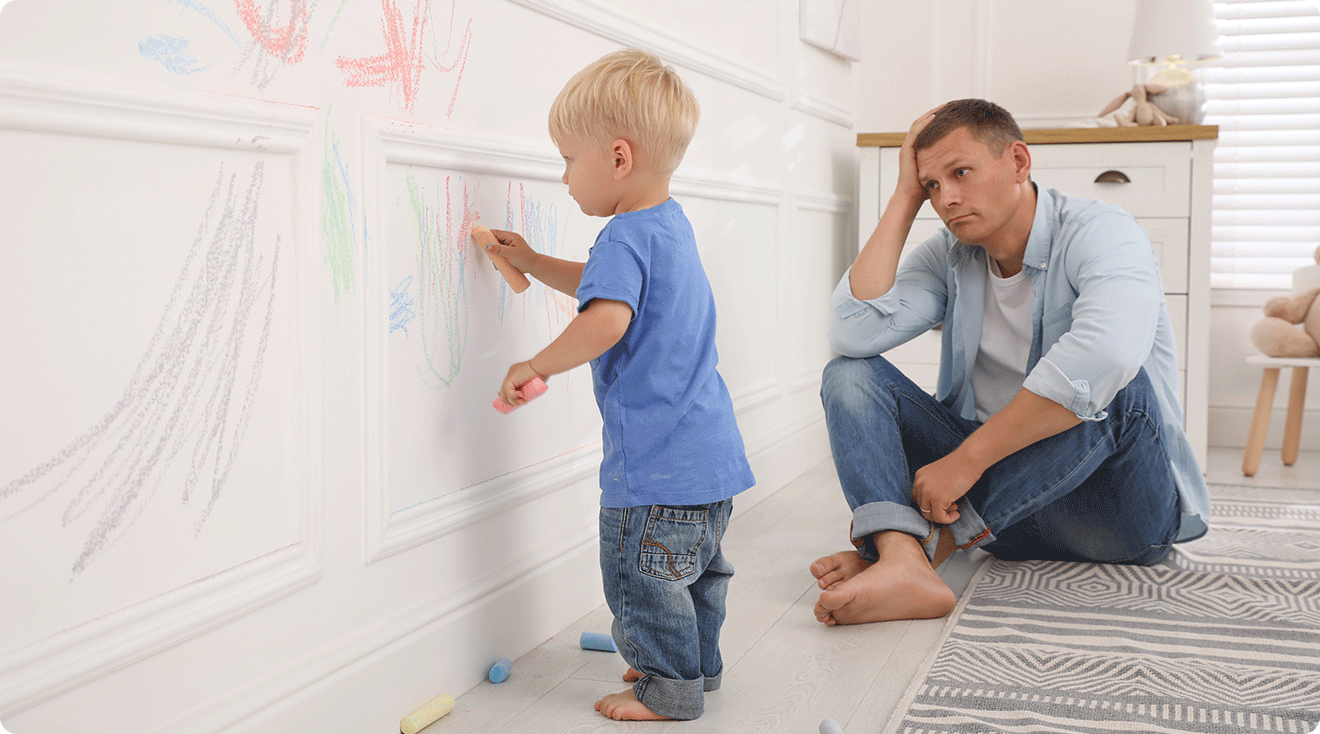

Of all the trendy parenting styles that’ve come and gone (and we’ve seen many), FAFO parenting wins for catchiest name. The social media-popular phrase stands for “‘eff’ around and find out”—and it means letting your little ones do just that. Instead of hovering, coddling and trying to control, FAFO parents let their kids learn from their own mistakes. Sometimes, with hilarious results.
FAFO parenting can teach a lesson quickly. Whitney Duenas Richardson, mom of two in Florida and founder of Global Sprouts, recalls when she didn’t stop her shoe-resistant toddler from walking a few steps barefoot on a hot sidewalk. “Her little ‘ouch’ was a teachable moment, one she understood much faster than a lecture,” she says.
Experts say the method can be useful when used appropriately. “When kids feel the mild to moderate levels of frustration, disappointment or sadness involved with a natural consequence, in the presence of a caring adult, it helps build their tolerance and expand their capacity for managing these feelings,” explains Kahlila Robinson, PhD, a licensed clinical psychologist in private practice in New York City. “This form of experiential learning is a powerful way to integrate new knowledge as well as grow emotional regulation skills.”
But FAFO isn’t worth trying for everyone—there’s a time and a place for this approach. Here’s a look at the pros and cons of letting your kids “eff around.”
- FAFO (aka "‘eff’ around and find out) parenting is a method that lets kids learn through natural consequences. The concept is nothing new, but some say it’s popular now due to a backlash to gentle parenting.
- When done correctly, FAFO can help kids deal with tough feelings and develop emotional resilience.
- FAFO can backfire with younger kids, who don’t yet understand risks and consequences. It’s also important to keep safety in mind; “finding out” shouldn’t lead to dangerous results.
FAFO parenting might be trending, but its principles aren’t new. The hands-off parenting style is essentially the equivalent of letting kids learn through natural consequences, says Rebecca Patrick, director and teacher at A Child’s Academy in Gainesville, Florida. That includes situations where those consequences might be uncomfortable. Anecdotally, many Gen Xers feel FAFO was the norm during their childhoods, just minus the catchy title.
In the 2000s, helicopter parenting—an overly involved, overly protective style of parenting—became popular. FAFO is, in many ways, its opposite and, to its proponents, the better way to raise resilient and independent kids.
Some say the rise of FAFO parenting is due to an exhaustion with the level of involvement gentle parenting can require, as Dr. Becky Kennedy recently suggested on her podcast Good Inside. “I do think there’s this theme of, ‘I don’t want to be involved in every aspect of my child’s emotional life,’” she says, adding that many parents are tired and overwhelmed with what they feel are outsized expectations. (These aren’t exactly opposites, though—there can be intersections between gentle parenting and FAFO parenting.)
When parents use it correctly, FAFO parenting can help kids deal with tough feelings and develop emotional resilience, says Robinson. “It also helps them learn, often in a deep and visceral way, how not to repeat certain errors or missteps,” she adds.
This method can help kids learn lessons independently, says Patrick. “When a child learns that throwing their toy truck means it gets put away for a while, or refusing to wear a jacket leads to feeling chilly on the playground, the lesson is far more potent than any lecture a parent could give,” she says. “It builds genuine problem-solving skills and fosters independence by shifting the dynamic from a power struggle to a moment of self-discovery.” As a side benefit, there’s no nagging required.
Jen Jones, a mom of three in North Carolina and founder of Hello Literacy, says she’s used FAFO with her kids. “I’ve let them forget their homework, navigate the fallout of a friendship and even trash their whole allowance on junk,” she says. She makes sure to always discuss what happened: “Then I’ve debriefed with them afterward about what happened. This is such a better way for lessons to stick than just lecturing them.”
Paul Zalewski, a dad of two in Colorado, remembers when his then-4-year-old daughter insisted on wearing jelly sandals to the park after a rainstorm. “I knew they’d be slippery,” he says. “I could’ve overruled her, but instead I let her go for it. She wiped out once, cried for a minute and then said, ‘Next time I’ll wear my boots.’ That moment stuck with me, because I realized she internalized something I could’ve nagged about 100 times with less impact.” Lesson learned.
FAFO parenting can at times be problematic, especially with toddlers and preschoolers. “Some kids don’t understand the connection yet between action and consequence, especially if the consequence is delayed,” explains Renée Goff, PsyD, PMH-C, a licensed clinical psychologist and owner of Orchid Wellness & Mentoring in Cincinnati, Ohio.
“I’m not going to use the FAFO approach if it’s going to negatively impact my day down the line,” says Jordyn Koveleski Gorman, a mom of two in Pennsylvania. When it comes to letting her little one skip a meal or not bring a coat, “we don’t need to FAFO because I already know it’s going to be a mess,” she says. “I’m going to work through those scenarios with a different approach for my own sanity and my child’s wellbeing.”
Toddlers also lack a full understanding of risks, so a FAFO approach could lead to an unsafe outcome. “Letting a 3-year-old ‘find out’ that running into traffic is a bad idea? Yeah, no. That’s not edgy parenting. That’s just reckless,” adds Luis Maimoni, LMFT, a licensed marriage and family therapist in Los Angeles and Long Beach, California.
So, to FAFO or not to FAFO? It depends. “You have to be aware of your child’s abilities, temperament and development,” Goff says. If the stakes are low—like with Zalewski’s jelly sandals incident—it’s possible to try it with little ones. But, again, in many cases, toddlers aren’t mature enough to understand consequences. “Once kids hit their tween years, that’s a different story,” notes Maimoni. “The older the child, the more useful FAFO becomes.”
Of course, it’s important to keep safety in mind too. “A toddler or preschooler’s brain isn’t equipped to foresee serious danger,” says Patrick. “You can’t let a child ‘find out’ what’ll happen if they run toward a street or put a small object in their mouth. Natural consequences are only appropriate when the outcome is safe, contained and emotionally manageable. A little discomfort is a lesson; a trip to the emergency room or a moment of genuine fear is [the opposite].”
If you do dip your toes into FAFO parenting, always check in afterwards—without lecturing—in order to reinforce the lesson. “Talking with your child later about ‘What did you learn from this experience? What was it like for you? Will you choose to do something differently next time?’” can be a good teaching experience, says Goff. “Be mindful of your tone and avoid ‘I told you so.’ Use FAFO parenting as a genuine teaching moment and a way to connect with your child.”
FAFO parenting is going viral for a reason—it has some benefits, namely helping kids learn natural consequences and instilling independence. But going full-blown FAFO can be overkill.
Suffice it to say, if parents use FAFO parenting playfully—and at the appropriate times—it can be a helpful tactic. “FAFO’s not about letting kids fail, but about giving them the space to learn within firm boundaries of safety and love, knowing you’re right there to help them process the lesson,” says Patrick. After all, the “finding out” part should be educational—not traumatic.
Please note: The Bump and the materials and information it contains are not intended to, and do not constitute, medical or other health advice or diagnosis and should not be used as such. You should always consult with a qualified physician or health professional about your specific circumstances.
Plus, more from The Bump:
Renée Goff, PsyD, PMH-C, is a licensed clinical psychologist and owner of Orchid Wellness & Mentoring in Cincinnati, Ohio. She received her doctor of psychology from Wright State University in Dayton, Ohio.
Luis Maimoni, LMFT, is a licensed marriage and family therapist in Los Angeles and Long Beach, California.
Rebecca Patrick is the director at A Child’s Academy in Gainesville, Florida.
Kahlila Robinson, PhD, is a licensed clinical psychologist in private practice in New York City. She's the author of The Self-Regulation Workbook for Children ages 5 to 8.
Real-parent perspectives:
- Jen Jones, mom of three in North Carolina and founder of Hello Decodables
- Jordyn Koveleski Gorman, mom of two in Pennsylvania and founder of Eat Play Say
- Paul Zalewski, dad of two in Colorado and cofounder of Fathercraft
- Whitney Duenas Richardson, mom of two in Florida and founder of Global Sprouts
Learn how we ensure the accuracy of our content through our editorial and medical review process.
Target Baby Registry
Free $100+ Value Welcome KitFree $100+ Value Welcome Kit
15% Completion Discount15% Completion Discount
Free 1-Year ReturnsFree 1-Year Returns
20+ Exclusive 20% Off
Deals For Mom & Baby20+ Exclusive 20% Off Deals For Mom & Baby1:1 Concierge With
Baby Gear Specialists1:1 Concierge With Baby Gear Specialists

*Subject to availability and Retailer's terms.
We earn commissions from these links.