



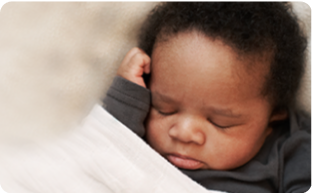






What Does a Newborn Sleep Schedule Look Like?


When my first two children were newborns, my Google searches were dominated by all kinds of sleep-related questions and concerns. As an exhausted mom, I turned to any swaddle, white noise machine or sleep consultant-approved newborn sleep schedule that the far corners of the internet promised would bring my little guys more zzz’s at night. But by the time my third was born, I realized that newborn sleep wasn’t as complicated as I once thought.
I learned that what really matters is understanding newborn wake windows, along with how much total sleep they should be clocking in a 24-hour period. In fact, it was a complete game-changer for me and my sons. This info provides the basis for establishing a solid, but still flexible, newborn routine.
“Think of a wake window as the total time baby spends awake between naps,” says Cara Dumaplin, a former neonatal nurse, certified pediatric sleep consultant and the founder of Taking Cara Babies. “It includes everything from feeding and diaper change to tummy time and playtime.”
Read on for why newborn wake windows are helpful in cracking the baby sleep code—plus see a sample newborn sleep schedule, and learn more about sleep during this challenging period.
- Newborn babies typically sleep 14 to 17 hours in a 24-hour period, though their sleep is often broken into shorter, irregular stretches.
- A newborn can typically only stay awake for 30 to 60 minutes straight during the first 4 weeks of life. This stretches to anywhere from 60 to 90 minutes when baby is 4 to 12 weeks old.
- Don’t stress about establishing a newborn sleep schedule, since newborn sleep is, by nature, erratic and irregular. Instead, focus on feeding baby around every two to three hours, learning baby’s sleepy cues and implementing a very simple routine.
Newborn wake windows are the range of time it’s ideal for a baby 3 months or under to be awake between stretches of sleep. Spoiler alert: These windows are teeny-tiny at first! “Newborn wake windows are usually quite short, around 30 to 45 minutes those first few weeks and then gradually stretching to 60 minutes max by the end of the first month,” explains Allison Panesar, a certified pediatric sleep consultant and founder of The Sleep Collaborative.
Slowly but surely, baby will be able to stay awake for longer periods of time. “As baby gets older, those wake windows become longer. By the time they’re 4 to 12 weeks old, they might be able to stay awake 60 to 90 minutes before they’re ready for sleep,” adds Dumaplin.
Wake windows are a useful tool to help find that sweet spot of sleepiness: awake long enough to be tired for their next period of sleep, but not so long that they become overtired. “If my baby starts to get fussy, I’ll consider how long they’ve been awake to determine if the reason for fussiness is tiredness,” says Danielle T., a mom of two in New Jersey.
But while understanding newborn wake windows can be helpful, remember that every baby’s different. “It’s important for parents to understand that their babies are humans, not clocks or robots,” Dumaplin says. “These wake windows are ranges and guides, not hard-and-fast rules around sleep.”
So how much do newborns sleep, really? While you may be sleep-deprived during those first few weeks, newborns spend most of their days sleeping as they adjust to life outside of the womb. “In the first few weeks, my son Rory slept nearly 20 hours a day,” recalls Jenna S., mom of a 3-month-old in Hoboken, New Jersey. “He slept in short stretches, anywhere from 30 minutes to three hours at a time.”
Experts say this pattern is typical for newborns. “Newborns sleep a lot, although that sleep is interrupted by feeding approximately every three hours,” notes Krupa Playforth, MD, a board-certified pediatrician at Warm Heart Pediatrics in Northern Virginia and the founder of The Pediatrician Mom.
How much sleep do newborns need?
Newborns need anywhere from 14 to 17 hours of sleep a day, according to Nemours KidsHealth.
All that time spent snoozing is crucial for baby’s growth. “While your newborn is sleeping, their brain’s making new connections and their body’s growing. All of that sleep is necessary for your little one’s physical, mental and emotional development,” says Dumaplin.
Lots of babies start out by sleeping more during the day than at night; this is known as day-night confusion. In those first few weeks, “there’s little variation between day and night sleep,” Playforth explains. “They’re simply sleeping a lot, eating a lot and pooping a lot.” This is because newborns are still establishing their circadian rhythms. “Both of my babies primarily slept around the clock in the early weeks,” says Danielle T. “[But] they were both more active at night.”
If you suspect baby has day-night confusion, it helps to pay attention to their wake windows to make sure they don’t become overtired. Additionally, “your pediatrician may recommend exposing baby to more ambient light during the day, and keeping nighttime relatively low-key and quiet,” Playforth says. Most times, however, “it’ll resolve on its own,” Panesar reassures.
While there’s no need for a rigid newborn sleep schedule (and sometimes it’s downright impossible), implementing a newborn routine is a smart idea. Typically, 24 hours with a newborn will include seven to nine feeds (though more is normal if baby’s cluster feeding), naps that last anywhere from 20 minutes to two hours, wake windows that are 30 to 90 minutes long (depending on how young baby is), and 14 to 17 hours of total sleep.
With that said, here’s a sample newborn sleep schedule (keeping in mind there’s a lot of variation):
Sample newborn sleep schedule

Even with all this knowledge on hand, lack of sleep during the newborn period—and potentially beyond—is hard on new parents. When I was pregnant with my first child, all of my mom friends warned me about the exhaustion that was headed my way—and I was still shocked by the depths of my tiredness in those first few weeks. “Our first baby rocked my world,” says Erynn S., a mom of three in Pennsylvania. “Sleep was so important to me, and I really struggled in the beginning.”
Still, there are a few ways to make those first few sleep-deprived weeks more tolerable, according to experts and real moms. Ahead, some tips and tricks.
Tag-team with your partner
“If you’re in a two-parent household, make a plan to divide the night so that you both get a longer stretch of sleep,” Dumaplin suggests. In our home, I’d take the first half of the night—feeding baby at 7 p.m., 11 p.m. and 2 a.m., for example—while he slept. Then, my husband would take over for the early-morning feeds, allowing me to sleep until mid-morning.
Enlist (and accept!) help
The phrase “it takes a village” rings especially true during the first few weeks of a baby’s life. “I wish I’d planned ahead for my family to come over for a little while each day to help keep things moving—laundry, meals, anything,” says Jenna S. Whether it’s holding baby while you take a nap, taking on household chores to lessen your load or dropping off a meal, any bit helps. “There’s no shame in asking for help,” Playforth says.
Prioritize rest
We’ve all heard the advice “sleep when baby sleeps”—but that can be easier said than done. Even if you’re not using baby’s naps to catch up on rest, you can still relax instead of tackling household chores or your to-do list. “Rest doesn’t always mean sleep,” Dumaplin says. “Maybe this looks like letting yourself relax while your newborn plays happily on the playmat, or allowing yourself to watch TV during baby’s nap.”
Find small ways to practice self-care
Even little moments of self-care can have a big impact on your overall mood and well-being. “There’s nothing glamorous about postpartum, especially when you’re sleep-deprived, but a few small things helped me feel a bit more like myself: A cozy pair of pajamas to live in, under-eye patches and warm socks,” says Jenna S. “I even made an effort to get a little ‘ready’ each day, which made a bigger difference than I expected.”
Adjust your bedtime
If baby starts sleeping longer stretches at night (hurray!), try to align your bedtime with theirs so that you can maximize your rest. When one of my sons started to consistently sleep for 5 hours straight—from 8 p.m. to 1 a.m.—as a newborn, I made sure that I went to bed at 8 p.m. to catch up on sleep myself.
Tune out the “noise”
“Don’t get too bogged down by the internet. Everyone will want to give you advice, and it can be overwhelming and hard to shut out the noise,” Playforth says. Instead, “trust your gut, and pick one or two resources for sleep information that are reliable and evidence-based,” she suggests, adding that “hopefully one of them is your pediatrician.”
Lower your expectations
Both Playforth and Panesar encourage new parents to give themselves grace. “It’s fine to stay in survival mode and to prioritize only the things that must get done,” Playforth says. “If baby’s safe, fed and loved, you’re doing okay.”
Don’t obsess over a schedule
It’s unrealistic to try to force baby into a newborn sleep schedule, particularly when their sleep is unpredictable and they need to eat on demand—and it can cause parents undue stress. “In my opinion and experience, forcing a schedule leads to burnout, which is far worse than any level of tiredness,” says Danielle T. Instead, pay attention to baby’s wake windows, sleep cues and hunger signs.
Remember: This isn’t forever
Although it can feel like you’ll never sleep again, know that you will. “That newborn period is deeply exhausting, but I promise it’ll pass,” Playforth says.
Frequently Asked Questions
What should a newborn bedtime routine look like?
While it may be difficult to implement a rigid newborn sleep schedule, a newborn bedtime routine can be beneficial. “A bedtime routine helps transition to sleep time and cues baby’s brain that sleep is coming,” Dumaplin says. It doesn’t have to be lengthy or complex. “A general guideline is to stick to the basics consistently,” Playforth says. “Your bedtime routine will likely include a feed, a diaper change, perhaps a bath, some snuggles, turning on a white noise machine and darkening the room.”
How much do newborns sleep in the first week?
Newborns typically sleep 14 to 17 hours a day, but they can often sleep even more during their first week. Their sleep is often broken up into shorter stretches, and they might have day-night confusion.
Do I need to wake my newborn to feed?
“We do recommend waking newborns to feed every two to four hours,” Playforth says. But, “as baby gets older, and is gaining weight reassuringly, your pediatrician may relax their recommendation to wake baby to feed,” she adds.
At what age will baby sleep more?
“It varies wildly as to when babies begin to sleep longer stretches at night,” Panesar says. On average, however, she says parents might start to see slightly longer consecutive stretches of sleep by the time baby’s 3 months old. Then, around 4 months old, developmental milestones occur that might let baby sleep at least six to eight consecutive hours without needing a feed. (Although it’s completely normal if baby isn’t sleeping through the night at that age too!) Overall, it differs from baby to baby—but things typically get easier as you get out of the newborn phase.
How much sleep do newborn parents get?
A 2025 study found that in the first few weeks postpartum, moms averaged a total of 4.4 hours of sleep each night, with their longest stretch of consecutive sleep averaging 2.2 hours. Researchers pointed out that interrupted sleep may be a risk factor for postpartum depression. It’s yet another finding that shows new moms need all the help they can get. Of course, how much sleep new parents get varies widely: The moms we interviewed reported getting anywhere from little-to-no sleep to around seven-to-eight hours in a day during the newborn period.
Again, a strict newborn sleep schedule is unrealistic (and not recommended). But it does help to pay attention to newborn wake windows, offer feeds every two to three hours and establish a simple, easy-to-follow routine. All of this is sure to help bring some consistency to an otherwise erratic and exhausting time. And remember: This too shall pass!
Please note: The Bump and the materials and information it contains are not intended to, and do not constitute, medical or other health advice or diagnosis and should not be used as such. You should always consult with a qualified physician or health professional about your specific circumstances.
Plus, more from The Bump:
Cara Dumaplin is a former neonatal nurse, certified pediatric sleep consultant and the founder of Taking Cara Babies.
Allison Panesar is a certified pediatric sleep consultant and founder of The Sleep Collaborative.
Krupa Playforth, MD, is a board-certified pediatrician at Warm Heart Pediatrics in Northern Virginia and the founder of The Pediatrician Mom. She earned her medical degree from Vanderbilt University School of Medicine.
Nemours KidsHealth, Sleep and Your Newborn, July 2022
Stanford Medicine Children’s Health, Infant Sleep
Healthy Children (American Academy of Pediatrics), Is It Safe for My Baby to Travel in a Car Seat for Hours at a Time?, November 2023
Sleep, Profound Postpartum Sleep Discontinuity in First-Time Mothers, May 2025
Real parent perspectives:
- Danielle T., mom of two in New Jersey
- Erynn S., mom of three in Pennsylvania
- Jenna S., mom of one in Hoboken, New Jersey
Learn how we ensure the accuracy of our content through our editorial and medical review process.
Target Baby Registry
Free $100+ Value Welcome KitFree $100+ Value Welcome Kit
15% Completion Discount15% Completion Discount
Free 1-Year ReturnsFree 1-Year Returns
20+ Exclusive 20% Off
Deals For Mom & Baby20+ Exclusive 20% Off Deals For Mom & Baby1:1 Concierge With
Baby Gear Specialists1:1 Concierge With Baby Gear Specialists

*Subject to availability and Retailer's terms.
We earn commissions from these links.


