



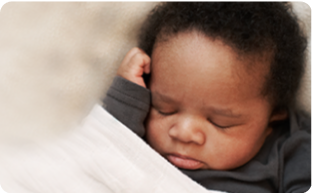






What Should a 7-Month-Old Sleep Schedule Look Like?


Once baby is 7 months old, you might feel like you’ve finally fallen into a rhythm. But little ones have a way of throwing us curveballs—and at this age, baby’s getting more active and their needs are quickly changing. So if you suddenly find yourself in need of a new 7-month-old sleep schedule, don’t be surprised.
By the time I had baby No. 4, I threw all caution to the wind about baby sleep schedules. I thought I had it all figured out—but my daughter proved me very, very wrong. When she hit 7 months, everything that had worked to get her (and her older siblings) to sleep stopped working. I felt like a new mom all over again, and had to enlist our pediatrician for some much-needed advice.
“Every child’s different,” points out Rebecca Fisk, MD, a pediatric hospitalist at Northwell’s Lenox Hill Hospital in New York City. As a result, it’s hard to give blanket advice on a 7-month-old’s sleep needs. Still, there’s general guidance to keep in mind to help you and baby get the top-notch rest you both deserve.
With that in mind, check out sample sleep and nap schedules for a 7-month-old ahead—along with other expert advice to get you through this stage.
- A 7-month-old sleep schedule typically includes around 14 hours of sleep in a 24-hour period. This is divided between 10 (or more) hours of night sleep and two or three naps.
- At 7 months old, many babies are sleeping longer stretches at night—but some night wakings are still completely normal.
- If your 7-month-old is having trouble sleeping, there are quite a few potential reasons including sleep regressions, teething, separation anxiety and being sick. Having a consistent bedtime routine can help a lot, but ask your pediatrician if you have specific concerns.
A 7-month-old sleep schedule can vary. Some babies take more naps, while others prefer longer stretches at night (lucky you!). Also, it’s important to keep in mind that if not having a schedule works for your family, you don’t have to have one—as long as everyone’s getting enough rest.
That said, if you’re looking for some overall guidance, a 7-month-old sample sleep schedule typically includes waking up around 7 a.m., two to three naps throughout the day and a bedtime of around 7:30 or 8 p.m. Wake windows are often around two-and-a-half to three hours.
At 7 months old, baby is usually transitioning from three naps to two longer naps—one in the morning and one in the afternoon, says Anjuli Gans, MD, attending physician at Children’s Hospital of Philadelphia and clinical assistant professor of pediatrics at the University of Pennsylvania Perelman School of Medicine. The third nap is optional and should ideally be on the short side. “You want that third nap not to be more than 30, 45 minutes,” says Fisk.
An important word of advice for the obsessive nap-trackers among us: “Wake windows aren’t an exact science,” notes Gans. “Following baby’s cues is more helpful than the clock.”
Keeping that in mind, here are a couple of sample 7-month-old sleep schedules, depending on number of naps:

While baby’s sleep needs are personal, there’s a general range that most 7-month-olds stay within, says Gans. A 7-month-old should sleep around 14 hours in a 24-hour period, according to Stanford Medicine Children’s Health. The American Academy of Pediatrics (AAP) suggests a range of 12 to 16 hours of sleep in a 24-hour period. Read ahead for how this breaks down between naps and nighttime.
How long should a 7-month-old sleep at night?
“On average, many 7-month-olds sleep about 10 to 12 hours overnight, though this often includes brief night wakings for feeding or comfort,” Gans says. “Some will consolidate longer stretches, while others still wake more frequently—and both can be normal.”
How much daytime sleep does a 7-month-old need?
Most 7-month-old babies will nap for up to four hours during the day, Gans says. Often, this will be split into two to three naps—but again, each little one is unique. “Your baby’s total sleep needs and patterns might be slightly higher or lower,” Gans says.
There are a few potential reasons your 7-month-old might not be sleeping as well as you’d like them to. Here are the biggest culprits, according to experts:
- Sleep regression. Sleep regressions are a common reason for baby not sleeping—but “sleep regression” is a bit of an umbrella term. “This isn’t a formal medical term, but parents often use it to describe a temporary disruption in sleep around this age,” explains Gans. “It can be linked to developmental milestones, teething or increased awareness of their surroundings.”
- Teething. Fisk says teething can “absolutely” cause issues with baby’s sleep. The pain and soreness can leave baby uncomfortable, making it hard to sleep as well as usual, says Gans. Sometimes an ear infection can be mistaken for teething, though: If baby has a fever of 101 or above, reach out to your pediatrician.
- Developmental milestones. When baby’s working on new milestones—like sitting up without help—they sometimes like to practice them when they’re supposed to be sleeping. It can help to make sure baby gets enough activity during the day.
- Separation anxiety. Baby might feel anxious to be away from you. While the AAP says more intense separation anxiety typically begins around 9 months, it’s possible for baby to experience it sooner.
- Being sick. Having a cold or other type of virus can make baby uncomfortable and throw off sleep, says Gans.
Should a 7-month-old sleep through the night?
While your 7-month-old might be sleeping longer stretches, don’t be alarmed if they’re still waking at night. “Some 7-month-olds sleep through the night, but many still wake one to two times—and that can be developmentally normal,” Gans says.
What is the 7-month-old sleep regression?
A sleep regression means baby’s sleeping less than usual, whether it’s due to teething, conquering a developmental milestone or going through a growth spurt. “It usually happens related to developmental milestones,” Fisk says. “There are also sleep regressions when babies are having a growth spurt. They may be hungrier and want to wake sooner.”
There are a few things to keep in mind when it comes to establishing healthy sleep habits for your 7-month-old. Gans recommends the following:
- Keep a consistent bedtime routine. A consistent bedtime routine helps signal to baby that it’s time to sleep. It can include calming activities like taking a bath before bed, reading a book or singing to baby.
- Offer naps before overtiredness sets in. Being overtired can make it harder for baby to fall asleep. Sticking to a consistent nap schedule and offering a nap to your little one before they get a little, well, extra can go a long way toward keeping sleep on track.
- Respond to baby’s needs. “Supporting connection can also support sleep,” says Gans. (Plus, the more you play and bond during the day, the more tuckered out they’ll be by bedtime!)
- Ensure a safe sleep space. The AAP advises having baby sleep on a firm, flat surface with no loose bedding, bumpers or toys in the crib.
- Keep the room dark and cool. This helps support a comfortable sleep environment for your little one.
Frequently Asked Questions
Why won’t my 7-month-old sleep through the night?
Scrolling social media may have you thinking every other baby sleeps 12 hours straight except for yours. Experts stress this couldn’t be further from the truth: In fact, it’s completely normal for 7-month-old babies not to be sleeping through the night. Teething, developmental milestones and growth spurts can also cause baby to wake up. Of course, you can gently nudge your little one to sleep longer stretches—factors like nap schedules, overtiredness and the room environment all play a role. If you have specific concerns about baby’s sleep, it’s best to ask a pediatrician.
Why is my 7-month-old sleeping so much?
Babies at this age require up to 16 hours of sleep over a 24-hour period, which means your little one will likely spend more time sleeping than being awake. However, if you’re concerned that baby’s sleeping more than usual, consult your pediatrician.
Can a 7-month-old sleep on their stomach?
Yes—with a big but. According to the AAP, you should always initially place baby on their back for sleep until they’re at least one year old. But—as long as they’ve mastered rolling over both front-to-back and back-to-front—you don’t need to wake baby if they roll on their stomach, says Fisk.
Can a 7-month-old sleep with a blanket?
No, a 7-month-old shouldn’t sleep with a blanket yet. The AAP recommends keeping baby’s crib free of blankets, pillows and other objects until they’re at least 12 months old.
Can you sleep train a 7-month-old?
Sleep training is a personal decision for every family, but experts generally say it’s safe to start between 4 and 6 months old. “Many families choose to introduce sleep training at this age if it aligns with their values, their child’s needs and their pediatrician’s guidance,” says Gans.
It’s perfectly normal if baby’s 7-month-old sleep schedule looks totally different from that of the baby down the street. But following these general guidelines could help you optimize baby’s sleep—and improve your whole family’s shut-eye.
Please note: The Bump and the materials and information it contains are not intended to, and do not constitute, medical or other health advice or diagnosis and should not be used as such. You should always consult with a qualified physician or health professional about your specific circumstances.
Plus, more from The Bump:
Rebecca Fisk, MD, is a pediatric hospitalist at Northwell’s Lenox Hill Hospital. She received her medical degree from the City University of New York Sophie Davis School of Biomedical Education.
Anjuli Gans, MD, FAAP, is an attending physician at Children’s Hospital of Philadelphia and a clinical assistant professor of pediatrics at the University of Pennsylvania Perelman School of Medicine. She received her medical degree from Georgetown University School of Medicine.
American Academy of Pediatrics, AAP Endorses New Recommendations on Sleep Times, June 2016
Cleveland Clinic, When and How to Sleep Train Your Baby, January 2025
Healthy Children (American Academy of Pediatrics), How to Ease Your Child’s Separation Anxiety, January 2025
Healthy Children (American Academy of Pediatrics), How to Keep Your Sleeping Baby Safe: AAP Policy Explained, September 2023
Journal of Clinical Sleep Medicine (American Academy of Sleep Medicine), Recommended Amount of Sleep for Pediatric Populations: A Consensus Statement of the American Academy of Sleep Medicine, June 2016
Stanford Medicine Children's Health, Infant Sleep
Learn how we ensure the accuracy of our content through our editorial and medical review process.
Target Baby Registry
Free $100+ Value Welcome KitFree $100+ Value Welcome Kit
15% Completion Discount15% Completion Discount
Free 1-Year ReturnsFree 1-Year Returns
20+ Exclusive 20% Off
Deals For Mom & Baby20+ Exclusive 20% Off Deals For Mom & Baby1:1 Concierge With
Baby Gear Specialists1:1 Concierge With Baby Gear Specialists

*Subject to availability and Retailer's terms.
We earn commissions from these links.


