



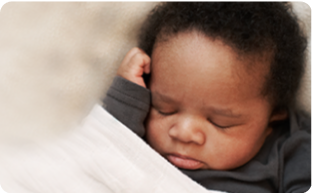






What Should a 5-Month-Old Sleep Schedule Look Like?


At 5 months old, baby’s hard at work on a lot of milestones—rolling over, babbling and so much more. Their personality is also emerging, which is so fun to watch. But all of these changes mean that sometimes baby “forgets” to sleep because they’re so busy (oops!). For many families, this sleep chaos makes it important to establish—and stick to—a 5-month-old sleep schedule.
But while a routine is important, schedules vary among babies. As a mom of four little ones, I’ve found that every one of my kids’ sleep schedules was slightly different at 5 months old. For example, one baby took four naps a day, while another refused to nap more than twice in one day.
One thing’s for sure: Baby’s sleep habits are changing at this age. “Circadian rhythms—the internal clock—are more developed at this stage, and wake windows gradually increase throughout the day, with the longest alert period often in the evening,” explains Mariana Bedoya Pulgar-Vidal, MD, medical director of pediatric sleep medicine at Monroe Carell Jr. Children’s Hospital at Vanderbilt University.
Ahead, check out sample sleep (including nap) schedules for a 5-month-old, along with other expert advice on baby sleep at this stage.
- A 5-month-old sleep schedule typically includes around 14 hours of sleep per 24-hour period. This is divided between 10 hours (or more) of night sleep and two to four naps.
- By 5 months old, many babies are sleeping longer stretches at night—often six to eight hours straight. However, this means that some night wakings are still normal.
- If your 5-month-old isn’t sleeping, there are many potential reasons: Regressions, teething, being overtired, separation anxiety and congestion are all possibilities. A consistent bedtime routine can go a long way, but ask your pediatrician if you have specific concerns.
A 5-month-old sleep schedule can vary quite a bit. (And if you’re not the type of family to have a schedule—and it works for you—that’s totally okay too!) “Patterns vary widely,” Bedoya says. “Every baby’s unique. Sleep patterns can shift with development.”
Still, if you’re looking for some general guidance, a 5-month-old sample sleep schedule will typically include waking up around 7 a.m., two to four (typically three) naps throughout the day, and a bedtime of around 7 p.m. Wake windows are around one-and-a-half to two-and-a-half hours. Keep in mind that every baby’s different—and see below for sample 5-month-old sleep schedules based on the number of naps.
Your 5-month-old’s nap schedule depends on baby’s needs, along with the needs of your family. That said, there are a few general guidelines. “At 5 months, babies typically take three naps a day, totaling around four to five hours of daytime sleep,” Bedoya says. “Approximately one-third of the total 24-hour sleep occurs during the daytime.” Wake windows are around one-and-a-half to two-and-a-half hours, she adds.
As for where baby naps, that can vary too. Some babies only nap at home, while others happily fall asleep in strollers and car seats while their older siblings go about their day. Do what works for you, but remember safety rules: The American Academy of Pediatrics (AAP) recommends moving baby to a flat, firm surface as soon as possible if they fall asleep while out and about.
Keeping that in mind, here are a few sample 5-month-old sleep schedules, depending on number of naps:

A 5-month-old should sleep around 14 hours in a 24-hour period, according to Stanford Medicine Children’s Health. The AAP (AAP) makes a more general recommendation, suggesting 12 to 16 hours of sleep in a 24-hour period. Read ahead to see how this breaks down between naps and nighttime.
How long should a 5-month-old sleep at night?
The exact amount of sleep a 5-month-old needs per night varies. Typically, baby needs 10 to 12 hours of total (not necessarily consecutive) sleep per night. Many babies tend to sleep longer at night once they hit 5 months, Bedoya says. “Some babies begin sleeping longer stretches at night—six to eight hours—between 4 to 6 months,” Bedoya says. “However, there’s variability between infants.” (So please don’t worry if baby’s not sleeping for 10 or 12 hours straight!)
How much daytime sleep does a 5-month-old need?
A 5-month-old’s daytime sleep will vary depending on how active they are and how much they sleep overnight. But in general, you can expect baby to sleep for a little more than four hours per day. They typically take between two and four naps, but don’t worry if this slightly varies too.
Maybe you survived the 4-month-old sleep regression only to have baby waking all night again. Or maybe baby slept pretty well until they hit 5 months. Either way, sleep troubles are pretty normal at this age and stage, says Bedoya. “Temporary sleep disruptions are common and often part of normal development,” she says.
Here are some potential culprits for your 5-month-old not sleeping, according to Bedoya:
- Sleep regression. “This is due to maturing sleep cycles,” Bedoya says. “It can happen due to changes in sleep needs, physical growth and emotional or social development.”
- Teething. Most babies start teething between 4 to 7 months, although it can vary, says Bedoya. Babies can struggle to settle down due to sore gums, and teething can cause them to wake up more often at night, she explains. “Daytime naps may also be shorter or harder to achieve due to discomfort,” she adds.
- Overtiredness or overstimulation. Ah, overtiredness—baby seems so happy to be awake, but you know it’ll end in a meltdown. Staying awake longer than they should (and having a little too much fun) can rile baby up and make it tough for them to settle down.
- Separation anxiety. Little ones can suddenly start feeling anxious to be away from you. While the AAP says more intense separation anxiety usually starts around 9 months, it’s possible for it to begin sooner.
- Sleep associations. Babies can learn to depend on specific conditions for sleep, like a dark room. Without those, they may have trouble conking out, Bedoya explains.
- Being sick. When babies get colds, viruses and ear infections, they may have trouble sleeping (just like anyone else!). It may get worse if they’re congested too.
Should a 5-month-old sleep through the night?
While baby might sleep longer stretches (like six to eight hours) at this age, it’s absolutely normal for them not to sleep for 10 or 12 hours straight. That said, it varies. “Sleep patterns become more predictable as babies reach two important milestones: sleep consolidation—more nighttime sleep and fewer naps—and sleep regulation, which is learning to fall asleep independently and self-soothe during brief night wakings,” Bedoya says.
If your little one isn’t sleeping through the night, don’t panic: That magic milestone may be coming sooner than you think. “By 6 months, most healthy babies no longer need overnight feeding for nutritional reasons, though occasional night wakings are still normal,” Bedoya says.
Bedoya recommends keeping several healthy sleep habits in mind for your 5-month-old:
- Establish a consistent bedtime routine. “Creating a consistent bedtime routine can help baby sleep better by providing calm, predictable activities that signal it’s time to wind down, like a bath, reading or a lullaby,” Bedoya says.
- Stick to a nap routine. When naps are consistent, Bedoya says that baby will have earlier bedtimes, fall asleep faster and wake up less at night.
- Avoid screens. Screen time can interfere with production of the sleep hormone melatonin, says Bedoya. (The AAP also recommends no screen time for babies until 18 months.)
- Be consistent with night wakings. If you’re looking to minimize night wakings, Bedoya recommends providing your little one with “gentle reassurance” without picking them up. This can help gradually teach baby independent sleep skills. Of course, it’s important to first check whether baby needs a diaper change, feeding or something else!
Frequently Asked Questions
How much sleep does a 5-month-old need?
A 5-month-old generally needs to sleep around 14 hours over a 24-hour period, but anywhere from 12 to 16 hours is totally normal. This is normally divided between 10 (or more) hours of night sleep (with some wakings still expected) and two to four daytime naps.
Why won’t my 5-month-old sleep?
There’s a laundry list of potential reasons why your little one may be struggling to sleep. Potential sleep disruptors can include sleep regressions, teething, being overtired or overstimulated, having separation anxiety and dealing with an illness, according to Bedoya. Start with a gentle, consistent bedtime routine and a predictable schedule—and consult your pediatrician with any specific concerns.
Can a 5-month-old sleep on their belly?
Yes, many 5-month-olds can sleep on their belly, but there’s a caveat. “Once baby can roll from back to belly and belly to back on their own, which is typically at 4 to 6 months, it's safe to let them sleep in the position they choose,” Bedoya says. “However, always place baby on their back to sleep until one year of age to reduce the risk of sudden infant death syndrome.” This is consistent with AAP guidelines.
Why is my 5-month-old sleeping so much?
At 5 months old, babies require up to 16 hours of sleep in a 24-hour period, which means your little one is likely to spend more time asleep than awake. But if you notice baby is sleeping more than usual and you’re concerned, bring it up to their pediatrician.
How can you get a 5-month-old to sleep in their crib?
If your 5-month-old doesn’t exactly love their crib, know that this is normal. But if you’re looking to encourage more crib sleep, Bedoya recommends putting baby in their crib while they’re drowsy but still awake. (We know this can be easier said than done, so be patient!) An established bedtime routine will help too. “The key is consistency,” Bedoya says. “Following the same calming steps each night helps baby feel secure and ready for sleep.”
Can you sleep train a 5-month-old?
Sleep training may not be the right choice for every family—but if you’re interested in trying it and have your pediatrician’s go-ahead, you may be able to start at this age. “You can begin gentle sleep training around this age if baby’s developmentally ready,” Bedoya says. “Start gradually and stay consistent.”
Every baby’s sleep schedule is slightly different, and your little one’s daily and nightly rhythms will change over time. But if you’re looking for a general 5-month-old sleep schedule, the one we’ve provided is a good place to start. Know that sleep doesn’t have to be perfect at this age (or any age!)—but that keeping things consistent can go a long way toward keeping baby—and you—happy and healthy.
Please note: The Bump and the materials and information it contains are not intended to, and do not constitute, medical or other health advice or diagnosis and should not be used as such. You should always consult with a qualified physician or health professional about your specific circumstances.
Plus, more from The Bump:
Mariana Bedoya Pulgar-Vidal, MD, is the medical director of pediatric sleep medicine at Monroe Carell Jr. Children's Hospital at Vanderbilt University. She earned her medical degree from Universidad de San Martín de Porres in Lima, Peru. Following this, she completed her pediatric residency and pulmonary fellowship at the University of Miami and further specialized in sleep medicine during her training at Cincinnati Children's Hospital.
American Academy of Pediatrics, AAP Endorses New Recommendations on Sleep Times, June 2016
American Academy of Pediatrics, Screen Time for Infants, February 2024
Healthy Children (American Academy of Pediatrics), How to Ease Your Child’s Separation Anxiety, January 2025
Healthy Children (American Academy of Pediatrics), How to Keep Your Sleeping Baby Safe: AAP Policy Explained, September 2023
Journal of Clinical Sleep Medicine (American Academy of Sleep Medicine), Recommended Amount of Sleep for Pediatric Populations: A Consensus Statement of the American Academy of Sleep Medicine, June 2016
Stanford Medicine Children's Health, Infant Sleep
Learn how we ensure the accuracy of our content through our editorial and medical review process.
Target Baby Registry
Free $100+ Value Welcome KitFree $100+ Value Welcome Kit
15% Completion Discount15% Completion Discount
Free 1-Year ReturnsFree 1-Year Returns
20+ Exclusive 20% Off
Deals For Mom & Baby20+ Exclusive 20% Off Deals For Mom & Baby1:1 Concierge With
Baby Gear Specialists1:1 Concierge With Baby Gear Specialists

*Subject to availability and Retailer's terms.
We earn commissions from these links.


