






















Why Your Newborn Is Snoring (and What to Do About It)

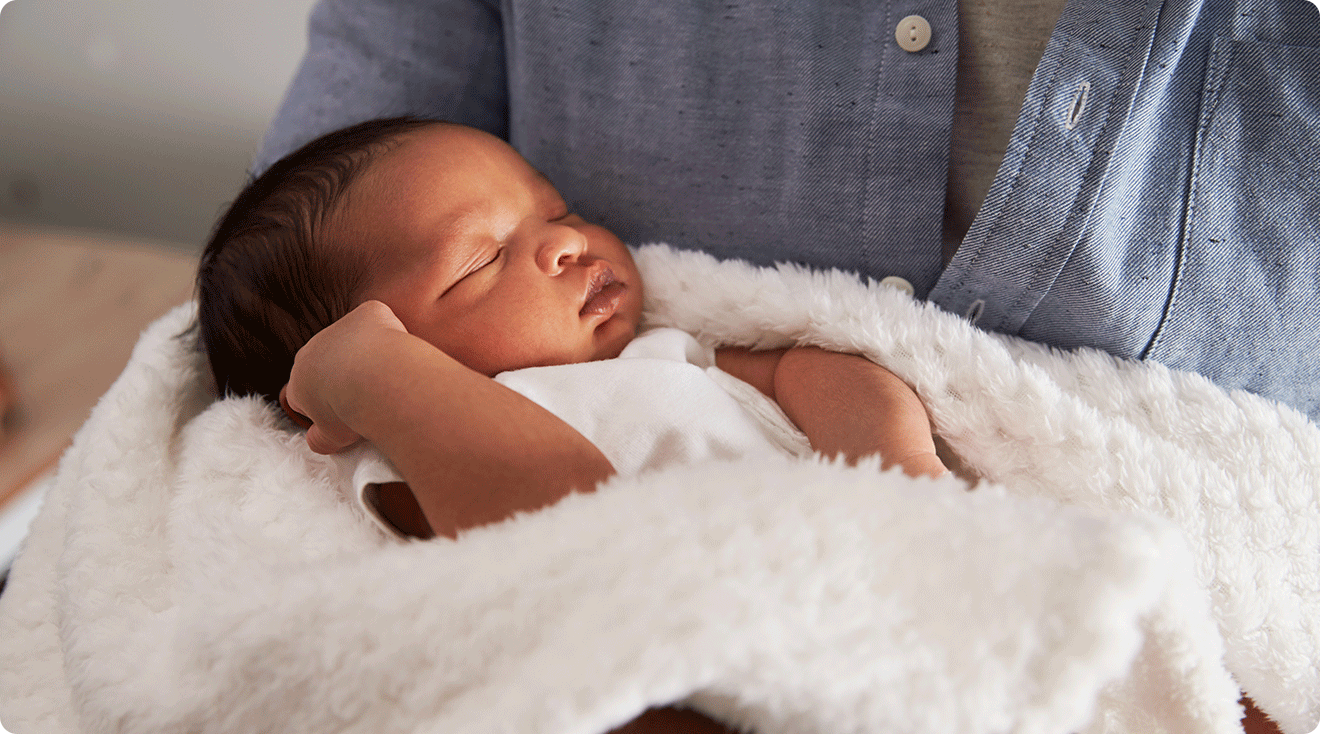

For their tiny size, newborns can produce a surprising symphony of sleep sounds, with snoring up there among the more unsettling. The first night in the hospital after giving birth to my daughter, I didn’t sleep at all—partially because I was a ball of anxiety, but mostly because her “piggy grunts” kept jolting me awake. As a first-time mom, any noise in the night had me Googling—because, as cute as baby sleep noises can be, newborn snoring can be downright unnerving.
Fortunately, experts have answers. “Soft snoring can be normal in newborns along with a variety of noises,” says Abhita Reddy, MD, a board-certified pediatric ENT surgeon at Cedars-Sinai Medical Center in Los Angeles. She adds that louder snoring can be normal when newborns are sick, but that it can also be a sign of obstruction anywhere in the airway. Ahead, read about what causes baby snoring, when it’s a concern—and what you can do when you hear it.
- Newborn snoring is often normal. Their tiny airways and nasal passages can amplify sounds from even minor obstructions.
- Nasal congestion is the most common cause of newborn snoring, but dryness or other temporary newborn conditions can also contribute.
- Call your pediatrician if you notice loud and/or constant snoring, pauses in breathing, gasping, wheezing, baby’s chest caving or a bluish skin tone.
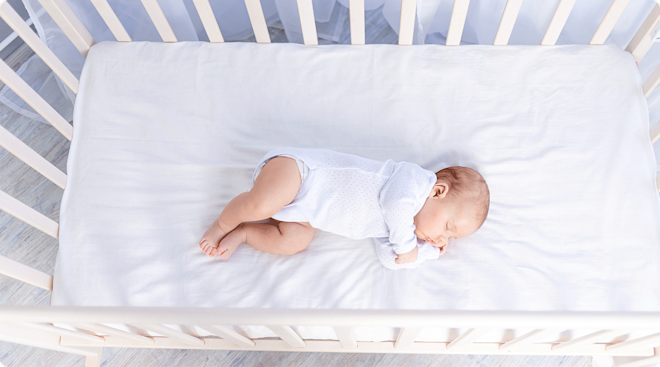
- Simple home care can help with newborn snoring. Try saline drops and a cool-mist humidifier, and make sure baby’s sleep space is flat and safe.
It’s common for newborns to snore softly, according to Reddy. This is due to the shape and small size of their nasal passages. “Their airways are tiny and still developing, so even just a bit of mucus or their sleeping position can make things sound louder than they are,” says Raj Dasgupta, MD, an ABIM quadruple board-certified physician specializing in internal medicine, pulmonology, critical care and sleep medicine, and chief medical advisor for Sleepopolis. “Most of the time, it’s totally normal and nothing to worry about.”
The most common cause of newborn snoring is nasal congestion or a minor nasal obstruction, says Reddy. “This can occur for a variety of reasons, including Mom’s estrogen remaining in baby’s bloodstream during the first few weeks after birth, which can cause something called neonatal rhinitis, or swelling of the lining inside the nose,” she says. “Other reasons can include swelling from over-suctioning the nose, nasal secretions or nasal dryness leading to crusting.” Dasgupta adds that newborns’ nasal passages are so small that “even a little blockage can make them snore. Their airways are also very soft, so when air moves through, it can create vibrations—think of how a straw makes noise when it’s bent.”
While occasional soft baby snoring is usually harmless, certain signs can indicate a more serious problem, like sleep apnea or an airway issue. “Newborn snoring is concerning when there are signs of increased work of breathing such as tracheal tugging—sucking in the muscles of the neck—belly breathing, nasal flaring or the chest appearing to cave in,” says Reddy. “Children should never be gasping or choking for air when they snore, nor should they look dusky or blue.” Dasgupta adds that if the snoring is loud and constant, or if baby’s struggling to gain weight, you should check in with your pediatrician. Don’t forget that you know your baby best—if anything seems like a concern, make sure you bring it up with the doctor.
If you’ve got a snoring newborn, Dasgupta suggests starting with simple steps at home. “Make sure baby’s nose is clear—saline drops can help—run a cool-mist humidifier to keep the air moist, and keep their sleep space safe and flat.” If you’re still concerned about baby snoring, Reddy (brilliantly) suggests taking a video of your sleeping newborn to show your pediatrician. “Checking for signs of increased work of breathing if the concern is high, including undressing them to look at their chest and belly, is usually helpful for your doctor to assess whether there’s need for concern,” she says.
Bruna D., a mom of two in Alberta, Canada, says she told the pediatrician about her snoring newborn right away. “I knew it wasn’t normal from the beginning,” she says, adding that she’s glad she spoke up so they could get to the root of the issue. Both experts agree that if the snoring persists or you notice labored breathing, it’s a good idea to get in touch with your healthcare provider.
Frequently Asked Questions
Why is baby such a loud sleeper?
While it can be startling, it’s normal for babies to cause a bit of a ruckus in their sleep—and it’s usually harmless. “Babies often make many noises in their sleep such as grunting and groaning,” says Reddy. “These vocalizations are normal and due to increased arousals, which is normal for baby while their nervous system is still immature.” Dasgupta adds that since babies breathe out of their noses and have small, soft airways, even “small vibrations or mucus can make them sound noisy while they sleep. It’s usually normal.”
If baby is snoring, does it mean they’re congested?
Snoring can sometimes mean baby’s congested, but not always. “One way to tell is when babies are feeding, they have to breathe from their nose and will often sound noisier, which signals some blockage in the nose,” says Reddy. Dasgupta adds that babies can also “snore just from how soft and narrow their airways are, especially when lying on their back.” (Which doesn’t mean you should move them to their side or belly—babies are still safest sleeping on their back, according to the American Academy of Pediatrics (AAP).)
What’s the difference between newborn snoring and wheezing?
Snoring and wheezing differ in both sound and cause. “Snoring sounds like a low, vibrating noise during sleep,” says Dasgupta. “Wheezing is more high-pitched and happens with each breath, often a sign of something affecting the upper or lower airways of the lung.” Reddy adds that what some parents might think is wheezing is actually “a misnomer for a high-pitched noise babies can make that’s called stridor. Stridor is a squeaky sound that children can make and should be brought up to your pediatrician if you hear it frequently.”
How can you tell if a newborn is struggling to breathe in their sleep?
There are telltale signs to look for that’ll alert you if your newborn is struggling to breathe. “Look for signs of increased work of breathing such as nasal flaring, tracheal tugging, sucking in of neck muscles, chest concavity or caving in and belly breathing,” says Reddy. “You shouldn’t hear baby gasping or choking for air, and you should never see baby turn blue.” If you notice any of these symptoms, contact a healthcare provider immediately.
Newborn snoring is one of those usually normal baby phenomenons that can understandably make you nervous. After all, it can be jarring to hear such big noises coming from such a small human. Most of the time, soft newborn snoring falls within the realm of “typical newborn sounds,” but it’s important to watch for signs of labored breathing. As always, if something feels off, reach out to your pediatrician—it’s wise to follow your instincts here.
Please note: The Bump and the materials and information it contains are not intended to, and do not constitute, medical or other health advice or diagnosis and should not be used as such. You should always consult with a qualified physician or health professional about your specific circumstances.
Plus, more from The Bump:
Raj Dasgupta, MD, is an ABIM quadruple board-certified physician specializing in internal medicine, pulmonology, critical care and sleep medicine, and chief medical advisor for Sleepopolis. He earned his medical degree from Medical University of Silesia.
Abhita Reddy, MD, is a board-certified pediatric ENT surgeon at Cedars-Sinai Medical Center in Los Angeles. She earned her medical degree from Louisiana State University School of Medicine.
Healthy Children (American Academy of Pediatrics), How to Keep Your Sleeping Baby Safe: AAP Policy Explained, June 2025
Healthy Children (American Academy of Pediatrics), Stridor & Laryngomalacia: Is My Baby’s Noisy Breathing Serious?, November 2022
Real-parent perspectives:
- Bruna D., mom of two in Alberta, Canada
Learn how we ensure the accuracy of our content through our editorial and medical review process.
Target Baby Registry
Free $100+ Value Welcome KitFree $100+ Value Welcome Kit
15% Completion Discount15% Completion Discount
Free 1-Year ReturnsFree 1-Year Returns
20+ Exclusive 20% Off
Deals For Mom & Baby20+ Exclusive 20% Off Deals For Mom & Baby1:1 Concierge With
Baby Gear Specialists1:1 Concierge With Baby Gear Specialists

*Subject to availability and Retailer's terms.
We earn commissions from these links.