






















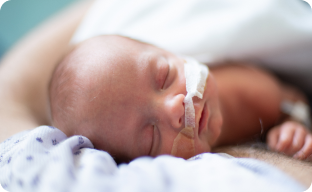


11 Things to Do Before Leaving the Hospital With Baby
When you leave for the hospital to give birth, you’re so wrapped up in what’s about to happen (i.e. pushing a human out of your body), that it’s hard to think about everything that’ll come next. But as Lauren Barth, associate content director at The Bump and mom of three, learned those post-delivery hospital day can be a whirlwind. You’re figuring out how to be a new parent and managing postpartum symptoms. “I was physically uncomfortable and mentally vulnerable. And someone was perpetually walking into the room to take my blood pressure, adjust my latch, massage my uterus! There is a lot happening, and it was easy to sort of lose track of all the things I was supposed to do—you know, besides recover,” she recalls. “Naturally, I knew what to expect with my second and third babies, and had a whole hospital to-do list prepared.”
Feeling overwhelmed already? We’ve got you! Here, experts and real parents from The Bump community share what you should do (and may even be required to do!) before leaving the hospital with baby.
You’ll likely want to do this before heading to the hospital rather than at the hospital—around the same time you pack your hospital bag. You’ll need a rear-facing infant car seat or a convertible car seat to safely transport baby home. It’s illegal in all states to not have a car seat for babies and young children.
“In Wisconsin they won’t let you leave the hospital without a nurse coming to the car and approving of the car seat install,” says The Bump community member ladyjenna13. “We went to our community sheriff’s substation and had them install the base in each of our cars and make sure the seats sit in the bases properly.”
Your doctor will want to take a look at you before they discharge you from the hospital. This will include an assessment of how you’re healing after birth and prescriptions for pain management techniques for the next few weeks. A nurse or doctor may also ask you some questions about how you’re feeling to get a sense of your mental health postpartum.
Baby’s provider will also want to give the green light before discharge. They’ll do an Apgar test, hearing test and bilirubin screening to make sure baby doesn’t have jaundice. They’ll also give baby a vitamin K shot and their first round of vaccinations (more on this below). “Make sure you don’t leave the hospital without baby’s discharge weight. You need it for the first pediatrician visit,” adds The Bump community member, vhmp. “I left without mine and now I have to write a letter requesting the records from the hospital.”
According to the American Academy of Pediatrics (AAP), newborns should get their first immunizations before they’re discharged from the hospital. They’ll need to get a vaccine for respiratory syncytial virus (RSV)—particularly if Mom didn’t get it, and they’re born during its peak season from October through March—as well as their first dose of the hepatitis B vaccine, which they may unknowingly be exposed to at birth, per the AAP. Make sure to ask any questions you have, as well as understand how baby’s medical records will be tracked, kept up to date and be made available to you.
Before leaving the hospital, schedulebaby’s first newborn checkup with their pediatrician. Per the AAP, this will usually happen one to three days after leaving the hospital and will involve a physical exam, as well as a review of their hospital screening tests. This is also a great opportunity to ask questions about newborn care, such as how to bathe baby, cut their nails, care for the umbilical cord and more.
Along with scheduling baby’s first checkup, make sure you also schedule your first postpartum visit with your provider, which will happen around six weeks after birth.
Nursing isn’t always as intuitive as it seems—and it can take a while to get the hang of it. “While you’re at the hospital it’s a great idea to ask for a visit from the staff IBCLC (International Board Certified Lactation Consultant), since they have more lactation training and expertise than the average postpartum nurse,” advises Meema Spadola, PCD, CLC a certified postpartum doula and lactation counselor in New York City. They’ll teach you how to ensure baby has a proper latch, how to hand express breast milk, and more. A lactation consultant can also answer any questions you have. “Don’t hold in questions because you’re afraid that it’s stupid or you’re wasting their time,” says Becid24, a community member on The Bump. “They’re there to help you, and the sooner you get a great latch, the sooner you have a happy baby and Mommy.”
See if you can schedule a follow up visit too for later on.
Nurses are really skilled at getting baby into the perfect burrito-wrap, but it’s not as easy as they make it look. Ask one to teach you how to swaddle baby—and ask if you can take a blanket home with you too. “The swaddle blankets they give you [in the hospital] are perfect for the first week,” says Satya Narisety, MD, a pediatric immunologist in New Jersey. “The fabric is strong so you can get a good, thick swaddle, which soothes newborns.” Barth seconds this notion: “Highly recommend sneaking one or two of those into your bag. You get the best wrap with those extra-starchy hospital swaddles!”
Another great thing to practice with postpartum nurses in the hospital? How to change baby’s diaper.
Your hospital will probably let you take home some basic care items, like a peri-bottle and thick pads, which are great to stock up on. “I wasn’t prepared for how much bleeding I’d have after I went home,” shares hmp1, a community member on The Bump. “I couldn’t ask my husband to buy me [pads], so I ventured to Target by myself a couple of days after coming home.” Barth also suggests snatching a few pairs of hospital-provided disposable panties. “They’re super unsexy but super comfy,” she says.
You’ll also want to grab a hospital-supplied sitz bath, which can really help for those with vaginal births and hemorrhoids). Postpartum sitz baths with plain Epsom salts are great for “cleaning and healing—and it’s frustrating to have to send someone out to a pharmacy to buy one when you can get it for free from the hospital,” Spadola says.
Along with postpartum recovery items, take home any baby items you can get your hands on, such as a bulb syringe, diapers and petroleum jelly. If you can, take the kimono-style snap-button shirts baby wears during your stay too. “They’re easy and perfect for dressing baby in the first few days after you bring them home,” Narisety adds.
All the people around you in the hospital are knowledgeable about newborns, so now’s the time to ask any and all questions you have! Don’t be shy or afraid to ask “too many questions”—it’s better you have this knowledge now than struggle when you get home later. “Write them down in a note on your phone as you think of them—questions are hard to remember in the moment,” says Rebekah Mustaleski, CPM-TN, a certified professional midwife and compression director with Motif Medical. “And get a phone number to call if you have anything come up after you get home.”
One of the biggest topics to brush up on is safe sleep for babies. This includes safe sleep practices, sleep environment, how to dress baby for sleep, how much sleep they should get and tips to help them meet their sleep goals.
This is one of the less glamourous and discussed parts of new parenthood, but it’s a biggie! A significant part of financial planning for birth and life with baby includes getting them on your health insurance plans. You’ll want to ensure you have any necessary documentation you need for this, Mustaleski says. Then, call your provider and let them know you just had a baby, so you can add your newest family member to your plan. (You don’t want to get hit with full-priced hospital bills.) If you don’t have health insurance, the government’s health care marketplace at Healthcare.gov allows you to enroll any time you have a life change—and this definitely counts as one!
Making a postpartum plan before giving birth can really help set you up for success as you manage caring for a newborn while recovering from birth. Think about who you want as a helper, as opposed to a visitor, Spadola says. Mustaleski also recommends having a loved one organize a “meal train” for the first two weeks postpartum. “Moms are so focused on baby that a lot of times they don’t get the care they need or take care of themselves well,” adds Narisety. “Having a baby is one of the biggest things a woman can go through, so do what you can to have a support system for yourself in those first few weeks.”
The Bump community member, blondek8 wholeheartedly agrees with this sentiment: “Don’t be too proud to ask for help. If people offer their help, take it! They wouldn’t offer it if they didn’t mean it. Let friends and family make meals, hold the baby or babies so you can take care of yourself. A happy and healthy Mommy equals a happy and healthy baby.”
Along with getting help around the house from loved ones, consider if a postpartum doula could help you feel more comfortable as you adjust to life at home with a newborn.
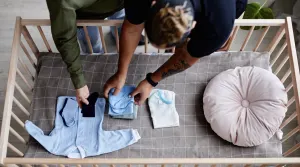
Tons of new parents get excited to dress baby in an adorable going home outfit and take pictures to document this incredible milestone. But you’ll want to remember to be practical about what baby wears. Per the AAP, it might be helpful to have a few different options in case the weather’s variable or baby has a blowout (the first of many!). Whatever outfit you choose, be sure to dress your newborn in one more layer than you’re wearing. For colder weather, this means an undershirt, diaper, pajamas and a newborn hat. In warmer weather, baby can dress in one layer if it’s over 75 degrees Fahrenheit, per the AAP.
This one may sound like a no-brainer, but you would be surprised how easy it is to overlook your own needs while swept in the aftermath of birth at the hospital. You’ll have tons of nurses, doctors and loved ones (if you decide to allow visitors) checking in on you and baby while you’re in the hospital, but don’t be afraid to schedule some time to yourself every day to nap and rest. “I delivered on Friday evening and had non-stop visitors on Saturday. I was so tired by the end of the day. My husband actually took a nap while I was breastfeeding (I’m still bitter),” recalls hmp1. “Also, we put the baby in the nursery at night and I’m glad we did. I don’t feel like I missed out on anything by getting a couple of nights of sleep before going home.”
Frequently Asked Questions
How soon can you leave the hospital after giving birth?
This timeframe will vary based on your hospital’s policies and how the delivery went. “If you have an uncomplicated vaginal delivery, you can expect to stay for 24 to 48 hours. After an uncomplicated cesarean delivery, you can expect to stay 48 to 72 hours after birth,” Mustaleski says.
Are there rules for leaving the hospital with baby?
You won’t be able to leave the hospital until both you and baby are cleared by the staff, Mustaleski says. You also need to provide the name of a pediatrician you will follow up with upon discharge. They’ll also check your car seat before you can leave, so you must have one to drive baby home.
Do you need a carry car seat to leave the hospital?
Seeing as most families drive to the hospital, you will need an infant or convertible car seat to leave the hospital with the baby. As noted, it’s illegal in the US to have a baby or young child in the car without a proper car seat for them.
Do you have to poop before leaving the hospital after delivery?
This depends on your hospital and may not be required. “[Most] people will have a bowel movement within 48 hours of a vaginal birth and within 72 hours of a cesarean birth,” Mustaleski says. Even though it may not be a requirement, you’ll probably end up pooping at some point before you’re discharged. “Even though it can feel intimidating to have a bowel movement after you give birth, it’ll be better and easier for you if you go the first time you feel the urge instead of trying to wait until you are home,” she adds.
Please note: The Bump and the materials and information it contains are not intended to, and do not constitute, medical or other health advice or diagnosis and should not be used as such. You should always consult with a qualified physician or health professional about your specific circumstances.
Plus, more from The Bump:
Rebekah Mustaleski, CPM-TN, IBCLC, is a certified professional midwife specializing in evidence-based maternity care. She co-founded Roots & Wings Midwifery in Knoxville, Tennessee. Mustaleski received her bachelor’s degree in psychology from Centre College and worked as a doula and birth photographer prior to establishing Roots & Wings.
Satya Narisety, MD, is a pediatric immunologist in New Jersey. She earned her medical degree from the University of Medicine & Dentistry of New Jersey and completed her residency at New York University.
Meema Spadola, PCD, CLC, is a certified postpartum doula and lactation counselor in New York City with over 19 years of experience. She earned certification from Doulas of North America (DONA).
Mount Sinai, Vaginal delivery - discharge
Healthy Children (American Academy of Pediatrics), Bringing Baby Home: What to Do Before Leaving the Hospital, November 2024
Real Parent Perspectives
Learn how we ensure the accuracy of our content through our editorial and medical review process.
Target Baby Registry
Free $100+ Value Welcome KitFree $100+ Value Welcome Kit
15% Completion Discount15% Completion Discount
Free 1-Year ReturnsFree 1-Year Returns
20+ Exclusive 20% Off
Deals For Mom & Baby20+ Exclusive 20% Off Deals For Mom & Baby1:1 Concierge With
Baby Gear Specialists1:1 Concierge With Baby Gear Specialists

*Subject to availability and Retailer's terms.
We earn commissions from these links.