










Delivery Room Tools Decoded

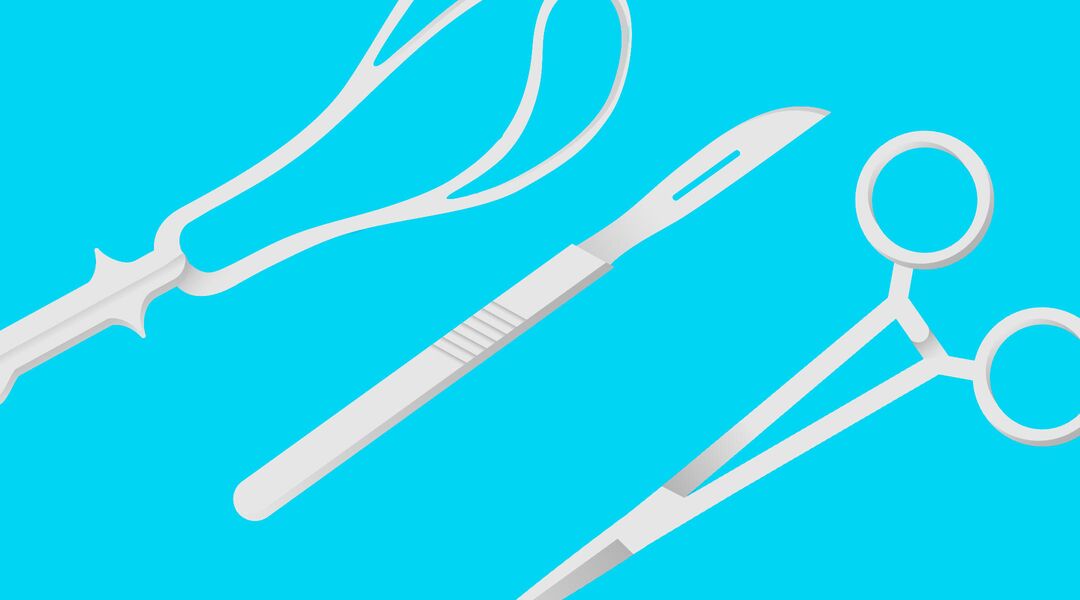

Don’t be alarmed when you see a nurse don a sterile hat, mask and gloves—all it means is that you’re getting close to delivery and it’s time to set up the doctor’s table. But some of the standard labor tools might not look so familiar to you. To help you mentally prepare, here’s a breakdown of the medical tools you might spot being set up. There’s a lot you can’t control during birth, but hey, at least you can know what’s being used and why.

Amniotic hook
This long crochet-like hook is used in the early stages of delivery to break your water, otherwise known as rupturing the membrnaes, if it hasn’t naturally happened on its own. To break your water, the doctor will insert the amniotic hook and use it to puncture the amniotic sac. You might feel some slight discomfort as the device enters your vagina, but as for the actual water breaking, most women only feel a big, warm gush of liquid.
Speculum
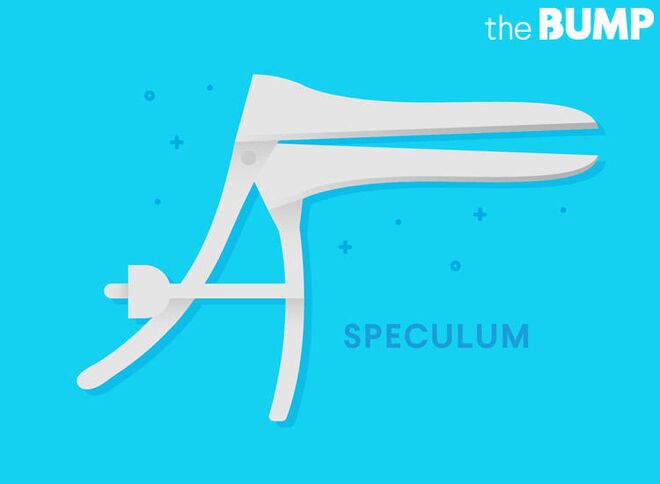
This old friend (think back to all those gynecological exams) is used early in delivery to open your vagina and get a better look at your cervix to see how dilation and effacement are coming along.

Forceps
Resembling large salad tongs, forceps are generally used if baby needs some help making her way through the last part of the birth canal, or if mom’s been pushing for a while and needs an assist. The forcep ends are curved to fit snugly (but not tightly) around baby’s head and gently pull her out as mom pushes.

Vacuum
An alternative to forceps for an assisted delivery, a vaccuum extractor can help deliver baby through the use of suction. A small suction cup is attached to the top of baby’s head and pulls as mom pushes. Don’t be alarmed if baby comes out looking a little conehead-like—newborns’ heads are super-soft and pliable, and in a few days baby’s noggin will regain its normal shape.

Scissors
You’ll likely catch sight of a couple different pairs of scissors in the delivery room. One pair will be used to cut baby’s umbilical cord. Another will be used if you need an episiotomy. In that case, your doctor will have to cut into the perineum (the skin between the vagina and anus) to help baby fit through. The good news is, episiotomies aren’t very common these days.

Hemostat
This clamp may look a lot like a pair of scissors, but it doesn’t have the same sharp blades. Instead of cutting, it’s used to contain any bleeds, hold sutures and—most importantly—clamp the umbilical cord before it’s cut.

Sponge Holders
To keep any bleeding during delivery under control, your doctor may apply pressure with highly absorbent laparoscopic sponges. She’ll use sponge holders—ringed tools that look sort of like forceps—to keep a grasp on the gauzy sponge.
Scalpel
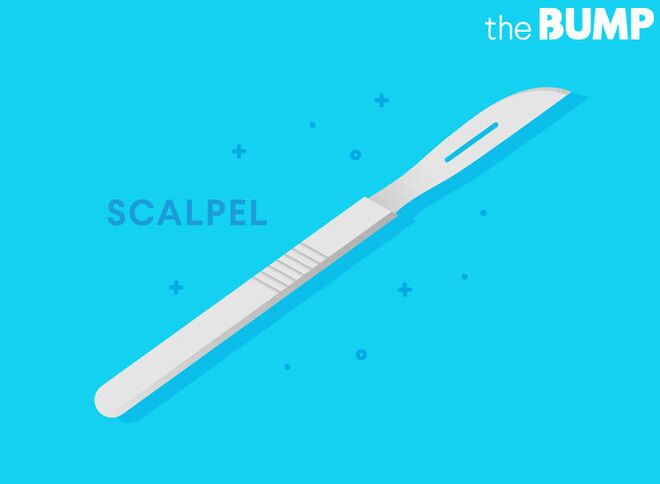
Unless you’re having a c-section, your doctor probably won’t use this—but it may be kept on hand.
Please note: The Bump and the materials and information it contains are not intended to, and do not constitute, medical or other health advice or diagnosis and should not be used as such. You should always consult with a qualified physician or health professional about your specific circumstances.
Target Baby Registry
Free $100+ Value Welcome KitFree $100+ Value Welcome Kit
15% Completion Discount15% Completion Discount
Free 1-Year ReturnsFree 1-Year Returns
20+ Exclusive 20% Off
Deals For Mom & Baby20+ Exclusive 20% Off Deals For Mom & Baby1:1 Concierge With
Baby Gear Specialists1:1 Concierge With Baby Gear Specialists

*Subject to availability and Retailer's terms.
We earn commissions from these links.


