




























5 Best Cribs For Every Need, Tested by Parents and Babies


When I was pregnant with my first baby, I had the perfect image of how I wanted the nursery to turn out. When it came to picking out the crib to match that vision, I quickly felt overwhelmed. Why are there so many options? What does “4-in-1” actually mean and do I really need it? It took until baby number two before the process felt a lot less daunting.
Fortunately, we’re here to help you cut through the confusing marketing claims of baby cribs so you can choose the right one the first time around. This round-up breaks down what features actually matter, what you’ll realistically use and what’s a nice-to-have bonus.
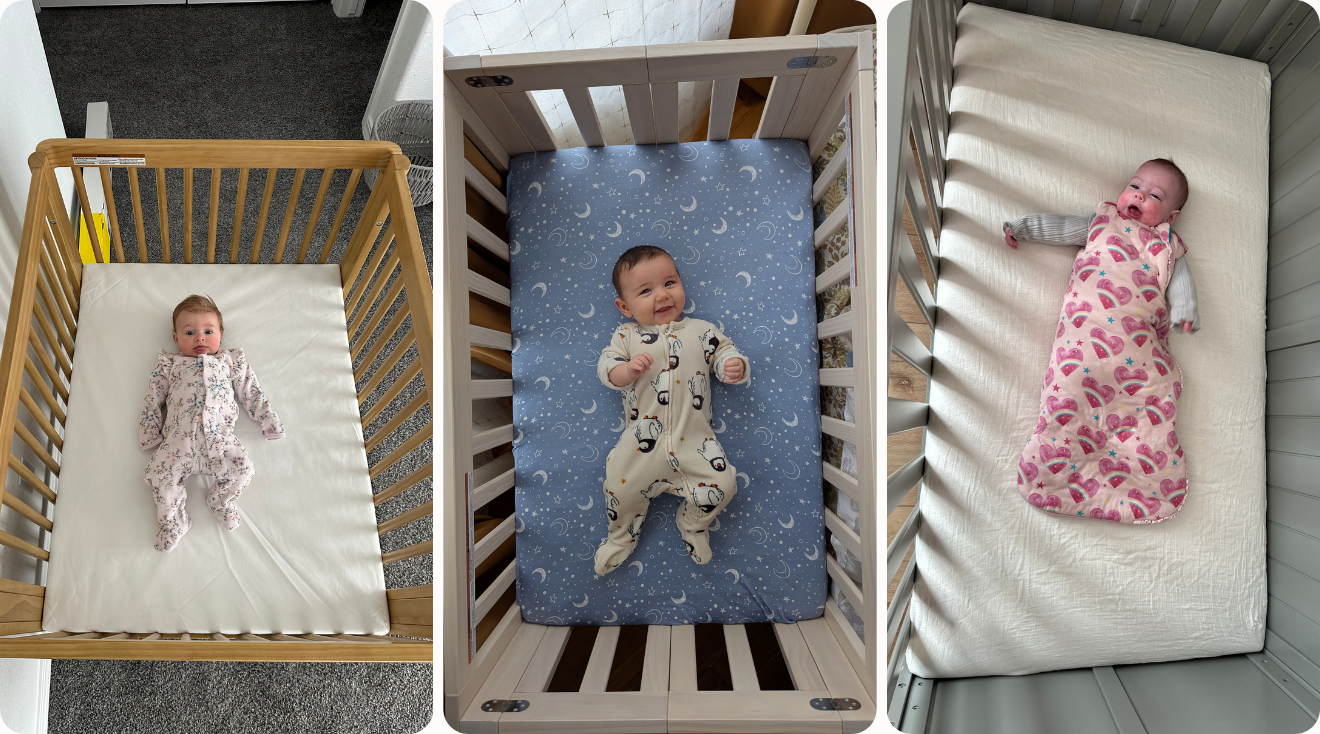
To help you pick out the best crib for your baby, we researched dozens of options and then put the top choices to the test. Here’s how we narrowed down the list:
- We tested 11 different cribs across 11 families with babies and toddlers ranging from 1-month-old to 4-years-old (using a convertible crib).
- Product testers used the cribs out over multiple nights of sleep and evaluated each one based on specific criteria including ease of setup, effectiveness, features, size and portability, style and design, quality and value for the money.
- Cribs were rated in each category on a scale from 1-10 with 10 being the highest score. We used those results to create our shortlist of top 5 products.
- We spoke with a pediatric sleep consultant for advice on what to look for in a crib and how to use one properly.
- Because no two families are alike, we conducted exhaustive market research, scouring message boards, forums and user reviews to see how these cribs worked for families across the country.
Editorial integrity is at the heart of everything we publish. Read more about how The Bump develops our product reviews.
Best budget-friendly baby crib
- Timeless design can fit with most aesthetics
- Can use it from newborns to toddlers and beyond
- Great quality for the price
- Toddler guard rail sold separately increases overall price
- Takes a long time to assemble
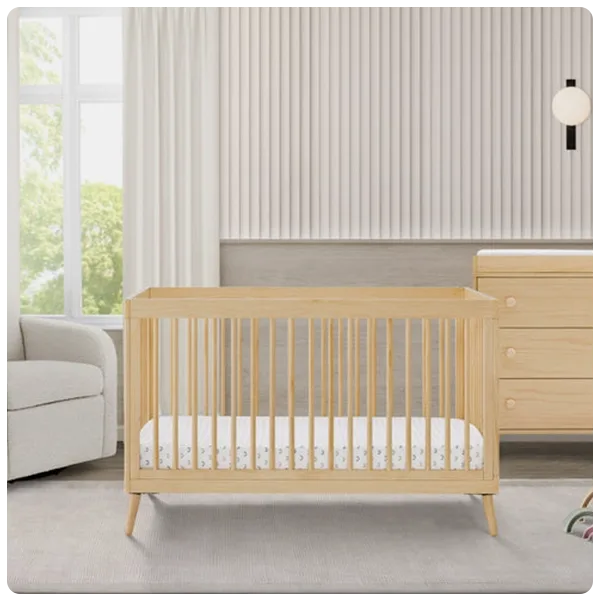
Let's start with the biggest obstacle parents run into when buying a crib: the price can add up, and quickly. Cribs can be expensive—after all, they’re pieces of furniture, as much as a dining set or sofa, with the added fact of needing to be rigorously tested as a safe sleep place for infants. But with the Delta Children Jordan 4-in-1 Convertible Crib, you can save money without compromising on safety or price.
This standard-sized crib comes in at under $200 while still being sturdy, secure, well-made and even GREENGUARD Gold certified. And it didn’t compromise on design either. Our product tester, Melissa L. loved the style of the bed. “I love that it has a timeless, minimalistic design and is gender neutral,” she says. The crib is made from pine and rubberwood, making it sturdy without feeling overly heavy. It’s sold enough that it won’t tip over, but light enough to push aside while you search for the missing pacifier.
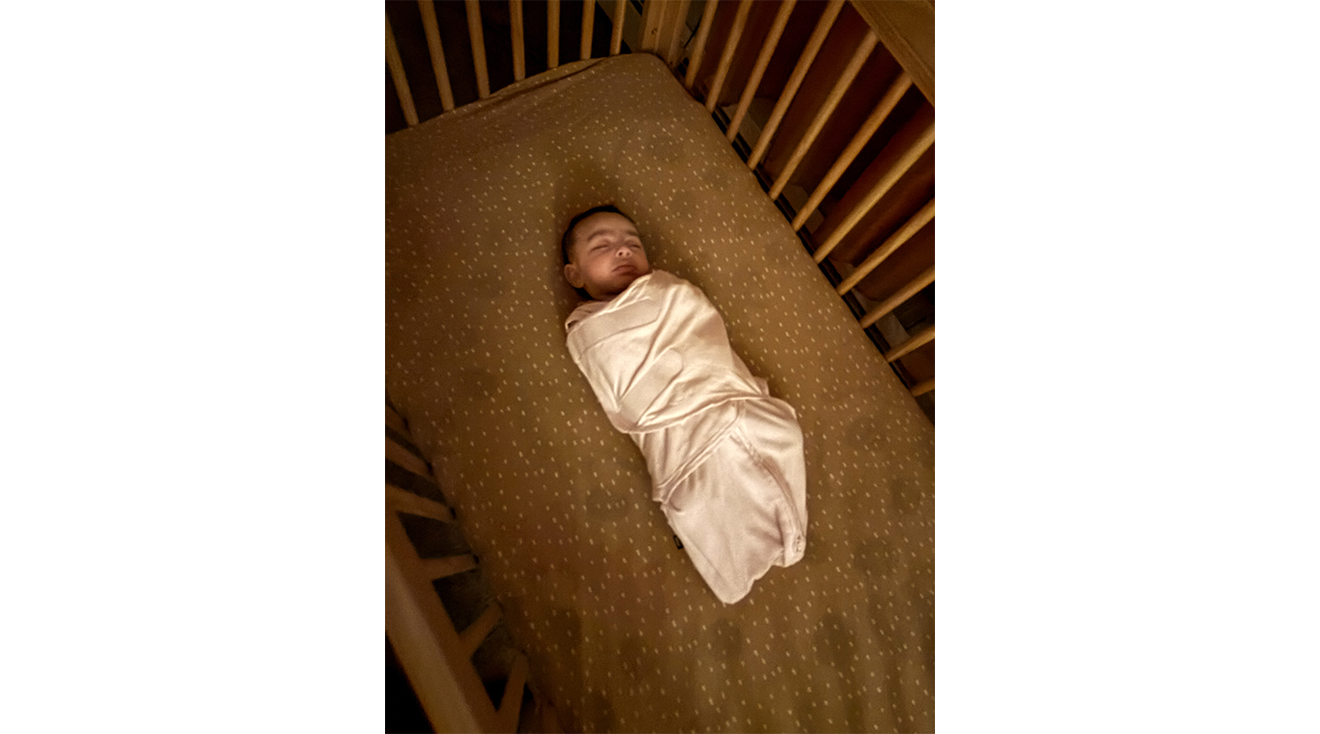
Adding to its value, this crib converts into a toddler bed and a daybed—the brand advertises a fourth sofa mode, although in practice we found that the sofa mode and daybed mode are functionally identical. It also has three mattress height settings, so you can lower the mattress as your baby grows and becomes more mobile. Just note, the toddler bed rail is sold separately—this adds to the overall cost, but everything else is included to get you through multiple stages of sleep.
Melissa found the assembly instructions and parts well-packaged and easy to follow, and she appreciated that all necessary tools were included. That said, it still took her three hours to put together, so plan to set aside some time.
Dimensions: 54.5" (L) x 30.25" (W) x 34" (H) | Mattress included?: No | Configurations: 3 (crib, toddler bed, daybed) | Requires a conversion kit?: Yes, toddler guard rail for $59.99 | Mattress heights: 3 | Has wheels?: No | Tools included or required?: Included
Our product tester says:
“This is a great purchase to put on a registry or to buy when expecting because you wouldn’t need any other crib. This crib/bed can be used from infancy to toddler stages as it has a timeless, aesthetically pleasing design.”

Best baby crib for room sharing
- High number of practical conversion options
- Bassinet has wheels
- All conversion kits included
- A lot of pieces to store
- Full-size crib mattress sold separately
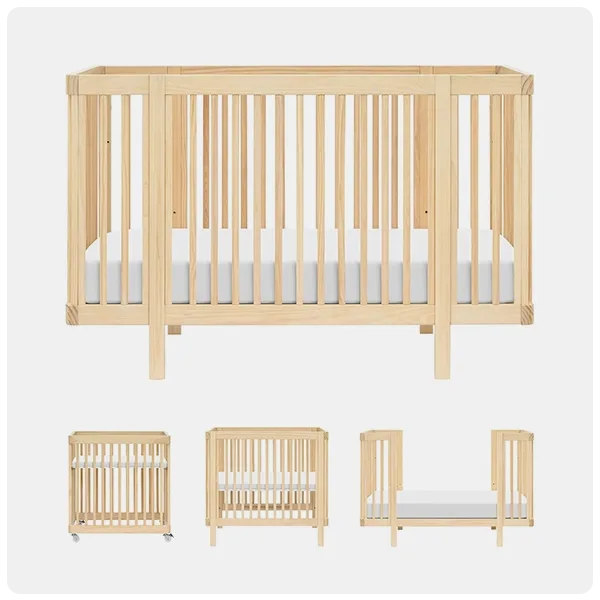
My bedroom barely has enough space for a bassinet––let alone a full-size crib. That makes the reality of the AAP's guidelines, which say parents should room-share with their infant for at least 6 months (ideally 12) a little tricky to pull off. The Babyletto Pogo 8-in-1 Convertible Crib with All-Stages Conversion Kits is a smart solution for those of us with limited bedroom space. And with a minimalist design and four color options to choose from, it’s easy to find one that fits your style.
This versatile crib can start out as a bassinet for your newborn, then grow with your child through every stage of toddlerhood. The bassinet also has wheels so you can move it around in your room––or even from room to room––keeping your baby safely in your line of sight. As you convert into a midi crib, standard crib or toddler bed, the wheels are removed so it stays sturdy as your baby becomes more mobile. And having the option for a midi crib means you can room-share longer even if you’re short on bedroom space.
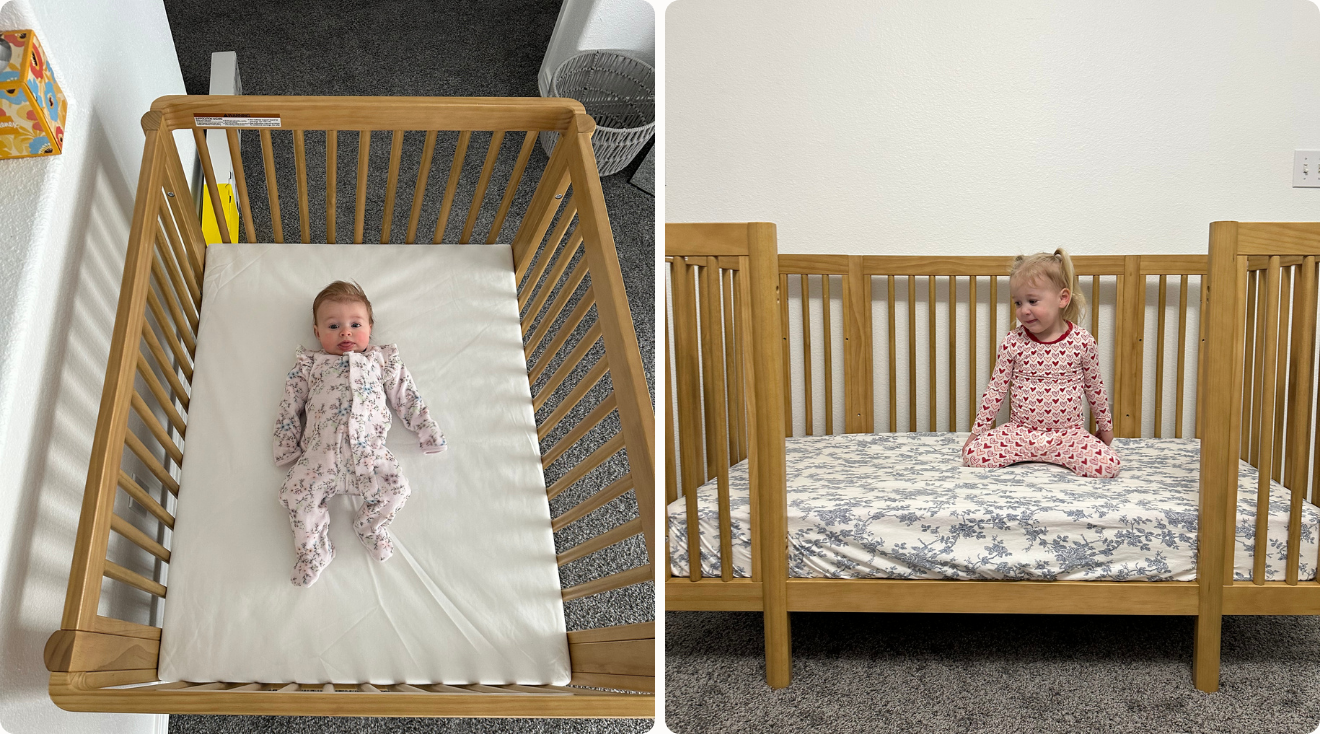
Eight different conversions may sound overwhelming, but our tester Morgan K. says it’s a one-person-job that took her about an hour to set up. For the next stages, “It took about 30-40 minutes to switch each configuration from bassinet to midi-crib, and then to crib.”
This crib is definitely an investment, but it will be the only bed you need to purchase for your little one through 5 years old––truly, all conversion kits are included. Just keep in mind: with so many configurations, comes a lot of extra pieces that you’ll need to store when not in use.
Dimensions (mini crib): 30" (L) x 19.5" (W) x 31.25" (H) | Dimensions (crib/toddler bed): 54" (L) x 31" (W) x 35.25" (H) | Mattress included?: Includes bassinet and midi mattress pad but no crib mattress | Configurations: 8 (bassinet, midi crib, standard crib, midi toddler bed, toddler bed, midi daybed, daybed, junior bed) | Requires a conversion kit? No | Mattress heights: 3 | Has wheels?: Yes | Tools included or required?: Screwdriver required
Our product tester says:
“I liked the bassinet configuration the most because I really loved that I could wheel it around. All of the mattresses fit perfectly into the different configurations and I never worried about my babies’ safety. It’s a great crib for room sharing and perfect for when they get older as well.”
Best baby crib for modern styling
- Attractive design
- Comes with mini and standard crib mattresses
- Great for room-sharing
- Expensive
- Toddler guard rail sold separately and at a high price
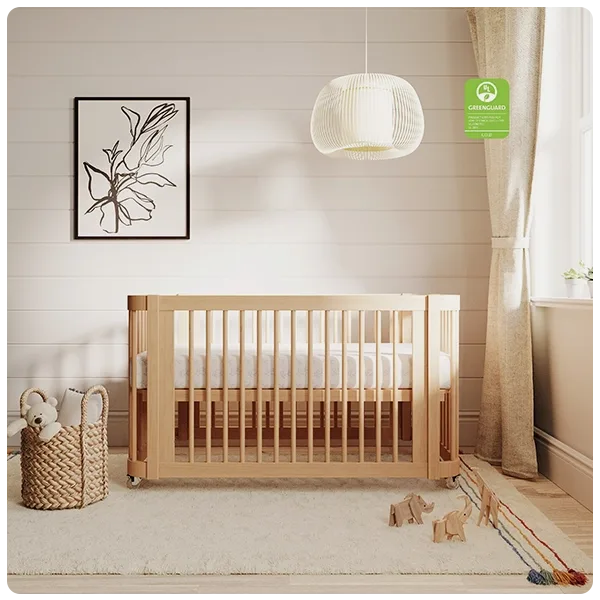
Obviously safety is a top priority when it comes to a crib. But since all cribs have to meet strict federal safety standards, you can also feel free to focus a little on how good it looks. If style is a top priority for you, the Nestig Wave 3-in-1 Crib is a beautifully designed modern crib. With its unique shape and three finish options, it stands out from more traditional crib designs, but still feels simple enough to work in most nurseries.
Just because this crib is pleasing to the eye doesn’t mean it skimps on functionality. It’s highly versatile and converts from a mini-crib to a standard crib to a toddler bed, which helps justify the higher price point––you won’t need to buy another bed until your kiddo reaches 50 pounds. It also includes both the mini crib mattress and standard crib mattress. Just note that the toddler guard rail is sold separately.
The mini-crib feature in this model is especially useful. It’s slightly shorter than most mini-cribs, which makes it ideal for room-sharing up to 6 months––and may even replace the need for a separate bassinet. It also has wheels so you can easily maneuver it around your bed or wheel it from room to room as needed. Like a standard crib, it offers three adjustable mattress heights to keep baby safe as they start to roll over or sit up.
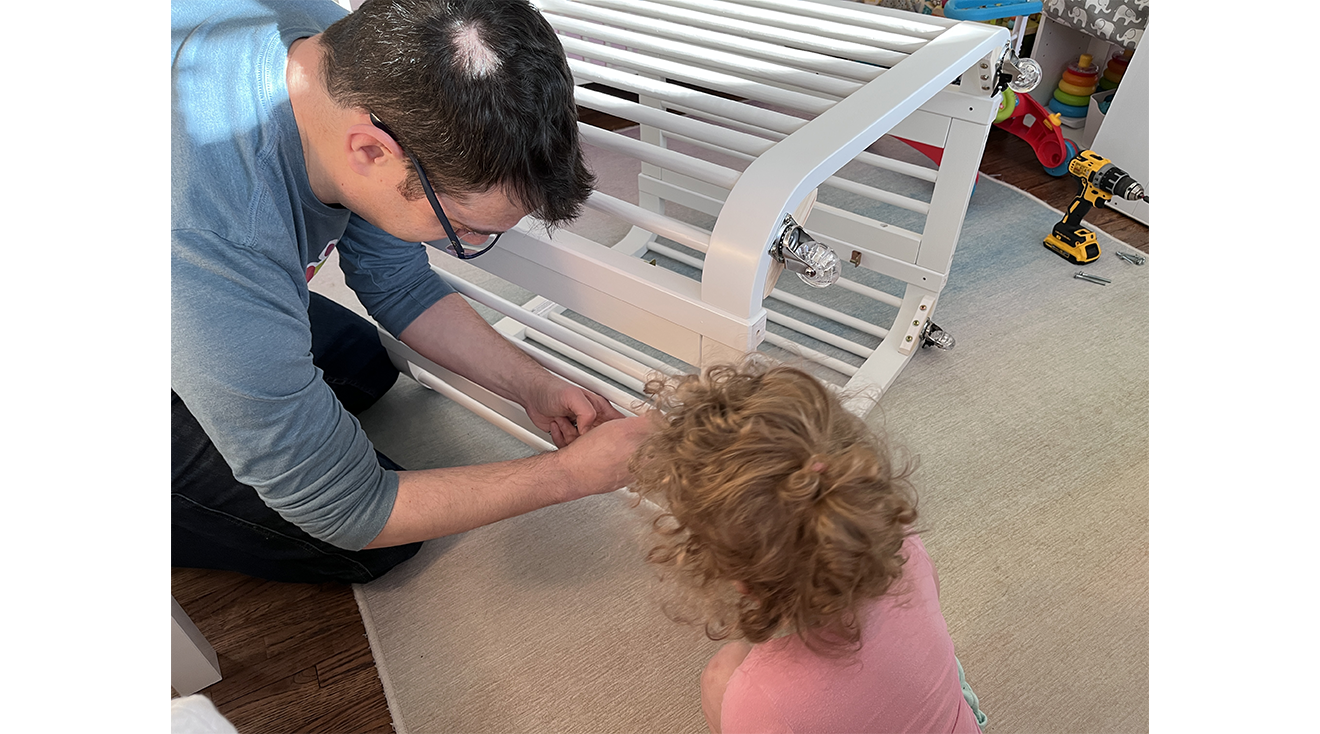
The sleek design and rounded corners were a win for Lauren D.’s family. The rounded corners were easier on her hips as she settled her 8-month-old into the crib, and her toddler loved the style too. “I think she really enjoyed feeling snug in the bed, the rounded corners were interesting to her, she liked to curl up in them like a puppy,” she said.
Setup was straightforward. Lauren was able to assemble the mini crib on her own in about 30 minutes, and she found it easy to convert between each stage using the instructions provided. Once assembled, it felt sturdy and well-made, giving her confidence that her children were sleeping in a safe, secure space. It is worth noting, however, that the toddler bed rail is sold separately, so this isn't an all-in-one purchase.
Dimensions (mini crib): 31" (L) x 24.5" (W) x 31.5" (H) | Dimensions (crib/toddler bed): 54.3" (L) x 31" (W) x 31.5" (H) | Mattress included?: Yes | Configuration: 3 (mini crib, crib, toddler bed) | Require a conversion kit? Yes, separate Wave Toddler Bed Side Rail for $179 | Mattress heights: 3 | Has wheels?: Yes | Tools included or required?: Tools included
Our product tester says:
“I adored the aesthetic of this bed! We got a white glossed crib and it fit in perfectly in our nursery and coordinated well with our family’s style. The bed is designed in a simple, yet, timeless manner that will absolutely be able to be passed on to the next generation.”
Best baby crib if you need built-in storage
- Functional, built-in storage
- Sturdy, quality materials
- Converts to a toddler bed
- Heavy and large
- Assembly can be tricky
- Changing table doesn’t fit standard size pad
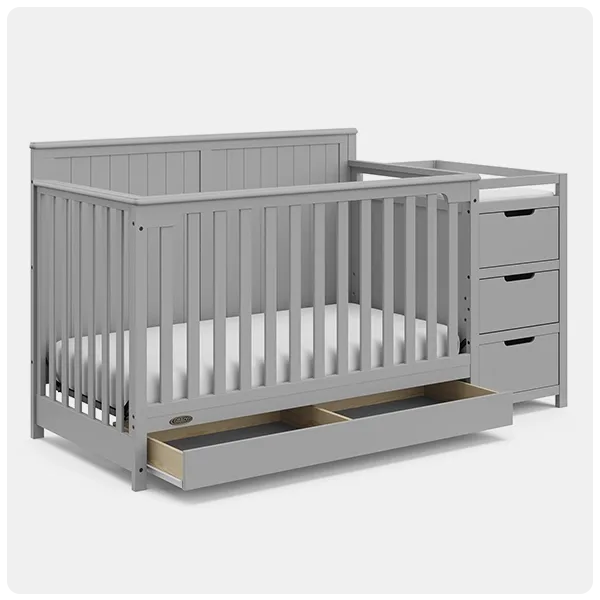
For such tiny humans, babies sure need a lot of stuff––bibs, onesies, diapers, wipes and more burp cloths than you ever thought possible. If you don’t want every corner of your home taken over, then the Graco Hadley 5-in-1 Convertible Crib and Changer with Drawer is worth considering.
This crib goes well beyond the typical under-crib drawer. It includes a full built-in changing table, complete with three drawers and open shelving for easy access to everyday essentials. And make no mistake, the addition of all these extra features makes for a large and heavy piece of furniture, our product tester Katelyn T. found that it gave the crib a feel of sturdiness, and made her feel confident that her baby was safe and secure. (Just don't try to build it outside baby's nursery! You'll never get it through the door.)
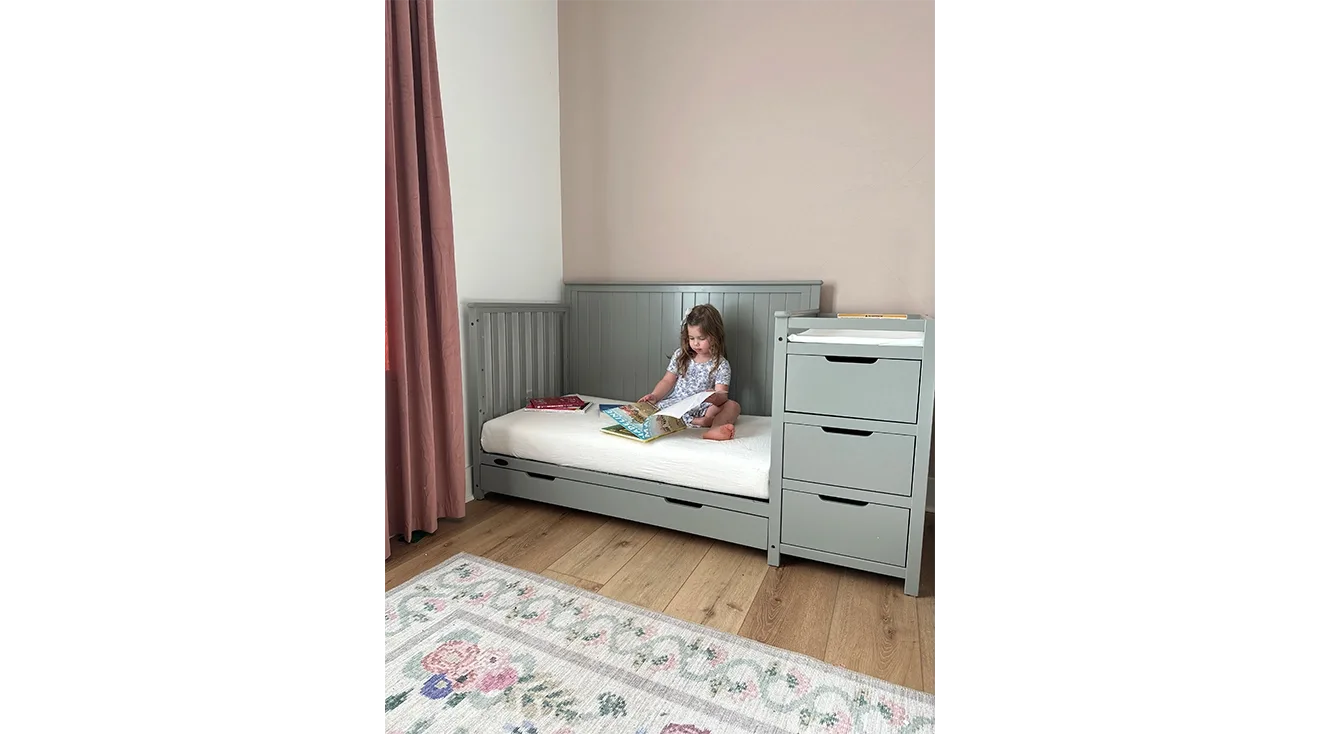
Once your little one is ready for their big-kid bed, this model converts to both a toddler bed and a day bed. It only took Katelyn 15 minutes to make the conversion, but the initial set up was a much bigger process. It took her over three hours––and at times needed an extra set of hands to get everything assembled.
While it’s marketed to convert to a twin bed, there are some tradeoffs to consider. The conversion kit isn’t included, and you’ll also need to purchase a box spring or build your own slats. Since the changing table and drawers are attached and not removable, you’ll want to consider how much space you’ll need in your child’s room as they grow, and whether a separate twin bed altogether is a better match for your family.
Dimensions (crib/toddler bed): 71.7" (L) x 29.9" (W) x 39.8" (H) | Dimensions (twin/full-size bed): 75.5" (L) x 38" (W) or 55" (H) | Mattress included?: No | Configurations: 5 (crib, toddler bed, daybed, and twin bed/full-size) | Requires a conversion kit? Yes, for both toddler bed and twin/full-size bed | Mattress heights: 3 | Has wheels?: No | Tools included or required?: Screwdriver required
Our product tester says:
“It's a great bed if you are looking for built-in storage and easy access to a changing table. The design of the backboard of the crib really elevates it and it would look nice in any nursery, with babies of any gender.”
Best baby crib if you only want a mini-crib
- 2 mattress heights
- Includes 1” waterproof mattress pad
- Folds up for easy storage
- High price point for a mini crib
- Doesn’t convert to a larger size
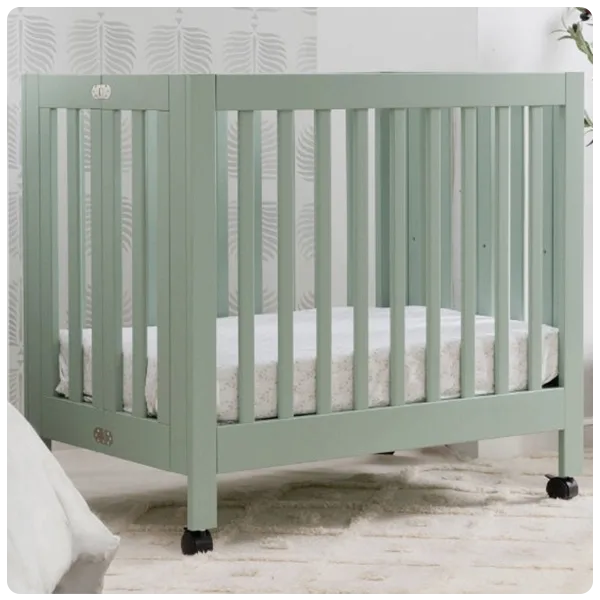
If you have a tight living space, a mini-crib option might be best for you. Most bassinets aren’t adjustable, so as soon as your little one starts rolling over, they’re no longer safe to use—that's usually around 6 months, but can mean as early as 3. With first baby, we had to transition to a full-size crib much earlier than expected, which made room-sharing more difficult. The Babyletto Origami Mini Crib is a great option if you want to skip the bassinet altogether and keep baby sleeping safely next to your bed for longer. And our product tester, Emily T., thought the design of this mini-crib was one she'd actually enjoy having in her bedroom: “The style of this crib is modern, yet timeless. It is streamlined and simple, without extra adornment,” she said.
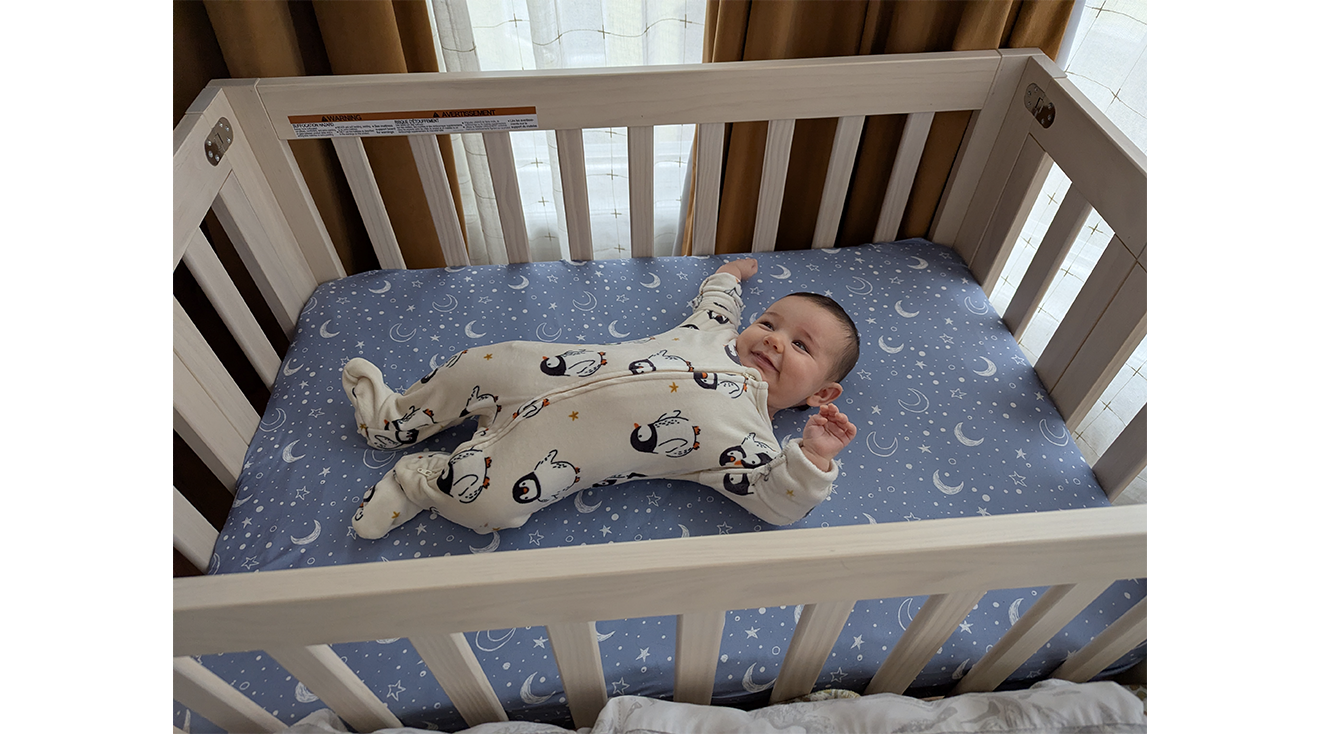
Unlike a bassinet, this mini-crib has two adjustable mattress heights, so whenever that first rollover happens, you can lower the mattress and keep baby secure. It also has wheels that are both lockable and removable, making it easy to move around your space. Emily said the set-up took about 25 minutes with two people and felt straightforward overall.
You will still likely need to purchase a full-size crib at some point. When that time comes, this mini-crib can be folded down for easy storage, which is especially helpful in smaller homes, or for families who plan to have multiple children. But note that you will need a screwdriver to fold and unfold it, so it’s not something you’ll want to do regularly.
Dimensions: 39.25" (L) x 25.75" (W) x 36" (H) | Mattress included?: No | Configurations: 1 (mini crib) | Requires a conversion kit? No | Mattress heights: 2 | Has wheels?: Yes | Tools included or required?: Screwdriver required
Our product tester says:
“The size is fantastic for use in our bedroom… For room-sharing, it is a great size—bigger than our bassinet, but not so big it doesn't fit next to our bed (which is a tricky space, as our bed sits in a bay window.)”
Baby Crib Comparison Chart
| Best budget-friendly baby crib | Best baby crib for room sharing | Best baby crib for modern styling | Best baby crib if you need built-in storage | Best baby crib if you only want a mini-crib | ||
|---|---|---|---|---|---|---|
Overall Best Delta Children Jordan 4-in-1 Convertible Crib | Babyletto Pogo 8-in-1 Convertible Crib with All-Stages Conversion Kits | Nestig The Wave 3-in-1 Crib | Graco Hadley 5-in-1 Convertible Crib and Changer with Drawer | Babyletto Origami Mini Crib | ||
| Price | $ | $$$ | $$$ | $$ | $$ | |
| Dimensions | 54.5" (L) x 30.25" (W) x 34" (H) | 54" (L) x 31" (W) x 35.25" (H) (crib mode) | 54.3" (L) x 31" (W) x 31.5" (H) (crib mode) | 71.7" (L) x 29.9" (W) x 39.8" (H) (crib mode) | 39.25" (L) x 25.75" (W) x 36" (H) | |
| Weight | 41.8 lbs. | 75.1 lbs | 75.1 lbs | 99.2 lbs. | 50 lbs | |
| Number of modes | 3 | 8 | 3 | 5 | 1 | |
| Number of heights | 3 | 3 | 3 | 3 | 2 | |
| Has wheels | ||||||
| Buy NowRead Full Review | Buy NowRead Full Review | Buy NowRead Full Review | Buy NowRead Full Review | Buy NowRead Full Review |
There’s a lot to think about when choosing a baby crib. To make the decision a little easier, here are the factors that actually matter:
- Safety. The safest baby cribs are newer models that meet current federal safety standards. Today’s cribs are built with stronger hardware and more durable slats to prevent breakage or loose parts. Any baby crib you buy new will have to meet CPSC (Consumer Product Safety Commission) requirements, but that’s not necessarily true of used models. If you’re using a hand-me-down, double check that it hasn’t been recalled—and that federal safety standards haven’t changed since it was made. And for extra assurance, look for cribs that carry the JPMA (Juvenile Products Manufacturers Association) seal.
- Size. If you’re tight on space or planning to room-share beyond the bassinet stage, a mini-crib can be a great option. Standard cribs are larger and once assembled, won’t fit through the doorway, which means you may want a different, smaller option for room-sharing. Otherwise you’ll probably need to disassemble the crib to move it from your room to your baby’s room once they’re ready to be on their own.
- Portability. Full-size cribs tend to be heavy and not meant to move. While this adds to their sturdiness, it makes it difficult to move around the room if you’re the kind of person who likes to redecorate. Mini cribs often come with wheels, which can be especially helpful if you want to move your baby from room to room during the day.
- Budget. The crib itself isn’t the only cost to consider. You’ll also need to budget for a crib mattress, which typically runs from $100 anywhere up to $500. And a non-convertible crib may cost less, but if you go that route you may then need a toddler bed down the line. And if you are buying a convertible crib, check whether conversion kits are included—many aren’t, and they can add a surprising amount to the total cost.
- Storage. Baby gear adds up quickly, so built-in storage can be helpful. Some cribs include a drawer underneath, but that can make it harder to stand close when lifting your baby in and out (you’ll likely bump your feet a few times). Others have attached dressers or changing tables, which save space, which save space––but they’re usually not removable, so you’ll always have a larger footprint.
- Add-ons. If you plan to convert your crib into a toddler bed later, consider purchasing the accompanying toddler rail or conversion kit at the same time. These pieces can go out of stock or get discontinued, so it’s better to have them on hand than to find out down the line that the necessary parts for the model you have are no longer available.
- Bedding. The good news: You don’t need (and for safety reasons, shouldn’t have) anything other than a fitted crib sheet in a baby crib. While a matching crib skirt is optional as a decorative touch, skip the bumpers, quilts and pillows, all of which pose safety hazards per the American Academy of Pediatrics (AAP).
Finding a baby crib that aligns with your unique needs is only half of the process—you’ll also want to make sure it’s set up and used safely. This way, you can create a sleeping spot for baby that’s comfy, dreamy and secure. Below, find safety tips to keep top of mind:
- Age. Depending on your preference, baby can sleep in a crib from day one. If you start with a bassinet, you’ll need to transition to a crib once baby outgrows the space or shows signs of rolling over or sitting up according to Jillian Thistel, a certified pediatric sleep consultant in Ontario, Canada. As your child approaches age 3, they’ll likely be ready for a toddler bed, but every child develops at their own pace, so follow their cues and move them when it feels right––or when they physically outgrow their crib––to avoid safety risks.
- Setup. Always follow the instructions given by the manufacturer carefully to ensure the crib is assembled correctly (without any loose screws or bolts!), says Thistel. If you lose any parts, such as screws and washers (because pregnancy brain!), don’t improvise. Instead, contact the brand for replacements. Most importantly, remember to build your baby’s crib in the room you plan to use it in—you don’t want to learn the hard way that it won’t fit through the door!
- Placement. Avoid placing their child’s crib near any outlets; furniture that could be a potential safety hazard; windows with blinds, cords or strings or walls with frames or hanging decor that could fall—the same goes for mobiles that attach to or hang over the bed. For baby’s comfort, the crib also shouldn’t be placed where direct sunlight hits, notes Thistel.
- Bedding. Make sure you’re up to date on all safe sleep guidelines from the AAP. For starters, when making your infant’s bed, use a fitted sheet only—nothing else should be in the crib with baby. Moreover, there shouldn’t be any gaps between the mattress and the bed. Once baby reaches their first birthday, you can introduce a small lovey, says Thistel, but the bed should remain free of bumpers, pillows, loose bedding and anything else that could pose a suffocation risk.
- Mattress height. Most cribs feature adjustable mattress height settings that adapt to your child’s changing needs. Thistle advises parents to lower the crib’s mattress height when baby shows signs of sitting up independently, rolling over or getting up onto their hands and knees.
Convertible cribs can be extremely convenient for parents. They start as one type of crib and transform into different bed configurations as your little one grows. Some convert from mini crib to full-size crib, others from crib to toddler bed, and can be marketed as “3-in-1,” or even “4-in-1” with multiple stages.
The way you convert each version varies. Going from a mini-crib to a standard crib usually involves screwing in additional rails on each side of the crib to extend the frame. Converting to a toddler bed typically involves removing one sides of the crib and adding a guard rail. Depending on the model, these conversions can be quick 15-minute processes or can involve more time, tools and connecting many small parts.
The appeal of convertible cribs is obvious––when they work right, you don’t have to purchase multiple beds throughout your child’s sleep stages. Convertible cribs can also reduce the amount of storage space you need—you don’t have to put the crib in the attic once baby outgrows it, you just keep using it.
While this sounds ideal, there are some tradeoffs to consider. Many cribs don’t include the conversion kits required for each stage. These are often sold separately, adding to the overall cost––and frustratingly, that’s not always clearly stated upfront. And by the time you need the kit (or another piece, like a toddler rail), it may be out of stock or discontinued.
It’s also worth looking at what those “conversions” actually are. Sometimes brands exaggerate the number of modes, and you’re told something is a 4-in-1 when really you’re looking at two or three modes, tops—for instance, we tested one model that described a daybed and a sofa bed as two separate modes, even though the only difference was where you place the cushions (that weren’t even included). This doesn’t mean the crib was bad, mind you—in fact, we recommended it in this article! It just means that you need to keep your eyes open and be aware of what’s a real benefit and what’s marketing speak. And while the idea of converting to a full- or twin-size bed sounds great, parents sometimes find that it can involve buying extra kits, slats and a box spring. In those cases, you may find it’s more hassle (and more expensive) than just buying a new bed.
When it comes to choosing a convertible crib, consider how many conversions you’ll realistically use. Would a mini crib help with room sharing and eliminate the need for a bassinet? Do you want a standard crib to convert to a toddler bed? Whichever type you choose, read carefully whether you need to purchase any conversion kits separately. If a separate kit is required, purchase them at the same time as the bed so you’re not stuck tracking them down later.
Many parents opt for a bassinet to make room-sharing easy in the first few months of their newborn’s life. But once baby starts to push up and roll over—which can happen earlier than you’d think—bassinets are no longer safe, since the mattress height typically isn’t adjustable. At that point, switching to a standard crib can make room-sharing (which the AAP recommends for 6 to 12 months) more challenging, especially in smaller bedrooms.
Mini cribs are a great alternative. Their smaller footprint means they can usually fit alongside your bed, eliminating the need for a separate bassinet. Mini cribs are also usually a bit larger than bassinets which means they’re more comfortable for baby for a longer period of time. Many mini cribs include adjustable mattress heights, which helps keep your baby safe as they grow and become more mobile.
On average, the footprint of a mini crib measures around 24" x 38", compared to 28" x 52" for a standard crib and about 19" x 33" for a bassinet. That said, not all mini cribs follow standard sizing. Depending on the model and your baby’s size, some can be used up to 12 to 18 months. Since sizing varies, you may need to purchase a brand-specific mattress and bedding for your mini crib so it fits snug with no gaps.
Another option is a midi crib. These are slightly larger than mini cribs (about 29.75" x 37.5" on average) but still smaller than standard cribs. They offer a bit more room for your baby to grow, but the larger footprint may make room-sharing less practical depending on your space.
Mini and midi cribs can be great alternatives to a bassinet and can help extend room-sharing. Their smaller footprint makes them easier to fit into most rooms. However, many parents still transition to a standard crib eventually, depending on their baby’s size and mobility, especially once they start pulling up to stand. It’s also worth noting that most mini cribs don’t include built-in storage options like drawers or attached dressers.
About the writer:
Michelle Sabia, MPH, CPH, MWC is a public health professional, health educator and mom of two. With nearly 15 years of experience, she has focused her career on designing and implementing women’s health education programs. Having experienced several complications in pregnancy, childbirth and the postpartum period, Michelle is a fierce advocate for maternal health and maternal mental health. She brings her personal and professional experience to her writing, where she aims to support all parents through the new, chaotic chapter in their lives.
Plus, more from The Bump:
Expert interviews:
Jillian Thistel is a certified pediatric sleep consultant based in Ontario, Canada. She is a member of the Association of Professional Sleep Consultants and the founder of Twinkling Stars Pediatric Sleep Consulting.
Scientific literature:
American Academy of Pediatrics, Safe Sleep, July 2025
American Academy of Pediatrics, New safe sleep recommendations can help pediatricians guide families, June 2021
Product testers:
Melissa L., Mom of an 18-week-old and 23-month-old
Morgan K., Mom of a 3-month-old and 2.5-year-old
Lauren D., Mom of an 8-month-old and 2-year-old-9-month-old
Katelyn T., Mom of a 4-month-old and 4-year-old-4-month-old
Emily T., Mom of a 3.5-month-old
Target Baby Registry
Free $100+ Value Welcome KitFree $100+ Value Welcome Kit
15% Completion Discount15% Completion Discount
Free 1-Year ReturnsFree 1-Year Returns
20+ Exclusive 20% Off
Deals For Mom & Baby20+ Exclusive 20% Off Deals For Mom & Baby1:1 Concierge With
Baby Gear Specialists1:1 Concierge With Baby Gear Specialists

*Subject to availability and Retailer's terms.
We earn commissions from these links.