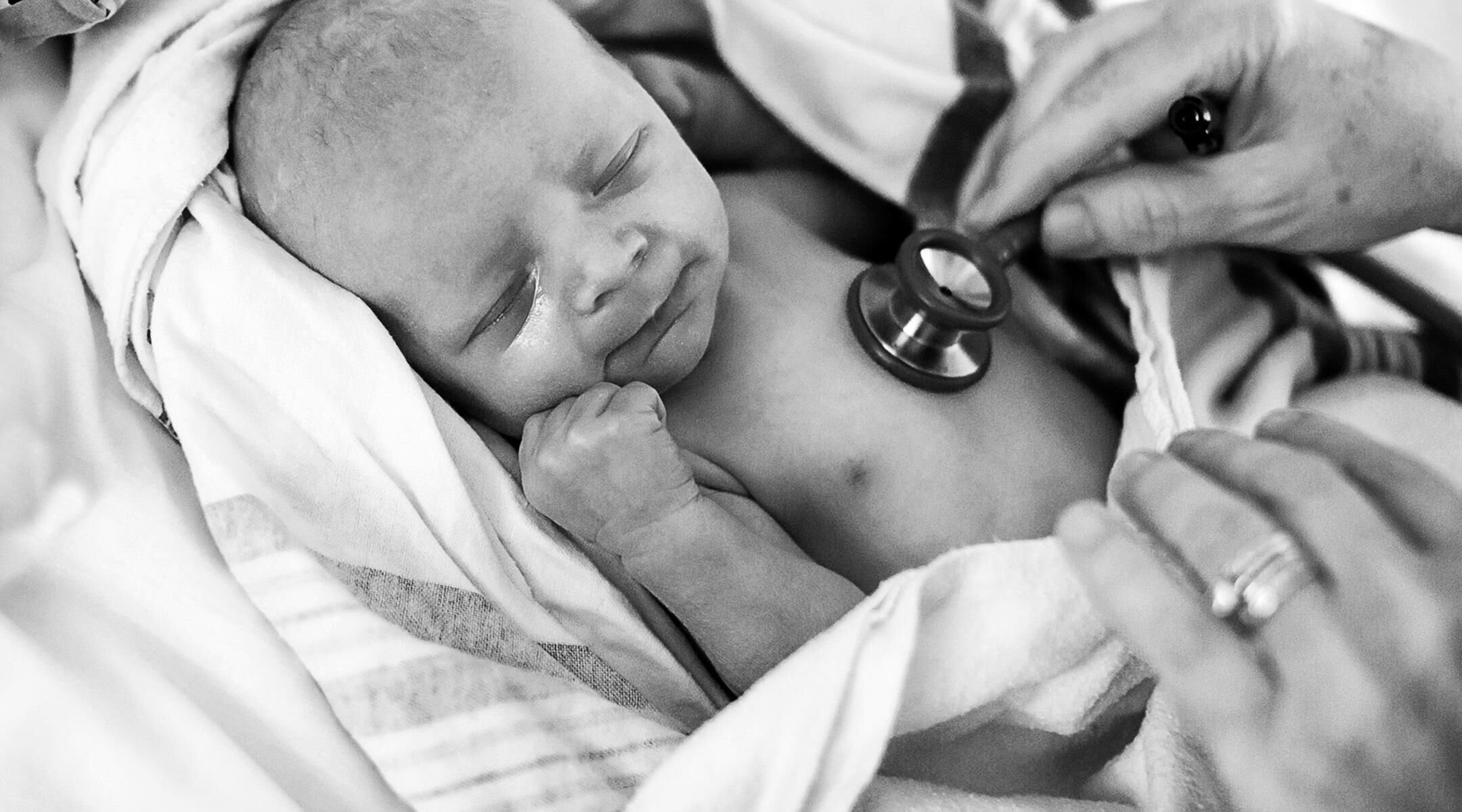







How to Build a Joy-Centered Birth Plan as a Black Mom


There’s a version of birth that belongs entirely to you. It looks familiar. It sounds like something that makes you feel safe. It’s lit the way you like it, and the people in the room are there because you want them there. That version of birth isn’t a fantasy. It’s a plan—and it’s yours to make.
As a doula and mom of eight, I’ve spent years helping Black women reclaim births that are personal, powerful and full of joy.
But here’s what I know from having seven home births and one hospital birth, and from sitting beside Black women in labor rooms across the Arizona Valley: Joy doesn’t just show up. You have to build it—and a birth plan is exactly how you do that.
The birth plan most of us know—that single sheet of paper you hand a nurse who may or may not read it—isn’t what I’m talking about. A joy-centered birth plan for a Black mom is a full preparation system—a vision, a prayer, a team and a practice. It’s every decision you make in advance so that when labor comes, all you have to do is be in it. Here’s how to build yours.
Before you research hospitals or interview providers, go to a quiet place without TV, social media or input from anyone. Sit with yourself and ask: What do I want this birth to look like? Who’s in the room? Is there music? Are there candles? Do I want to birth in a bed, on the floor, in a tub? Write it down. Draw it. Read it back to yourself every day.
This is your birth vision. Every other decision you make—your location, your provider, your support team—should be measured against it. You can ask yourself: Does this choice protect my vision, or does it compromise it?
When I planned my seventh birth, I wanted a pain-free, stress-free, soft and stylish labor and delivery. I planned ahead, stayed focused on my goals, and made sure that fear and impatience never rushed or altered my process. I pressed on my “labor nails” in bed while experiencing mild contractions, I ate the foods I’d planned to eat, I watched Netflix and took naps—and I labored conscientiously the entire way through. All of this happened because I visualized it—manifested it—before it was real.
For Black moms, a birth plan isn’t just a preference sheet—it’s a protection tool.
“Birth plans ensure the physiological needs of the birth experience are communicated and respected,” says Angella Kiwanuka-Boothe, RN, a HypnoBirthing educator in New York City and founder of LifeSprk LLC. "This is paramount for mothers of African descent whose cellular memory based on an ancestral blueprint may be more familiar with trauma.
A birth plan supports healing by surfacing subconscious worries and fears, which aids in regulating the nervous system—and results in earlier, easier bonding between Mom and baby, because Mom will feel safe and respected."
Kiwanuka-Boothe points out that a birth plan provides something critically important in a hospital setting: a sense of predictability and control.
Kiah Jones, a doula, childbirth educator and healthcare technology specialist in Atlanta, puts it this way: “Birth plans can be especially important for Black mothers because the Black infant and maternal mortality rates remain high. Having a birth plan helps you advocate for yourself, especially in moments when you may feel like your voice isn’t being heard.”
One of the most common mistakes parents make when writing their birth plans is skipping the education that makes a plan useful. “When you don’t know what’s normal during pregnancy and labor, your birth plan might look either too general or have specifics that don’t apply to you, your provider or the hospital,” explains Divine Bailey-Nicholas, CPM, CLC, a licensed home-birth midwife and the founder of Community Birth Companion in Opelousas, Louisiana.
Bailey-Nicholas encourages moms to take a childbirth class and tour their hospital or birthing center before putting anything on paper. She adds that a birth plan should be treated as a starting point. “It’s important that your birth plan isn’t just a document. It should also be a springboard to ongoing conversations about goals, needs and expectations of you, baby and your midwife or OB.”
Policies and preferences aren’t the same thing, and confusing the two can cost Black women their births, their bodies and sometimes their lives. It’s important to make the decision about where to give birth based on written policies, not what a provider or nurse tells you is standard.
When touring hospitals or birthing centers—or interviewing a home-birth midwife— be prepared with a list of specific questions. What are the policies around eating during labor? Delayed cord clamping? How many people are allowed in the room? What are the C-section rates? What constitutes an emergency? Can you leave if labor is moving slowly?
Know the difference between what you want and what’s allowed before you commit to any location. If those two things don’t match, keep looking.
You’re entitled to know your provider’s track record, for example how many natural births they’ve supported and at which hospitals they’re authorized to deliver. You need a provider who’s invested in your goals and who sees you as a full human being.
Lorena Graham, a holistic doula and mom of three in Charleston, South Carolina, says she was given an episiotomy without being asked during her first hospital birth. She wasn’t told it happened until the doctor was stitching her up afterward. That experience was enough to redirect the entire course of her birthing life. Her second and third children were born at home—90 minutes of labor, her husband catching the baby, the family showering, eating and going to sleep together.
Black women aren’t asking for too much when we expect to be respected and fully informed. If a provider can’t meet that minimum, they don’t belong at your birth.
The people around you during labor will either protect your vision or pull you away from it. Choose them carefully—and give them jobs.
Identify every need you have: someone to manage food, someone to handle the older children, someone to walk the halls with you, someone to hold your hand and remind you what you said you wanted when labor gets hard, someone to take pictures. Then match a person to every need. Write it down. Give each person their own assignment sheet. Review it together in the weeks leading up to your birth.
Your support team isn’t just there for emotional comfort—they’re the infrastructure that makes your birth run smoothly.
Nourishing yourself well during pregnancy will help you achieve the joy-centered birth you deserve.
Stay hydrated to help yourself feel better and prevent complications. Eat iron-rich leafy greens to support all the extra blood circulating in your body. Pick up legumes for hormonal balance. Choose whole grains, fresh and frozen foods over heavily processed ones, and cut unnecessary additives to help your body work like the extraordinary tool it is.
During labor specifically, reach for light, easy foods: fruit, smoothies, soups. You want to stay nourished and hydrated without weighing your body down, and you want foods that bring you comfort, because that comfort isn’t trivial—it’s part of your plan.
The way you move during pregnancy can help your body when it’s time for labor. Walking—even small increments—improves circulation and builds stamina. Stretching after long periods of sitting releases muscle tension so your body can be more flexible. Regular use of a birthing ball trains your pelvis and prepares your body for the positions that will ease labor. Remember: The body you bring to labor is the body you built in the months before it.
There’ll be people—family, friends, providers, people on the internet—who have strong opinions about your birth. Some will be well-meaning. Some won’t. None of them are having your baby.
A joy-centered birth plan requires active, ongoing protection. Find scriptures, mantras, songs or phrases that anchor you and read, sing or speak them every single day. Choose one to three affirmations—such as “labor isn’t a medical emergency,” “my body was made for this,” “I can do this”—write them out, and post them somewhere visible every morning and night. Share your vision only with people who will hold it carefully.
Aisaba Regina Hall, a home-birth consultant and mom of five in New Orleans, labored at home for two days. She prayed for clarity, received confirmation and ultimately delivered her 10-pound, 3-ounce son at home. Her reflection afterward was simple and complete: “My body did what others said was impossible.”
Hall’s advice to other moms is worth sitting with: "Autonomous environments that respect the [natural] birth process could change the maternal mortality rates in the Black community. Being careful and intentional about choosing our care providers and really acknowledging that birth is sacred.”
Your vision is worth defending. Defend it.
A joy-centered birth plan isn’t just about logistics. It’s spiritual. If you feel called to, write about your labor—about your fears, about what you can’t control and about what you’re hoping for.
And then practice everything: your positions, your affirmations, your environment. Walk your support team through the plan. Review it together. Know your vision so completely that when labor comes, and your thinking mind goes somewhere far away, your body and your people already know exactly what to do.
A joy-centered birth plan is a declaration. It’s you deciding, in advance, that your birth belongs to you—that you won’t walk into one of the most significant moments of your life without a vision, a team and a voice.
Black women deserve to tell their birth stories with pride. We deserve to say: I knew what I wanted, and I got it. We deserve births that are peaceful and blissful and entirely ours. That doesn’t happen by luck—it happens because we planned it that way.
To help Black moms build a joy-centered birth plan, we spoke with a variety of experts, including a licensed home-birth midwife, a doula and a HypnoBirthing educator. The author, a doula and mom of eight, contributed her own experience with birthing. Finally, we spoke with two real moms, one of whom is a home-birth consultant and the other a holistic doula. After editing, this article was vetted through fact-check and reviewed by our ob-gyn medical adviser. Learn more about how we ensure the accuracy of our content through our editorial and medical review process.
About the author: Shayla Brown knows how to have a joyful birth and helps women have them every day. She is a Shafia Monroe-certified doula, educator, advocate and a mom of eight. She’s the founder of Genesis Birthing and Living, the Teach Me How to VBAC Facebook group and the creator of the Black Birth Story Blog.
Please note: The Bump and the materials and information it contains are not intended to, and do not constitute, medical or other health advice or diagnosis and should not be used as such. You should always consult with a qualified physician or health professional about your specific circumstances.
Plus, more from The Bump:
Divine Bailey-Nicholas, LM, CPM, CLC, is a licensed home-birth midwife and the founder of Community Birth Companion in Opelousas, Louisiana.
Kiah Jones is a doula, childbirth educator and healthcare technology specialist in Atlanta.
Angella Kiwanuka-Boothe, RN, is a HypnoBirthing educator in New York City and founder of LifeSprk LLC.
Real-parent perspectives:
- Aisaba Regina Hall, home-birth consultant and mom of five in New Orleans
- Lorena Graham, holistic doula and mom of three in Charleston, South Carolina
Learn how we ensure the accuracy of our content through our editorial and medical review process.
Target Baby Registry
Free $100+ Value Welcome KitFree $100+ Value Welcome Kit
15% Completion Discount15% Completion Discount
Free 1-Year ReturnsFree 1-Year Returns
20+ Exclusive 20% Off
Deals For Mom & Baby20+ Exclusive 20% Off Deals For Mom & Baby1:1 Concierge With
Baby Gear Specialists1:1 Concierge With Baby Gear Specialists

*Subject to availability and Retailer's terms.
We earn commissions from these links.