





























Can a Birthing Comb Distract You From the Pain of Labor?

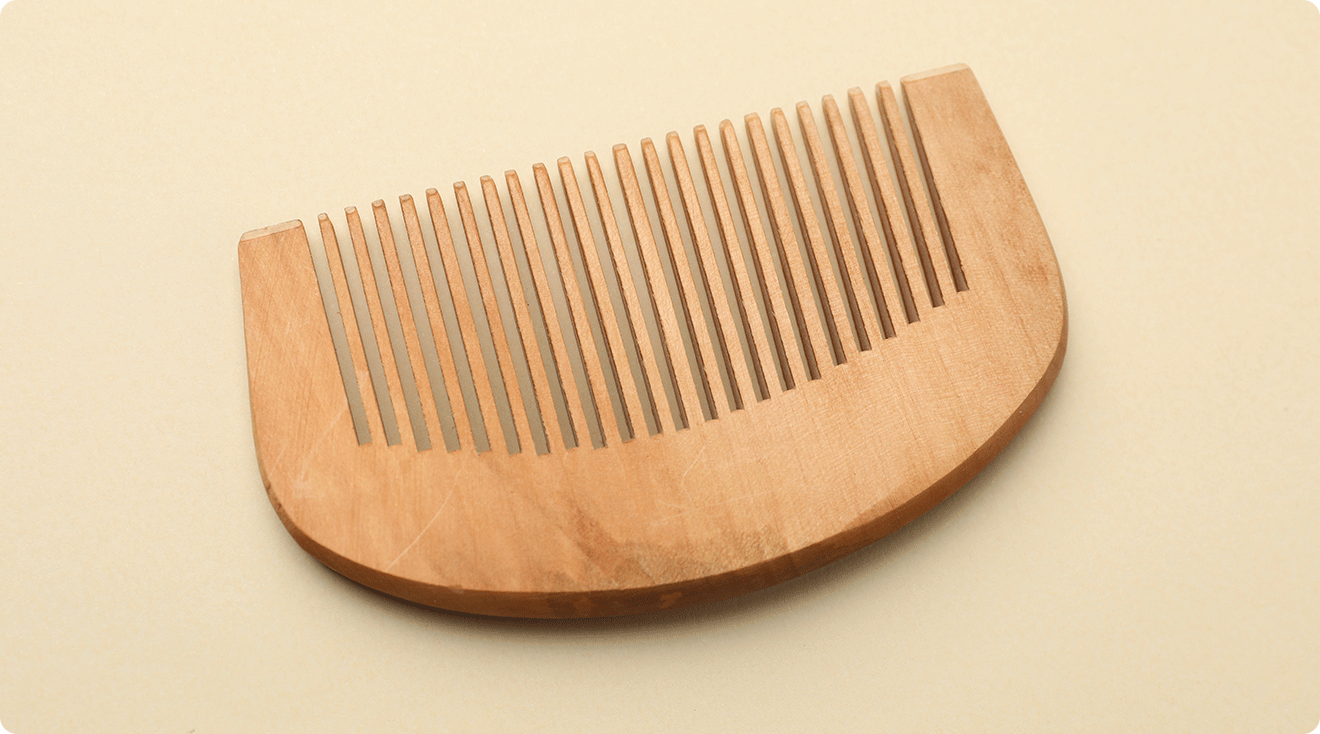

Whether or not you’re planning to get an epidural, it’s always a good idea to have a couple of holistic, low-cost (and low-effort) labor survival tricks in your back pocket. In this case, literally in your back pocket: Enter the birthing comb.
Everyone from midwives to doulas to crunchy moms has been sharing the birth comb trick on TikTok, raving about how squeezing one in your hand can help relieve labor pain—or at least keep your mind off it for a while.
Social media is where Gina V., a mom of one in Illinois, first learned about birthing combs—and why she decided to use one while trying to have an unmedicated birth. “I used the comb to help get through contractions [and] made it about eight hours without an epidural,” she says. “It helped when the contractions were on a lower scale of pain, like a 5 out of 10, but once they ramped up, it no longer helped distract [me].”
Distraction’s basically what a birthing comb’s designed to do. “[It] can be a helpful, low-intervention tool for pain management during labor, distracting you from the discomfort of labor,” explains Stephanie White, RN, MSN, a certified doula and nurse care manager of clinical services at WIN.
Ahead, find out more about birthing comb benefits, how to use a birth comb during labor, and what else you should know about this handy tool.
- A birthing comb is a comb you can hold in your hand during labor to help distract you from the pain of contractions and minimize the feelings of labor. It can be any sturdy comb you may already own.
- Birthing combs work by stimulating acupressure points and tapping into a well-studied theory of pain relief, which says you can distract your brain from pain signals by introducing non-painful signals instead.
- You can get creative with a birthing comb and hold it in whatever way feels best for you, but most people position it so the teeth of the comb are against their palm.
A birthing comb is a comb designed to be held in your hand—usually with the teeth positioned against your palm—and squeezed during labor contractions to distract your mind from the pain of giving birth. It can also stimulate particular acupressure points to induce pain relief. White says you can use any sturdy comb with rounded teeth that fits comfortably in your hand (although specialty versions are available for sale).
Birthing combs have been around forever, but lately they’ve enjoyed a social media revival. The doula-and-labor-and-delivery-nurse team behind @mamastefit on TikTok calls the birthing comb a “secret weapon” for birth workers, while labor and delivery nurse Liesel Heinzelmann, RN, says squeezing one during a contraction can make it hurt less. Blair Herring, MS, OTR/L, an occupational therapist specializing in maternal health, says she packed a birthing comb in her hospital bag because these types of “pain relief techniques work.”
When holding a birth comb, you’re essentially telling your nervous system to redirect its attention to something else, explains Trish Ware, RN, a birth educator and founder of Labor Nurse Mama. To answer a likely question—no, this will not make labor pain disappear completely (sorry!)—but many moms and providers swear by it as part of their labor and delivery toolkit.
There are two main methods through which a birthing comb can help with pain relief during labor: acupressure and the gate control theory of pain.
How a birthing comb works through acupressure
Squeezing a birth comb in your hand can help provide pain relief through accessing certain pressure points. Your palm is full of acupressure points that, when stimulated, can be used to reduce pain in your stomach and back and relieve emotional distress, notes The Ohio State University.
How a birthing comb works using the gate control theory
The gate control theory of pain, developed in the mid-1960s, says there’s a “gate” in the spinal cord that can modulate pain signals before they reach the brain. “There are certain sensations and actions that compete with this pain pathway and have the ability to decrease pain,” explains Lucy Chapin, CNM, a midwife at Mad River Birth and Wellness in Vermont. “Things like warmth, pressure, massage and even simple acupressure can influence the opening and closing of this gate.”
Touching something non-painful—like a birthing comb—can help “close the gates” by distracting your brain. “A common example given is [when] you bang your knee very hard, but then rub your knee right after it,” says Chapin. “We do this because it actually decreases the pain we feel for the knee bang.” Adds Ware: “Your brain literally can’t focus on both the labor pain and the pressure from the comb at the same time.”
This tactic not only makes it easier to get through the often excruciating 30 to 90 seconds of a contraction, but it also puts you more in control of your own pain relief—something Ware says is critically important to staying calm and confident during labor. “During birth, what we’re really struggling with is losing control, [but] the birth comb gives you back that control,” she explains. “It’s tangible, it’s in your hands, and you decide when and how to use it.”
You can pretty much use a birthing comb in whatever way feels good for you. “Honestly, I don’t think that there’s a right way,” says Chapin. “You could push it into your thigh if you wanted to!”
That said, most people do some variation of the following, according to experts:
- Hold the birth comb in your hand with the teeth facing your palm.
- Position it so the top of the comb is lined up with the base of your fingers (where your fingers meet your palm) and the comb itself is loosely centered in your palm (with the middle of the comb placed under your middle and ring finger).
- Close your fingers around the birthing comb to grip it and hold it in place as a contraction starts.
- As the contraction builds, squeeze the comb as much or as little as you want. Some people squeeze it with increasing intensity until the contraction slows. Others squeeze it rhythmically.
- Use the same hand or switch hands depending on your comfort.
Although it’s generally safe to use a birthing comb, it’s a good idea to ask your provider to check your hands from time to time to make sure you’re not overdoing it. “Be mindful of any delicate skin, especially if you were laboring in the tub, or there are any weirdly sharp or broken parts of the comb,” adds Chapin. “Many laboring people don’t realize their strength when they’re in the middle of a contraction.”
Haleigh B., a mom of two in Missouri, can attest to this: She was successfully using a birthing comb during her labor to distract herself from the pain and focus on her breathing–until it broke! “During one of the contractions, I squeezed so hard it snapped in two,” she says. “The ironic thing is the comb had ‘It’s not pain, it’s power’ [written] on the side. That’s how I knew I was definitely experiencing some power.”
There are generally two types of labor pain relief: medicated and non-medicated.
Medicated options involve analgesics and anesthetics, both of which numb all or parts of your body and desensitize you to pain. These include:
- Epidural
- Spinal block
- Narcotics administered through an IV or by injection
- Nitrous oxide inhaled through a breathing mask
Non-medicated options use physical strategies to alleviate pain or distract you from more intense feelings of pain. Some examples include:
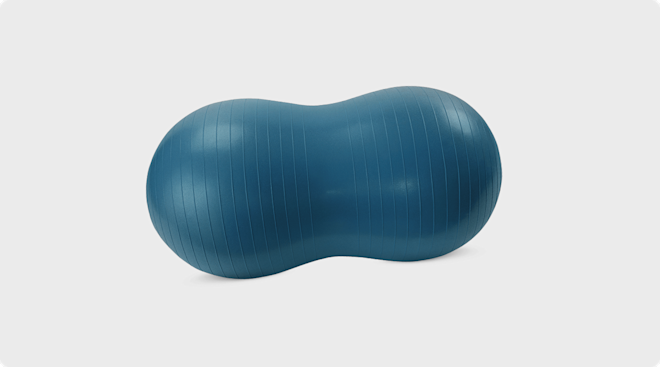
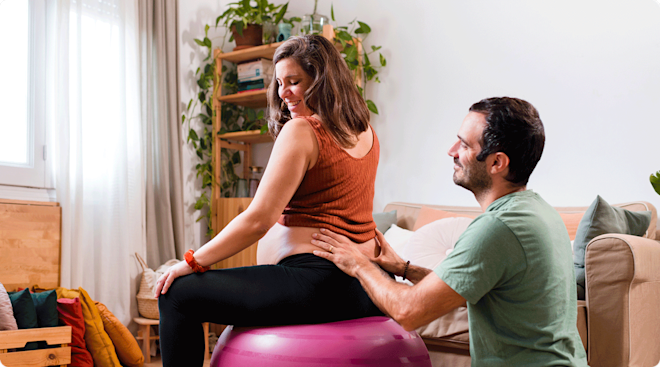
- Sitting on a birthing ball
- Practicing breathing techniques
- Applying heat or ice
- Getting a massage from your partner
- Sitting in a birthing tub or taking a shower
Frequently Asked Questions
Can I use any comb as a birthing comb?
Yes. You can buy a specialty birthing comb online if you prefer, but it isn’t necessary. Ware says it’s far more important to practice with the comb before you go into labor so you can figure out how you want to hold it and what techniques work best for you.
When choosing your own birthing comb, White suggests finding one with rounded teeth and an ergonomic design that feels good in your palm. No flimsy combs, either; Ware says you need something that can hold up to your bone-crushing grip during contractions.
What is the gate control theory of pain?
The gate control theory of pain is the idea that your brain can only process so much sensory input at one time. Because non-painful signals reach the brain faster than painful ones, doing something like squeezing or rubbing your skin when you’re experiencing pain can short-circuit the pain response, causing your brain to focus on the non-painful input instead of the painful input.
What size birthing comb do I need?
White says ideally your comb should be slightly longer than the width of your hand when placed across your fingers.
What are birthing comb benefits?
A birthing comb is a convenient, portable and cheap way to relieve pain during labor, and it’s a completely unmedicated intervention. There are basically no risks to using one and you can even practice with it before you go into labor. While it won’t make labor pain go away entirely, it’ll give you something else to focus on during contractions.
Birthing combs may be all the rage on social media, but there’s also a well-studied theory of pain relief behind them. By squeezing a birthing comb in the palm of your hand during labor contractions, you can help distract your brain from pain and target important acupressure points that may help reduce pain sensations. A birth comb’s not a substitute for more intense medical pain relief during labor—but it can help you feel calmer and more in control while giving birth. “Sometimes that’s the difference between feeling like labor is happening to you versus feeling like you’re actively working with your body,” says Ware.
Please note: The Bump and the materials and information it contains are not intended to, and do not constitute, medical or other health advice or diagnosis and should not be used as such. You should always consult with a qualified physician or health professional about your specific circumstances.
Plus, more from The Bump:
Lucy Chapin, CNM, is a midwife at Mad River Birth and Wellness in Vermont.
Trish Ware, RN, is a birth educator and the founder of Labor Nurse Mama.
Stephanie White, RN, MSN, is a certified doula and nurse care manager at family-building support company WIN.
Cleveland Clinic, Pain and the Brain: What Is the Gate Control Theory?, September 2022
Mass General Brigham, Nonpharmacologic Pain Management During Labor
The Ohio State University, Why Does Squeezing a Comb Help with Labor Pains?, November 2023
Pain, Constructing and Deconstructing the Gate Theory of Pain, December 2013
US Department of Health and Human Services, Eunice Kennedy Shriver National Institute of Child Health and Human Development, What Are the Options for Pain Relief during Labor and Delivery?
Real-parent perspectives:
- Gina V., mom of one in Illinois
- Haleigh B., mom of two in Missouri
Learn how we ensure the accuracy of our content through our editorial and medical review process.
Target Baby Registry
Free $100+ Value Welcome KitFree $100+ Value Welcome Kit
15% Completion Discount15% Completion Discount
Free 1-Year ReturnsFree 1-Year Returns
20+ Exclusive 20% Off
Deals For Mom & Baby20+ Exclusive 20% Off Deals For Mom & Baby1:1 Concierge With
Baby Gear Specialists1:1 Concierge With Baby Gear Specialists

*Subject to availability and Retailer's terms.
We earn commissions from these links.