









Moms and Pediatricians on How to Prepare for the Arrival of a Winter Baby

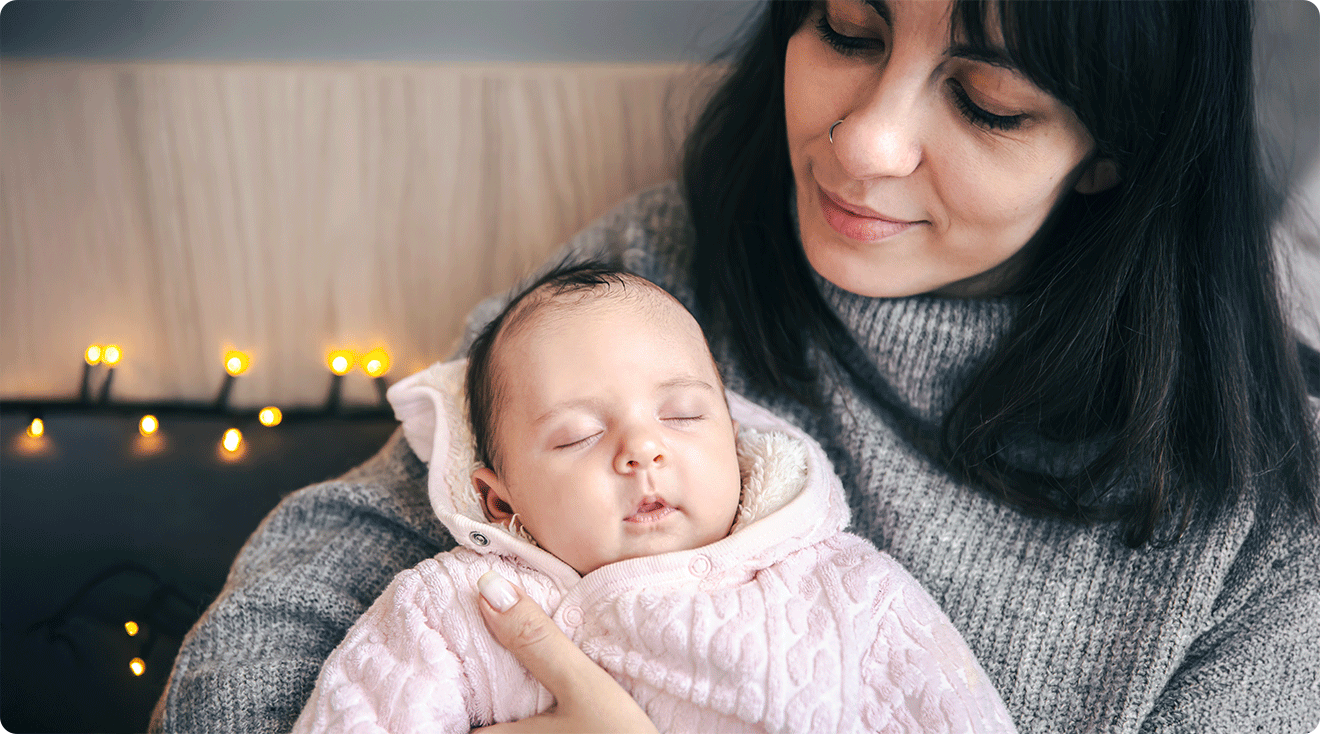

Having a baby requires a lot of preparation, no matter when your due date falls. But if you’re expecting a winter baby—as temperatures dip and viruses circulate—there are extra things to consider before baby’s arrival.
My daughter’s due date was in late November, about a month before the official start of winter. I remember stocking up on hand sanitizer for visitors, fleece sleep sacks and lots of warm baby hats. We live in the South, where we have mild winters, but it’s best to be prepared, just in case. On the other hand, when my friend who lives in Chicago was pregnant, she shopped for stroller footmuffs, thick baby mittens and even a baby snowsuit.
“Welcoming a newborn in the winter can come with a few added considerations,” says Amiirah Aujnarain, MD, FRCPC, a board-certified pediatrician, allergist and immunologist. Between the dry winter air, keeping baby comfortable temperature-wise, the potential to catch bugs and car seat safety, there are extra challenges that come with a winter baby. Fortunately, there are lots of things you can do to prep. Ahead, experts and real parents share what to keep in mind before a winter baby’s arrival.
- Keeping your winter baby warm will look different depending on the climate you live in. Hats, mittens, socks and booties are must-haves for everyone, though.
- Avoiding crowded indoor spaces and making sure the whole family is properly vaccinated will help keep baby safe from RSV, colds, the flu and other illnesses.
- Infants shouldn’t be put into car seats with bulky layers or coats; a specially designed car seat blanket will keep them warm and safe.
Depending on the climate where you live and your due date, there’s a good chance you’ll be experiencing pregnancy in colder weather before your winter baby arrives. Pregnancy in the winter months can come with challenges of its own.
Snow and ice can be slippery, which increases the risk of falls. To keep yourself safe, opt for shoes or boots that offer plenty of traction and ankle support. To avoid getting too cold, it’s a good idea to layer up so you can remove clothing as needed when you get inside, but keep yourself warm when you’re outdoors. “I couldn’t find an affordable winter jacket that would fully zip when I was 35 weeks pregnant,” says Lisa M., a mom of two in Michigan’s Upper Peninsula. “Layers and big sweaters were my saving grace on blustery days.”
It’s also important to get your recommended vaccines during pregnancy to keep yourself and baby safe. This includes seasonal vaccinations such as the flu, COVID-19 and respiratory syncytial virus (RSV) shots, which are safe to get while pregnant.
As for when baby arrives, your experience will vary based on where you’re living. Those in warmer areas will need a plan for keeping baby warm on the handful of days when the temperature drops considerably, while those in colder climates, like the Midwest and northern states in the US, will need to plan for snow, single-digit wind chills and possibly even negative temperatures outside. “One of the most difficult aspects is that we advise avoiding crowded indoor areas with newborns and prioritizing outdoor spaces in those first few months to reduce the chance of exposure to illness,” says Gabriella Dauer, MD, FAAP, a double board-certified pediatrician practicing in southern Florida. “This is easy in warmer climates, as baby and parents can get those outdoor walks in, but navigating that outdoor time in the winter with a newborn is challenging [in colder climates].”
Parents should also keep the dry air in mind, says Aujnarain. “Cold, dry air can irritate baby’s skin and make breathing feel less comfortable,” she says. Similarly, she notes that indoor heating can be dehydrating, so breastfeeding parents need to be extra mindful about staying hydrated.
RSV, cold and flu season with a newborn
Experts stress that one of the most challenging aspects of having a newborn in the winter months is navigating common viruses, such as colds, RSV, the flu and COVID-19. “[Winter] is prime time for circulating upper respiratory viruses,” explains Gary Kirkilas, DO, a pediatrician at Phoenix Children’s. “This is important to know because a newborn’s immune system is still developing, making them more susceptible to getting sick.”
Doctors say to keep the following in mind:
- Good hand hygiene (wash those hands!)
- Only allowing close family to come to see and hold baby, and only if they’re feeling well and haven’t had recent contact with sick individuals
- Avoiding very crowded indoor spaces
- Following the recommended baby vaccine schedule, and keeping up-to-date on your own vaccines
If Mom didn’t get vaccinated for RSV during pregnancy, Kirkilas stresses the importance of making sure baby’s vaccinated. “I recommend that infants, from birth to 8 months, receive their RSV immunization,” he says. He notes that it’s a “particularly troublesome respiratory virus in infants” that can progress to difficulty breathing and require hospitalization. RSV season lasts from fall to winter, but typically peaks in December and January.
What you need to do to prepare for a winter baby, again, depends on where you live and how cold the winters get. In general, if you live somewhere with mild to moderate winter temperatures, you should have:
- A humidifier to help with dry air
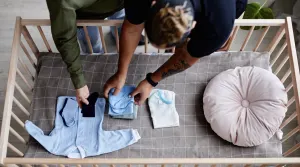
- Baby clothes that can be layered and easily removed as needed, like comfortable cotton onesies
- A car seat-safe blanket (more on car seat safety below)
- Warm hats and blankets for outdoors (no hats that cover baby’s face, as they can obstruct breathing)
- The basics for helping your little one manage a cold, such as saline, a nasal aspirator and acetaminophen (call your doctor if baby’s under 3 months with a rectal temperature of 100.4 degrees Fahrenheit or higher)
If you live where it’s consistently very cold in the winter months, you’ll likely need to plan for extra protection from the chill with additional things like:
- A breathable, water-resistant stroller cover
- A cozy stroller footmuff
- Warm clothing for baby with coverings for over their hands and feet
- Fleece or wool socks or booties
- Extra blankets for outings
Aujnarain adds that it may help to develop a routine for the winter months. Since you’ll be indoors a lot and there are fewer hours of daylight, it helps to have a (flexible) schedule that maximizes your daylight exposure.
Winter Baby Essentials Checklist
Looking for a quick winter baby checklist? Here are the basics of what baby needs in cold weather.
Keeping baby warm in the winter is essential, but it can be tricky. Here are a few suggestions from experts.
How to dress baby in winter
If you’re staying indoors, the general advice is to dress baby in one more layer than what you’re wearing. Dauer suggests, if possible, to keep your home the same temperature year-round to make sure baby’s comfortable no matter what.
For outdoor adventures in the winter, Aujnarain recommends ensuring baby’s hands, feet and head are covered. In this case, you’ll want a comfy hat, warm mittens and booties to keep them protected.
How to dress baby for sleep in winter
At bedtime, you may be tempted to bundle baby up even more – no one likes to be too cold when they sleep, after all. But it’s not as complicated as it may seem. “For sleep, it’s advisable for infants to wear a full-length onesie,” says Kirkilas. “If you have concerns about your newborn getting cold, another option is using a sleep sack, swaddle or wearable blanket.”
When picking out pajamas and swaddles for baby, Aujnarain says the best fabrics are breathable and layerable. She also suggests looking up the thermal overall grade (TOG) of your baby’s swaddle “to ensure it fits with your house temperature” and keeps baby warm, but not hot.
Finally, even when it’s cold outside, the American Academy of Pediatrics (AAP) advises against putting baby to bed with blankets, quilts, comforters, hats, mittens or bulky clothing, as these can all increase the risk of suffocation.
For our winter baby, we bought a cozy stroller footmuff, some stroller gloves for myself, a lot of footie PJs for baby, a snowsuit and some zip-up baby fleece buntings. We were all ready for New York City winter!
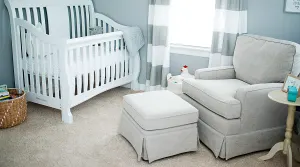
What’s the ideal temperature for baby’s room in winter?
Again, Dauer suggests keeping baby’s room the same temperature year-round, whether it’s summer or winter. The ideal room temperature for baby is between 68 and 72 degrees Fahrenheit. Aujnarain notes that this temperature range is comfortable for babies, plus it “helps reduce overheating and supports safe sleep.” Kirkilas echoes this and stresses the importance of avoiding overheating as it’s “a known sudden infant death syndrome (SIDS) risk factor.”
Of course, baby needs to be in an infant car seat to stay safe while you’re driving. But putting too many layers on them while they’re in there can compromise safety.
“When bundling up an infant during the winter, the additional layers make it difficult to securely fit the restraint belts around the child,” explains Kirkilas. “The extra space created by a fluffy snowsuit can allow an infant to slip out of a car seat in the event of a motor vehicle accident.” That’s why experts recommend babies only wear base layers when fastened into a car seat.
If taking away layers makes you feel uneasy, rest assured you can still keep baby warm. Aujnarain recommends:
- Warming up the car before getting in whenever possible
- Placing a blanket over baby and the harness (don’t tuck it under the harness)
- Investing in a blanket specifically designed to fit over car seats
Frequently Asked Questions
What do you need for a winter baby?
What you need for a winter baby depends on what climate you live in. For places with mild winters, the basics are usually enough, like a hat, mittens, warm socks and blankets. If you live somewhere with more extreme temperatures, you’ll want to invest in thicker fabrics, a stroller cover and extra layers for yourself to stay warm as well.
Can you take a newborn outside during the winter?
Technically, yes, but experts caution that infants aren’t able to regulate their body temperature like adults, and they’re not able to fully communicate when they’re feeling cold, which can lead to hypothermia. “Once the [the temperature or windchill] is below freezing, take caution with how much time is spent outside with a newborn,” advises Dauer. In addition to ensuring baby’s safely bundled up before going outside, Kirkilas notes, “make sure [the outing is] only for a brief amount of time and with a plan for a quick escape back inside.”
What are some signs that baby is too cold?
According to Aujnarain, signs to look for include feeling cold to the touch on the chest, back or tummy; pale or mottled skin; fussiness that doesn’t improve with feeding or soothing; and lethargy (though this is rare). Dauer also suggests keeping an eye out for purplish or bluish discoloration of extremities like their hands and feet.
What are signs baby is overheating?
Signs baby is getting too warm, according to Aujnarain, include: sweating, flushed cheeks, damp hair, rapid breathing, heat rash, feeling “too warm” to the touch and irritability. You should also be on the lookout for fussiness that doesn’t resolve with a diaper change, feeding or soothing, says Kirkilas.
Welcoming a winter baby comes with its own set of challenges, but planning ahead can make things feel a bit less stressful. Stock up on layerable clothes, hats and mittens, blankets and warm booties or socks. And, of course, don’t forget to stay up-to-date on your vaccinations and wash your hands. All of this should make the winter months cozy and fun—just as they’re meant to be.
Please note: The Bump and the materials and information it contains are not intended to, and do not constitute, medical or other health advice or diagnosis and should not be used as such. You should always consult with a qualified physician or health professional about your specific circumstances.
Plus, more from The Bump:
Amiirah Aujnarain, MD, FRCPC, is a board-certified pediatrician, allergist and immunologist. She earned her medical degree from the University of Ottawa.
Gabriella Dauer, MD, FAAP, is a double board-certified pediatrician practicing in southern Florida. She earned her medical degree from the University of Miami Leonard M. Miller School of Medicine.
Gary Kirkilas, DO, is a pediatrician at Phoenix Children’s. He earned his medical degree from Touro University in Northern California.
Real-parent perspectives:
- Lisa M., mom of two in Michigan’s Upper Peninsula
- Sally J., mom of one in New York City
Antelope Valley Medical Center, Winter Safety While Pregnant, February 2024
Healthy Children (American Academy of Pediatrics), How to Keep Your Sleeping Baby Safe: AAP Policy Explained, June 2025
Learn how we ensure the accuracy of our content through our editorial and medical review process.
Target Baby Registry
Free $100+ Value Welcome KitFree $100+ Value Welcome Kit
15% Completion Discount15% Completion Discount
Free 1-Year ReturnsFree 1-Year Returns
20+ Exclusive 20% Off
Deals For Mom & Baby20+ Exclusive 20% Off Deals For Mom & Baby1:1 Concierge With
Baby Gear Specialists1:1 Concierge With Baby Gear Specialists

*Subject to availability and Retailer's terms.
We earn commissions from these links.